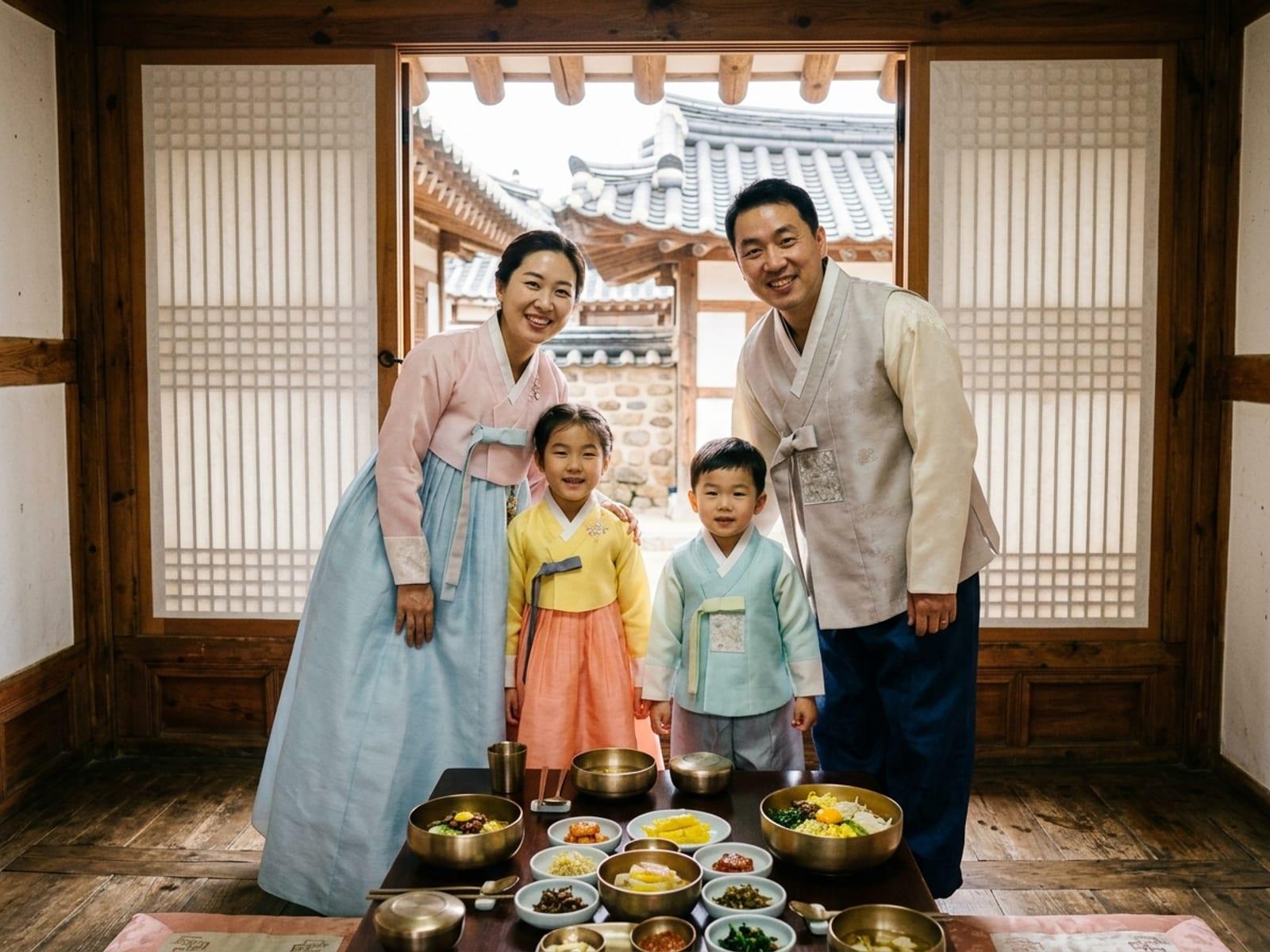
Jeonju, a UNESCO City of Gastronomy in southwestern Korea, is the home of Jeonju bibimbap: rice cooked in beef-shank broth and topped with soybean sprouts, yellow mung bean jelly and more. It's about two hours from Seoul by KTX, and paired with the Jeonju Hanok Village, where more than 800 traditional houses line the lanes, it makes an easy one-night trip with children. Before you order for kids, ask whether the raw beef (yukhoe) can be left off and the gochujang served on the side.
Put a bowl of bibimbap in front of you, with its seasoned vegetables fanned out in a circle of colors, and the first thing you do is mix. "Bibim" means mixed and "bap" means rice.
Rice from the plains, greens from the hills, salted seafood from the sea
Jeonju joined UNESCO's Creative Cities Network for gastronomy in 2012. According to UNESCO, Jeonju is known as a "city of taste," blessed with high-quality ingredients: rice from the Honam plain, fish and salted seafood from the Yellow Sea, and vegetables and wild greens from the mountains. Traditional cooking is taught at universities, high schools and private schools. The public and private sectors have worked together to set up a cooking research institute and a foundation to promote bibimbap worldwide, and the city holds food events such as a bibimbap festival and an international fermented food expo. A whole city nurturing one dish is very much part of what makes Jeonju Jeonju.
As for bibimbap itself, a dish of rice mixed with other ingredients appears under the name hondon-ban in Chinese-character writings from around 1590, and it was also written as goldong-ban. The first known recipe for bibimbap is in the Siuijeonseo, an anonymous cookbook from the late 19th century.
In Jeonju bibimbap, the rice is different
What makes Jeonju bibimbap distinctive comes before the toppings: it's the rice. The rice is cooked in broth made by simmering beef shank, then finished with a coat of sesame oil. On top go soybean sprouts, strips of hwangpo-muk (a yellow mung bean jelly), gochujang chili paste, seasoned raw beef (yukhoe) and more. It's often served with kongnamul gukbap, a soybean sprout soup, another very Jeonju pairing.
Mix with a spoon, not chopsticks. Lift the rice from the bottom of the bowl and keep going until the toppings and gochujang are spread through. Since the rice in Jeonju bibimbap is already seasoned with broth and sesame oil, go easy on the gochujang and you'll taste the bean sprouts and hwangpo-muk better. Hwangpo-muk is wobbly and mild, an easy topping for children.
Stone-pot bibimbap, or dolsot bibimbap, has a Jeonju connection too. Rice and toppings go into a heated stone bowl, a raw egg cooks against the rim, and the sesame oil at the bottom crisps the rice. That crust is called nurungji, and scraping it off the bottom at the end is part of the fun. The modern dolsot bibimbap is generally credited to Namgung Seong, owner of the Jeonju restaurant Jungang Hoegwan, who came up with the stone bowl in 1969.
Korea has another famous bibimbap as well, from Jinju in the south. It tops seasoned vegetables with yukhoe and pairs them with a broth called potangguk and a distinctive gochujang made with rice syrup, known as yeot-gochujang. It's also called hwaban, "flower bowl," for its colors, and it was already known as a local specialty by the 1920s.
Walk the hanok village to work up an appetite
In Jeonju, walk Jeonju Hanok Village before or after your meal. More than 800 traditional hanok houses stand side by side across Pungnam-dong and Gyo-dong, and in 2010 the area was designated an international Slow City.
Near the village entrance is Gyeonggijeon, built in 1410 to enshrine the portrait of Taejo, Yi Seong-gye, founder of the Joseon dynasty. The portrait is a National Treasure of Korea. During the Japanese colonial period, the western part of the grounds was demolished to build a primary school for Japanese children. Across the street stands Jeondong Cathedral, completed in 1914. It was designed by the French priest Poisnel, who also designed Myeongdong Cathedral in Seoul, and its blend of Romanesque and Byzantine styles makes it the oldest and largest Western-style building in the Jeolla region. On the high ground at the east side of the village is Omokdae, where Yi Seong-gye is said to have held a feast after defeating Japanese pirates. Climb up and you'll look down on a town of tiled roofs rolling like waves.
The village lanes look good in hanbok and in everyday clothes alike. If you wear hanbok, keep children's hems short so they don't trip on cobblestones and steps. To see how a family photo around a bowl of bibimbap under the tiled eaves might turn out, you can try pokesta's AI photos ($1 per photo, and the first one is free).
Eating with kids: watch the raw beef and the chili paste
Jeonju bibimbap may come topped with raw beef (yukhoe). For young children or anyone pregnant, ask before ordering whether they can leave the raw meat off or swap in cooked meat. Ask too whether the gochujang can come on the side; mix a small amount into the children's portions and let adults add more to taste.
A dolsot bowl stays very hot for a while after it reaches the table. Put it out of children's reach and serve them a portion rather than handing them the bowl. Bibimbap servings are generous, so up to primary-school age, a child can share with an adult.
Many restaurants are packed at lunchtime. Go a bit early, around 11 a.m., or shift to after 2 p.m. to cut the wait. Knowing how Korean restaurants handle call buttons, banchan and the bill saves some confusion at the table.
From Seoul by KTX
Jeonju Station is on the Jeolla Line, and KTX high-speed trains have stopped there since the line was double-tracked on October 5, 2011. From Seoul (Yongsan Station and others), the KTX takes around two hours (the time varies by train). Seats sell out on weekends and holidays, so book early if your family wants to sit together. The station building itself is designed in hanok style. From the station to the hanok village, take a bus or a taxi. A day trip from Seoul is possible, but the village has guesthouses in traditional homes, and staying a night lets you walk the quiet lanes in the evening and early morning.
The international gateway is Incheon International Airport (ICN); the usual route is to head into Seoul and then catch the train. Bibimbap is on the menu all year, so any season works. Spring and autumn, away from the summer heat and winter cold, are the most pleasant for walking the village, and easier on children. Entry requirements for Korea depend on your nationality, so check your own government's official information.
For more Korean food travel, see our articles on kimjang and tangerine picking on Jeju.
Before you mix your bowl in Jeonju, take a moment to look at it. Point out the colors with your children, then stir as hard as you like. That's how this city eats.
References