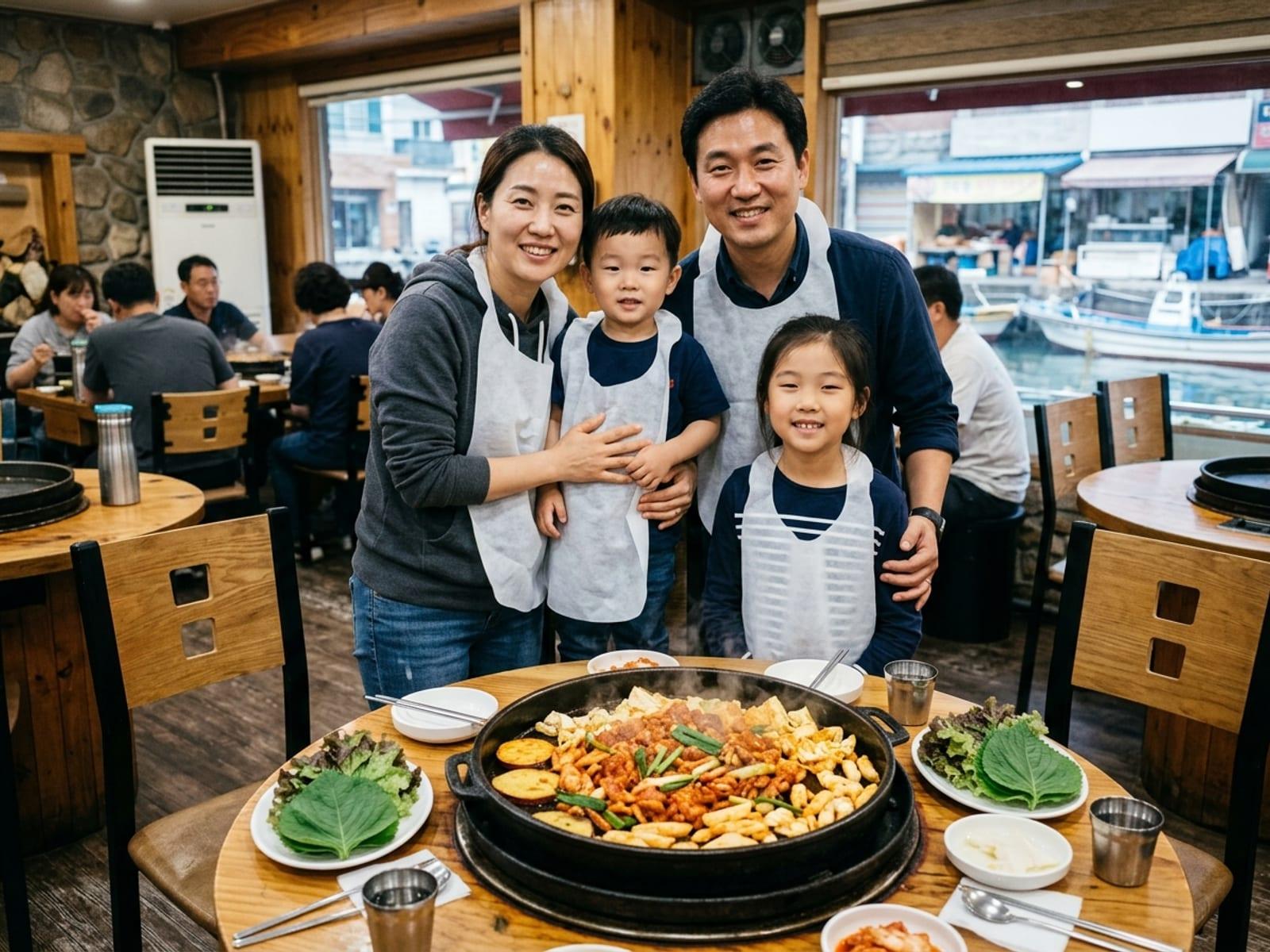
Dakgalbi, spicy chicken stir-fried on a tabletop griddle, was born in Chuncheon, a lake-ringed town in Gangwon Province east of Seoul, and its specialist restaurants cluster on Myeongdong Dakgalbi Street in the town center. Together with the town's other specialty, cold buckwheat makguksu noodles, it's available year-round and easy to fit into a day trip from Seoul. With children, ask for a milder sauce and seat them away from the hot griddle.
Chicken coated in red sauce sizzles on a round iron griddle set into the table, along with cabbage, sweet potato and chewy rice cakes. In downtown Chuncheon, that scene repeats in restaurant after restaurant.
Short on pork, someone cooked chicken "like galbi"
Dakgalbi means "chicken galbi," though no ribs (galbi) are involved. According to the Korean-language Wikipedia, it started in the 1960s. A man named Kim Young-seok, who served pork at a drinking house on Jungang-ro in Chuncheon, is said to have tried cooking chicken "like pork galbi" when pork became hard to get. He butterflied the chicken, marinated it for about half a day, grilled it over charcoal and sold it as dak bulgogi.
In the 1970s it spread around Myeongdong, Chuncheon's main shopping district, and became popular with soldiers on leave and university students as cheap food that filled you up. A portion reportedly cost about 100 won, and people called it "college student galbi" or "common people's galbi." In 2002 the TV drama Winter Sonata, filmed in Chuncheon, became a hit abroad, and as fans came to visit the filming locations, dakgalbi's name traveled beyond Korea too. The dish was originally grilled over charcoal; the style you see most often today, stir-fried on a griddle with vegetables, spread later.
Gathering around the griddle on Myeongdong Dakgalbi Street
The first stop for dakgalbi in Chuncheon is Myeongdong Dakgalbi Street in the city center. This is not the Myeongdong in Seoul but a lane in Chuncheon's own downtown, lined with dakgalbi restaurants that multiplied as the dish spread out from the district. You can find charcoal-grilled dakgalbi, griddle-fried dakgalbi and makguksu all on the same street. Opening hours and closing days vary by restaurant.
At a griddle restaurant, you sit down and order by the number of people, and a staff member spreads the ingredients on the griddle and starts cooking. The pan holds chicken marinated in a sauce of gochujang mixed with garlic and ginger, plus cabbage, sweet potato, onion, green onion and tteok (rice cakes). Every place does the stirring a little differently, so ask at the start if it's fine to mix it yourselves. Once it's cooked, wrap bites in lettuce or perilla leaves.
At some places you can finish with bokkeumbap, rice fried in the sauce left on the griddle. The rice that crisps against the pan soaks up the sauce, and some children like it more than the chicken.
Makguksu: you pour the broth yourself
Makguksu is a noodle made from buckwheat flour and a local dish of Gangwon Province, Chuncheon in particular. Buckwheat on its own breaks easily, so wheat flour is often mixed in. The noodles are topped with chopped kimchi, cucumber and sesame and eaten with a cold broth. The name is usually explained as "noodles made quickly and eaten quickly." It began as a winter late-night snack and has been eaten year-round since the 1970s.
In Gangwon restaurants the noodles and broth sometimes come separately. Pour in just a little and you have bibim makguksu, a mixed noodle dish; pour in plenty and it becomes mul makguksu, a noodle soup. After the heat of dakgalbi, cold makguksu is just what your mouth wants. Some restaurants also serve suyuk (boiled pork slices) or gamjajeon, a pancake of grated potato. Gamjajeon isn't spicy, which makes it a good dish to share with kids.
The word makguksu first appeared in print in a newspaper article in 1934, and the noodle is tied to life in the mountains of Gangwon, where buckwheat was widely grown. Chuncheon also holds an annual Makguksu Dakgalbi Festival celebrating both specialties. It was started in the 1990s by the city and a local broadcaster, and its timing has shifted over the years, so if you want to plan around it, check the latest dates with Chuncheon's tourism information. The grounds are outdoors and can get crowded, so keep a hand on younger children.
Eating with kids: watch the spice and the griddle
The red sauce on dakgalbi is based on gochujang, a chili paste. What counts as medium heat for Korean diners can be a lot for a child who isn't used to spicy food. When you order, try asking "deol maepge hae juseyo" ("Please make it less spicy"). If that isn't possible, serve children mostly plain rice, the fried rice, sweet potato and rice cakes. Makguksu sometimes comes with chili powder on top, so ask whether a child's portion can be made without it.
The other thing to watch is the griddle in the table. It stays hot for the whole meal and sits right at a child's hand height. Seat small children away from it and have an adult sit between them and the pan so they don't lean over. Oil and sauce spatter while it cooks, so dark clothes that hide stains are a sensible choice.
If anyone has allergies, show a note written in Korean listing the ingredients the sauce may contain, such as wheat, soy and sesame, before you order. Some restaurants only take orders of two portions or more, so ask about how to handle a small child's share before you sit down. Call buttons, paying at the counter and other habits of Korean restaurants that puzzle first-timers are worth knowing before you go.
To see what your family gathered around a sizzling griddle might look like, you can try pokesta's AI-generated photos ($1 per photo, and your first one is free).
Getting there, and what to pair it with
The ITX-Cheongchun express train runs to Chuncheon Station from Yongsan and Cheongnyangni stations in Seoul. Near Gapyeong Station along the way is Namiseom, an island in the river. It sits right next to Gapyeong County but officially belongs to Chuncheon, and you can even reach it by a zip line of about 940 meters from a tower on the opposite bank. Spend the day walking around the island, then head to Myeongdong for dakgalbi in the evening, and the kids will be more than ready to eat.
The main international gateway is Incheon International Airport (ICN). You can eat these dishes any time of year, but the fresh green of spring and the autumn leaves make the lakeside especially pleasant for walking. For more Gangwon cooking, head to the east coast for Gangneung's chodang sundubu, tofu set with seawater; farther southwest, bibimbap in Jeonju is easy to plan alongside. Entry requirements for South Korea depend on your nationality, so check your own government's official information before you travel.
References