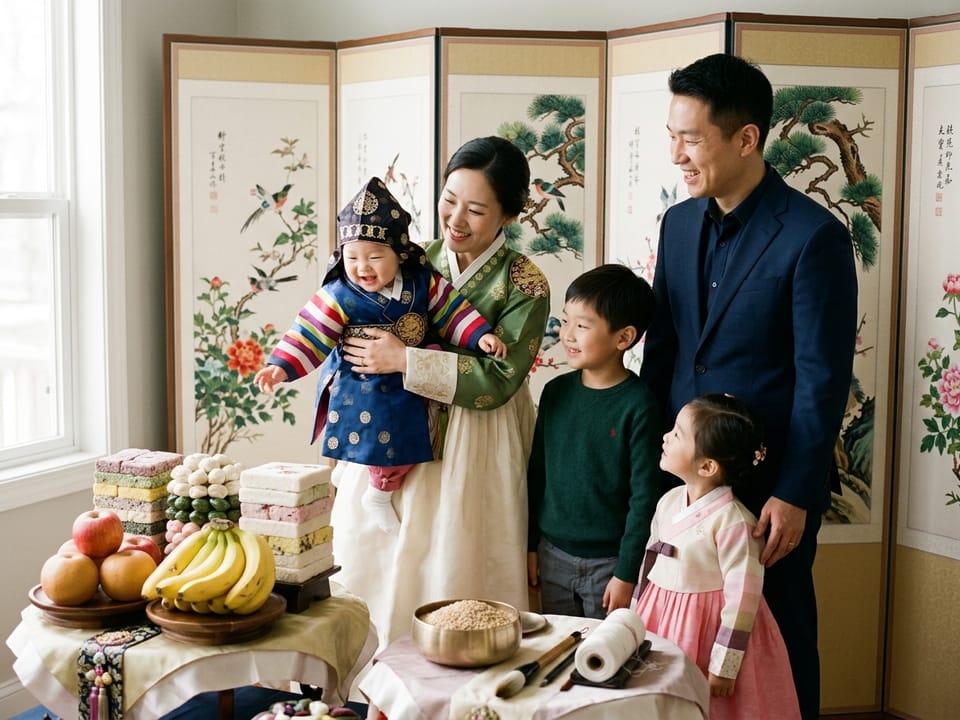
A dol snap, the day-of photo coverage of a Korean first-birthday party (doljanchi), is priced on five things: how long they stay, how many people shoot, whether you get every original file, how many images are retouched, and whether you pay for travel. Drop the ones you don't need and the quote falls without touching the photos you'll frame. The other half of saving happens on paper: most doljanchi complaints to Korea's consumer agency come from families who cancelled and couldn't get their deposit back.
The day-of snap and the studio session are separate purchases
Korean families talk about two kinds of dol photos. Maeil Shinmun, a daily paper based in Daegu, put the split simply in April 2026: shooting on the day is the dol snap, and the portraits taken beforehand are the studio. The same report found parents adding an "iPhone snap" on top of the camera coverage, and quoted the head of a snap company who said that as parties get smaller, parents are putting more into the photos, not less.
That gives you the first and biggest saving decision. If you've already had a studio session with the dol hanbok and the folding screen, the photographer on the day doesn't need to recreate those portraits. Their job is the people, the dol table and the doljabi, the moment the baby grabs one of the objects laid out to hint at their future. If you're skipping the studio, the snap has to cover the formal portrait too, and that part is worth paying for. Our guide to dol photos at a studio, a doljanchi or home walks through that choice.
Five things set the price on every quote
Put two or three quotes side by side and look for the same five items in each.
- Hours: a doljanchi has a before (dol table, family portraits, details), a middle (greetings, doljabi, cake) and an after (guests and goodbyes), and you may not need all three covered.
- Photographers: a second shooter, or a separate phone snap, means one person stays on the baby while another works the room.
- Original files: every frame, a selection, or only the edited set.
- Retouching: how many fully retouched images are included, who picks them and what each extra one costs.
- Travel: some photographers charge outside their home area, and parking or venue entry can land on you.
Albums, frames and video come on top. Prints can wait until you've seen the files, and albums and frames sold on top of a shoot turn up again and again in the photo-shoot complaint cases the consumer agency has published.
"Original files" can mean the retouched ones
Korea's consumer dispute resolution standard for photo businesses (소비자분쟁해결기준), which the Korea Consumer Agency attached to a 2025 warning, covers commemorative photos such as 100-day and dol portraits. When a customer asks for the originals, the contract decides. Where the contract says nothing, the digital files go to the customer, who can be charged the actual cost of materials such as a blank disc. The same standard, though, defines a digital "original" as the final retouched file. It also notes that handing over originals doesn't transfer copyright, and that a business keeping the originals holds them for one year.
So 원본 제공 ("originals included") on a price list can mean every unedited frame, low-resolution proofs for you to choose from, or simply the finished edits. If you want every frame, write "all unedited shots" and a rough number into the contract, with the resolution and how long the photographer keeps a copy.
Where to trim without losing the photos that matter
Shorten the coverage to the hour that counts; a one-year-old's good mood rarely lasts the whole party anyway. Ask the venue to have the dol table ready early, take the family portraits before the meal and hold the doljabi near the start, and the photographer can leave once the cake is cut.
For a family-only meal in a private room, one photographer is usually enough; in a small room a second shooter mostly ends up photographing the first. If you like the casual phone-snap look, a relative with a recent phone can cover the table while the hired photographer stays on the baby. Take a data-only package and order prints after you've seen the files. Pick your own images for retouching, and keep that number close to the photos you'd really print. Our piece on a small family doljanchi has a running order built around exactly this kind of short coverage.
Book someone based near the venue to avoid a travel fee, and ask whether weekday rates differ. In the same Maeil Shinmun report, popular doljanchi venues in Daegu were already mostly booked for weekends two to three months out, and one parent said spring and autumn dates suited to outdoor shots can go a year ahead. Prices vary by region, season and plan, so compare quotes for your own date rather than trusting anyone's "going rate."
Read the contract the way the Consumer Agency suggests
In February 2026 the Korea Consumer Agency (한국소비자원) and the Fair Trade Commission issued a warning on doljanchi services. Applications for consumer relief had reached 146 over 2023–2025, rising from 43 to 50 to 53, and most came from families who had to cancel and couldn't get their deposit back. The agency noted that venues increasingly bundle photography, outfits and makeup, and asked families to check those optional services and their costs before signing.
One of its cases is directly about snaps. A venue recommended a snap company; that company was fully booked; the venue then said the party couldn't go ahead with any other snap photographer. When the family asked to cancel, the venue refused to return the deposit, saying refunds were only possible up to 90 days before the event. If you want to bring your own photographer, get the venue to confirm it in writing before you pay anything.
The agency's 2025 warning on "free" photo shoots is worth reading for the same reason. Between January 2022 and March 2025 it received 1,228 relief applications about photo shoots, 182 of them involving free-shoot promotions, and where the amount was known, the average contract in those free-shoot cases came to about 750,000 won. Its advice: confirm costs before booking, settle the total before shooting starts, get the key terms into the contract, and keep booking messages, the contract and payment records. In June 2026 the Fair Trade Commission and the agency asked photography businesses to post detailed price lists, with base fees and optional items, in their shops and on their websites, and to explain extra costs such as original files, albums, frames and outfit rental before the shoot. Asking for the full price list is normal. If a dispute can't be settled directly, the 1372 consumer counseling center and the Consumer 24 website take complaints. Packages that bundle several shoots, from 100 days to dol, follow their own rules, covered in our piece on growth album contracts.
When a full dol snap is worth paying for
Pay for full coverage when the party is big, with a long guest list and an MC running the program, because nobody in the family will be free to shoot. Banquet rooms can be dim, and handling mixed light without firing flash into a one-year-old's face is a professional skill. A hired photographer also puts both parents in the pictures, which rarely happens otherwise. Relatives who can't travel are a different gap: pokesta can create an AI family photo in hanbok around the dol table from each person's own phone snapshots ($1 per photo, the first one free).
Before you compare a single quote, write down the five photos you'd frame. Buy coverage for those, and the rest of the price list becomes much easier to turn down.
References