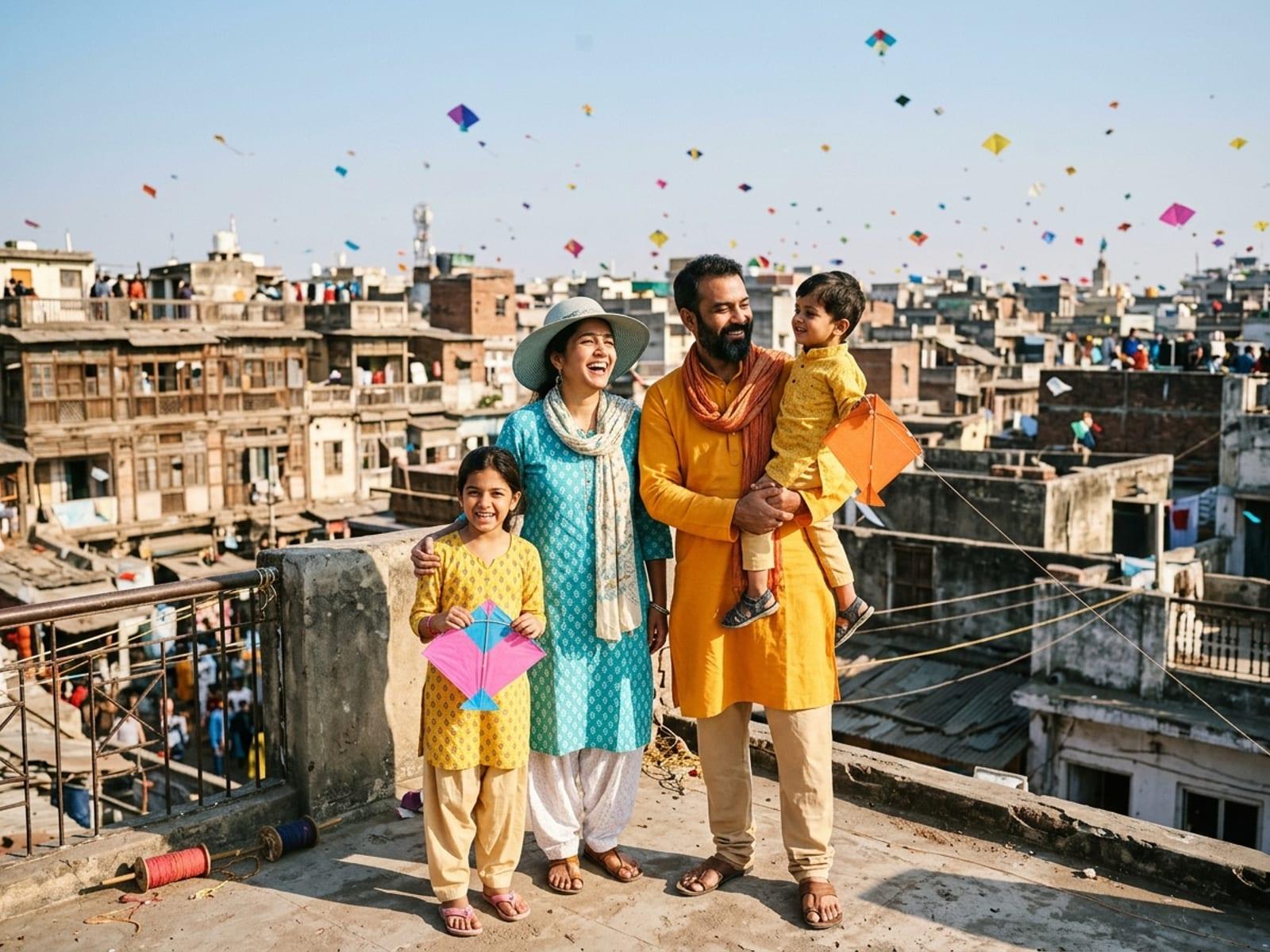
On the morning of January 14, people across Gujarat in western India climb onto every flat roof they can find, and the sky slowly fills with colored kites. This is Uttarayan, the festival that marks the end of winter. In Ahmedabad, the state's largest city, kite flyers from around the world also gather along the Sabarmati River for the International Kite Festival. It's an easy festival to enjoy with children, since most of the fun is simply looking up. The one thing to take seriously is the kite string, which is coated with powdered glass.
Celebrating the sun's move into Capricorn
Uttarayan is the Gujarati name for Makar Sankranti, a festival celebrated across India. Makar Sankranti marks the astronomical moment when the sun moves from Sagittarius into Capricorn (Makara). Because the date follows the sun, it stays almost fixed, usually falling on January 14 and in some years on the 15th. That sets it apart from Diwali, the autumn festival of lights, and Holi, the spring festival of colors, whose dates shift with the phases of the moon.
In Gujarat, the 14th is Uttarayan and the 15th is Vasi Uttarayan ("leftover Uttarayan"), so people fly kites two days in a row. It's a state holiday, and the festival is associated with the turn from winter to the harvest season. Strictly speaking, "uttarayana" is also an astronomical term for the six months when the sun appears to travel northward, which is a separate idea from the festival itself.
Kite flying has long been a local pastime, but the first International Kite Festival was held in 1989, and since then flyers have come from abroad. All India Radio reported that the 2025 edition drew 143 kite flyers from 47 countries.
Rooftops in the morning, the riverfront by day, lantern kites at night
On the festival days, kites go up at dawn and stay up until late at night. The real stage is the rooftops. People fly the patang, a light diamond-shaped kite of paper and bamboo, and the main event is the kite fight, where flyers try to cut each other's strings. Every time a string snaps and a kite drifts away, cheers and shouts go up from the neighboring roofs.
At the International Kite Festival site along the Sabarmati, you'll see giant kites shaped like dragons and birds, traditional kites from many countries, folk dance and music, and stalls selling Gujarati food. India's official tourism site lists the 2027 festival at the Sabarmati Riverfront from January 10 to 14. Dates and venues change from year to year, and other cities in the state host events too, so check the Gujarat Tourism announcements before you go.
The kites brought by overseas flyers are the ones that catch the eye: the Malaysian wau, the Indonesian layang-layang, Japanese hexagonal kites, giant American banner kites, Chinese dragon kites, all sharing the sky with India's small patangs. Asking a child "Which country do you think that one is from?" is a good way to keep them engaged as you walk. The riverfront promenade is said to hold more than 500,000 people, and at the city's police stadium some visitors simply lie on the grass and watch a sky full of kites.
After dark, tukkal lantern kites with lights inside go up into the night sky. Dozens of small lights rising slowly overhead look nothing like the daytime scene.
If you want to buy kites and string, the kite market (Patang Bazaar) near Raipur Darwaja in the old city is the best known, and its shops are said to stay open through the night around the festival. Kite sales jump in the week before, and you can feel the city gearing up.
Undhiyu and chikki, the tastes of a winter festival
The dish most associated with Uttarayan is undhiyu, a Gujarati specialty of several winter vegetables slow-cooked with spices. For something sweet, there's chikki, a brittle of sesame seeds or peanuts set in jaggery, and jalebi, the fried syrupy spirals. Chikki keeps well and travels easily, which makes it a good snack to nibble on the roof between kites. To try a wider spread of Gujarati food than the festival stalls offer, look for a Gujarati thali, with small bowls arranged on one tray. How to order and eat one with one hand is covered in how to eat a thali and restaurant etiquette in India.
Dress for the sun, and for the string
There's no traditional costume to wear. You'll be outside from early morning until night, so easy clothes like a cotton kurta or shirt work best, with one extra layer for the cool mornings and evenings. You'll spend hours on a rooftop looking up, so a wide-brimmed hat and sunglasses help. Bright colors such as yellow, saffron and light blue stand out well against the blue sky and the kites. For photos, crouch a little on the roof and point the camera up so the kites scatter behind your family. When the light is behind your subjects, try turning until the sun is at your back.
The string and the rooftops: what to watch with kids
Uttarayan kite string (manja) is coated with glue and powdered glass so it can cut an opponent's line, and once dry it's sharp enough to slice skin. Don't let children handle the string themselves; an adult should stay right beside them. Before you head out, explain that they should never wrap string around their hands or touch loose, hanging lines. Synthetic "Chinese manja" made of nylon is especially dangerous and is illegal to use. Every January, Gujarat also runs the Karuna Abhiyan campaign to rescue birds and animals injured by kite string.
The rooftops are still where you feel closest to the action. When choosing a place to stay, ask whether guests can go up on the roof on festival days, and you'll watch the kite fights at the same level as local families. Some buildings have low railings, though, so keep small children within reach. The riverfront site is big and very crowded, so agree on a meeting point in case anyone gets separated. Going early in the morning or in the cooler late afternoon, and resting in the shade through the midday heat, helps children last the day.
Ahmedabad's old city became India's first World Heritage city in 2017. Its pols, lanes of old wooden houses, have continuous rooftops that double as the stage for kite flying. You can also try pokesta's AI photos ($1 per photo) to see what your family might look like standing on one of those roofs.
When to go and how to get there
The festival centers on January 14 and 15 every year, and the International Kite Festival can start a few days earlier. The gateway is Sardar Vallabhbhai Patel International Airport (AMD), inside the city of Ahmedabad. Hotels fill up around the festival, so book early. India's entry requirements vary by nationality, so check your own government's official information.
References