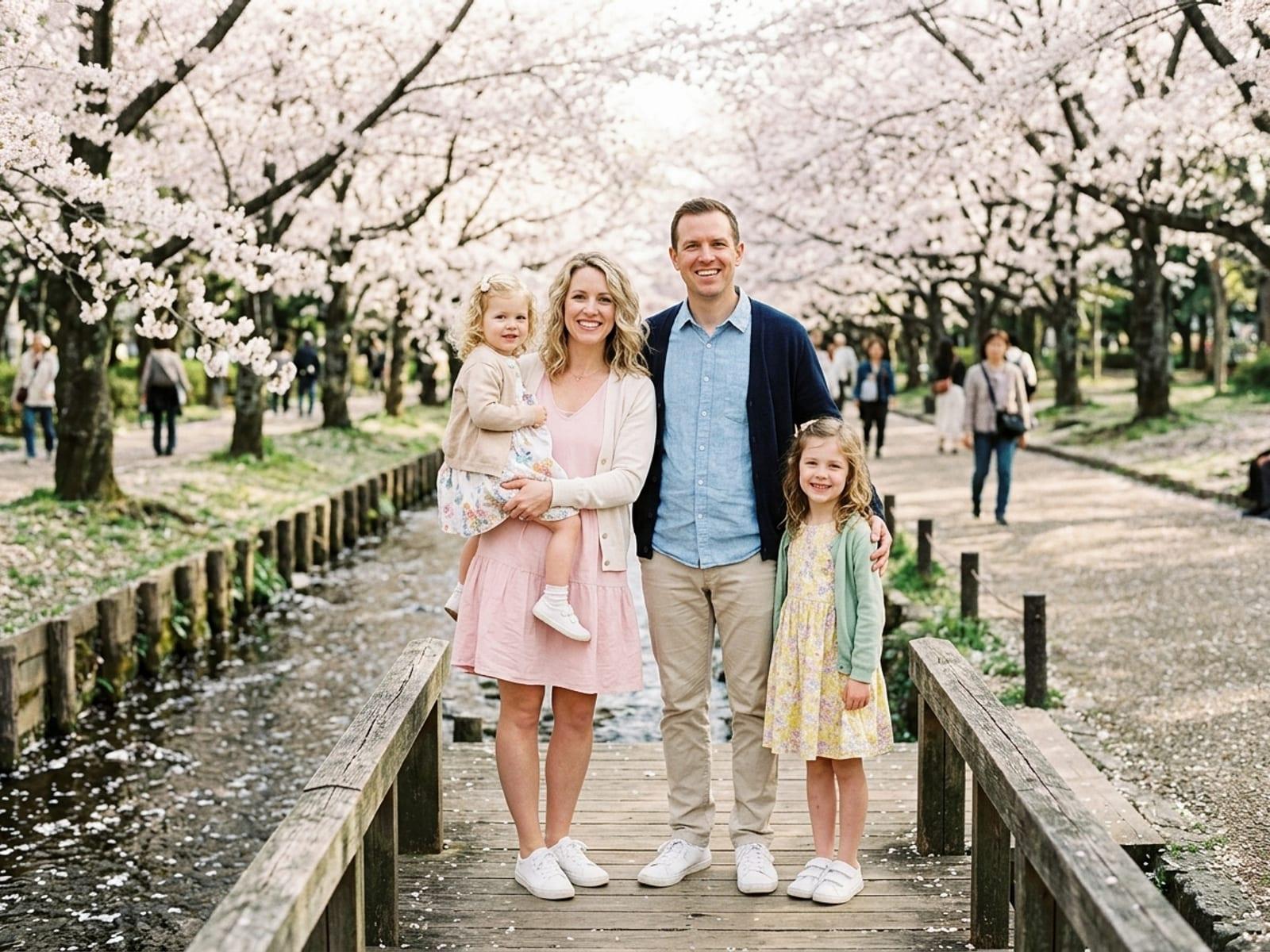
The Jinhae Gunhangje Festival, held each year from late March to early April in the port district of Jinhae in Changwon on Korea's south coast, is the country's best-known cherry blossom festival (in 2026 it ran from March 27 to April 5). The highlights are the roughly 360,000 king cherry trees along Yeojwacheon stream and the old Gyeonghwa Station tracks, plus navy bands you'd only find in a naval town, and the outdoor venues are free. The crowds are enormous, so with children, walk Yeojwacheon on a weekday morning and pick only a few spots.
A festival that began as a memorial to Admiral Yi Sun-sin
Jinhae has long been a base for the Korean navy. According to the Korea Tourism Organization, the festival began in 1952 as a memorial ceremony for Admiral Yi Sun-sin, who led the Joseon navy against the Japanese invasions of the late 16th century (the Imjin War). It became a full-scale festival in 1963, and today it draws more than two million visitors a year from Korea and abroad.
About 360,000 king cherry trees grow in the town. The 64th festival ran for ten days in 2026, from the opening ceremony on March 27 through April 5. Events spread across Jinhae-gu, centered on Jungwon Rotary and Bugwon Rotary, and the outdoor venues are free to enter (some programs charge a fee).
The program includes a memorial rite for Admiral Yi, a victory parade, a display by the Black Eagles, the Korean air force's aerobatic team, and a cherry blossom music festival. On April 1, 2026, a fireworks show over Jinhae Bay celebrated Admiral Yi's victories. Events shift from year to year, so check the official site before you plan your days.
Yeojwacheon, Gyeonghwa Station, and the navy bands
The biggest crowds gather along the Yeojwacheon stream. Cherry branches arch over the narrow stream from both banks, and small bridges cross it at intervals. It's about a ten-minute walk from Jungwon Rotary. The stretch near the entrance is the most packed, so walk a little further along before taking photos and you'll find frames with fewer people in them.
The other famous spot is the cherry-lined track at the old Gyeonghwa Station. Thick cherry trees stand on both sides of a line that no longer carries regular passenger trains, and you can walk along the tracks looking up at the blossoms. It's a little out of the center, so take a bus. The tracks fill with people taking photos, and there are sleepers and gravel underfoot, so hold your children's hands.
What sets Jinhae apart is the military band and honor guard festival. Mostly on Friday evenings and weekends, navy bands play and honor guards perform drills. During the festival, parts of the Korea Naval Academy and the naval base command, normally off-limits, are opened to the public. Uniformed marching and live brass are the kind of thing that grabs even children who couldn't care less about flowers.
For a view over the town, head to Jinhae Tower at the top of Jehwangsan Park. Climbing the stairs is a real workout, and the ride to the top tends to have a long line. With small children, you may get more out of skipping the climb and walking the stream instead.
The festival also changes character between day and night. In 2026 the night market was revamped with the "Gunhang Brand Fair" of local products and a food zone, and a nighttime street-food village opened on the beach near Sokcheon Port. There are hands-on events too, such as a K-pop dance competition. Evenings get chilly, so with children it works well to go back to your hotel in the late afternoon, add a layer, and head out again.
Dress for cool mornings and long walks
There's no traditional costume for the festival. For photos under the trees, bright colors that don't fight the blossoms work best: white, pale pink, light blue. Late March in Jinhae can be warm in the daytime and cold in the morning and evening, so bring a cardigan or light jacket.
You'll walk a long way between venues, and neither the Yeojwacheon walkways nor the area around the Gyeonghwa tracks is level. Sneakers for the kids, and it's wiser for adults to skip heels too. If you're walking in hanbok, keep children's skirts on the short side so they don't step on the hem in the crowd.
If you'd like to see how a photo of your family strolling under the cherry trees might come out, you can try pokesta's AI photos ($1 per photo, and the first one is free).
With kids, go on a weekday morning
On weekends, Jinhae's roads and sidewalks are full of people. In 2026 the city prepared about 5,950 parking spaces and ran free weekend shuttle buses and bus-only lanes, but most of the parking is far from the festival grounds. If you drive, plan to park and ride the shuttle in. On weekends four shuttle routes linked the main venues and parking lots, and a loop bus ran on weekdays as well.
With children, a relaxed plan is enough: walk Yeojwacheon on a weekday morning, then move to the band venue before lunch. Strollers are hard to steer through crowds, so bring a carrier as well. In case anyone gets separated, tuck a note with a parent's phone number into your child's pocket.
On street food prices, the 2026 festival tightened its rules against overcharging, requiring real-name registration, posted prices and card payment. Even so, get into the habit of checking the price before you order.
Bloom dates move from year to year
The festival is scheduled for late March to early April each year, but the peak bloom depends on the weather, and in recent years it's said to be arriving earlier. The 2027 dates had not been officially announced at the time of writing. Book flights early, but choose a hotel plan you can change so you can adjust if the blossoms come early or late.
Fly into Gimhae International Airport (PUS) in Busan. From the airport, take the Busan–Gimhae Light Rail to Sasang, where Busan Seobu Intercity Bus Terminal next to the station has buses to Jinhae. Buses to Jinhae also leave from outside Hadan Station on subway Line 1. From Jinhae Intercity Bus Terminal you can reach the main blossom spots on foot. Bus service between Jinhae and Busan has been cut back at times and frequencies change, so check the timetable. Roads jam on festival weekends, so leave extra time for the trip back. If you're staying in Busan, you could pick out fish for lunch at Jagalchi Market, on the same subway Line 1 as Hadan, and head to Jinhae from there.
Entry requirements for Korea depend on your nationality, so check your own government's official information. To see Korea at other times of year, read our pieces on the Lotus Lantern Festival in Seoul and Chuseok.
If you want to avoid the worst of the crowds, don't try to see every famous spot. A slow walk to the far end of Yeojwacheon is enough to understand spring in Jinhae.
References