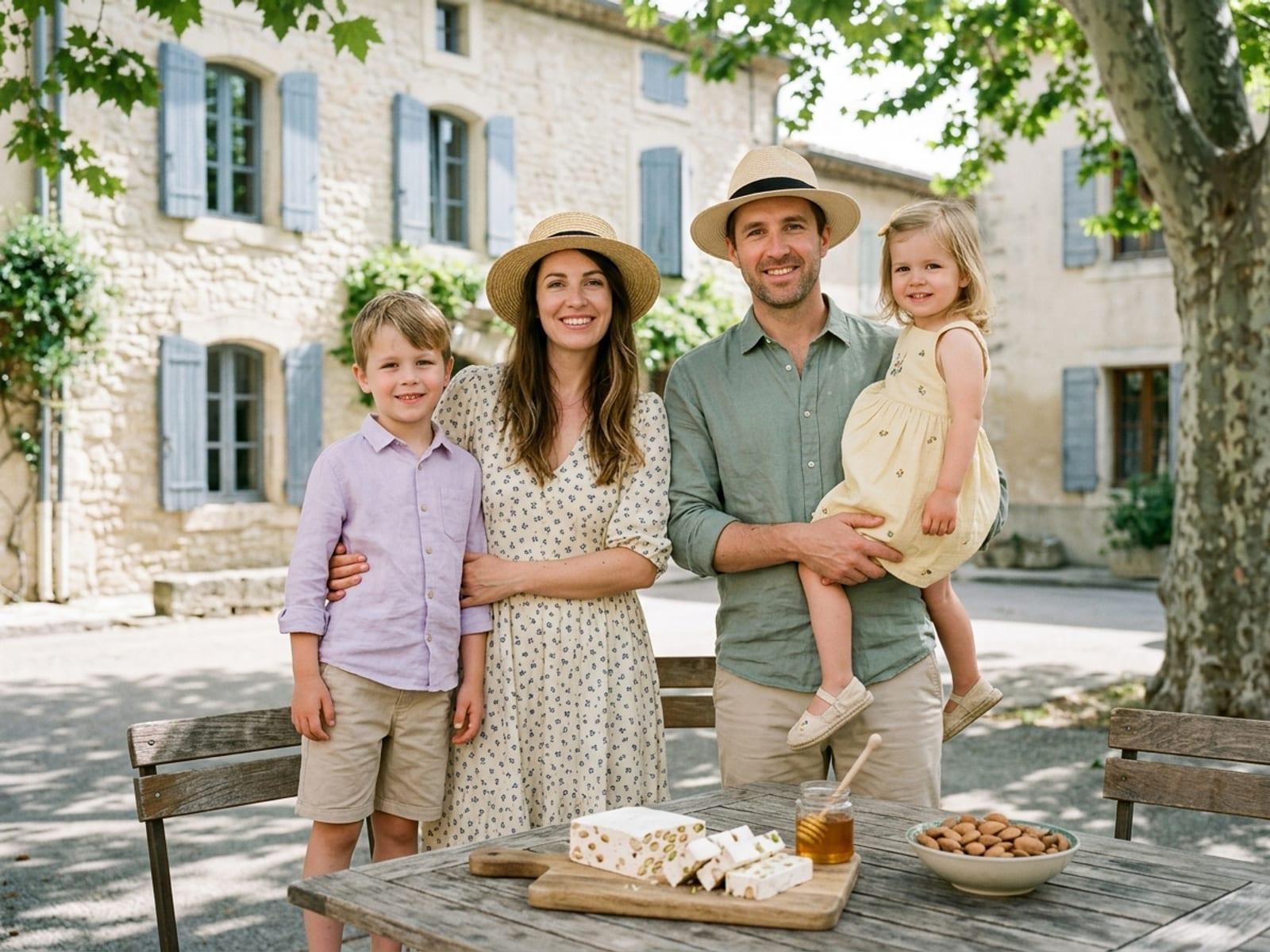
A soft, chewy white block packed with almonds and pistachios, with a taste of honey that comes through as you bite: that's nougat, the specialty of Montélimar, a town on the Rhône in southeastern France. It sits roughly halfway between Lyon and Marseille, at the gateway to Provence, and several nougat makers still work there. To use the name, the nougat has to meet rules such as at least 25% honey among its sweeteners and at least 30% nuts, and in 2024 it was registered as a Protected Geographical Indication (IGP). See how it's made at a factory museum, taste a few, and choosing gifts to bring home becomes part of the fun.
1701: a gift for the dukes
White nougat made from honey, egg whites and nuts already appears in a 10th-century Arabic cookbook. In France, the word "nogat" shows up in a pharmacy book published in Lyon in 1595. Montélimar nougat appears clearly in the record in 1701, when the Duke of Burgundy and the Duke of Berry stopped in the town and were reportedly given one quintal (about 42 kg) of it.
The man who made the name known around the world was Émile Loubet. Born in a nearby village, he went from mayor of Montélimar to President of France (1899–1906), and he gave nougat to visiting heads of state, so the sweet became famous along with the town. When the A7 motorway opened in 1968, nougat shops appeared at the Montélimar service area too. Said to be one of the largest motorway service areas in Europe, it has even been reported as the place where the most nougat is sold in France, and it has become a regular stop for families driving south on their summer holidays.
The rules for calling it Montélimar nougat
To be sold as Montélimar nougat, the sweet has to follow set ingredients and proportions. Under the IGP specification, it must contain at least 30% nuts (whole sweet almonds or green pistachios), honey must make up at least 25% of the sweeteners, and egg whites give it its light texture. The thin wafer sheets that sandwich the nougat (pain azyme) and vanilla are allowed. It may only be made in 14 municipalities in the southern Drôme around Montélimar.
The earlier rules, set by a 1996 decree, included details such as using honey only from Mediterranean EU countries, with at least 7% French lavender honey. The current IGP rules drop the requirement on where the honey comes from. Today there are a dozen or so producers, two large factories and about ten small workshops, making around 4,500 tonnes a year and employing roughly 300 people. Textures range from soft to hard, and proportions and recipes differ from maker to maker, so buy a little of several kinds and taste them side by side to find your favorite.
Peering into the big pots at the factory museum
The easiest visit for families is the Musée du Nougat, attached to the workshop of Arnaud Soubeyran, a long-established maker founded in 1837. According to its listing on a regional tourism site, the exhibits cover the history of nougat, the story of the town and of the Route Nationale 7, the old main road through the south of France. There's a spot where you can look into the workshop, and an exhibit of sound called "La Ruche Sonore" (the sound hive), which makes you feel as if you're inside a beehive through the seasons. Admission is 5 euros with an audio guide and a tasting bag, and free for children under 12. It's open Monday to Saturday from 9:00 to 18:00 and closed on Sundays (as of October 2026).
If you want to see nougat actually being cooked, go in the morning. Production takes place on weekday mornings, Monday to Friday from May to December and Monday to Thursday from January to April, with none on public holidays. Production times vary from day to day, so the official website advises calling ahead. Prices and hours can change, so check the official website for the latest information.
The same company also takes bookings for visits to its own almond orchard, with a guided tasting. You can buy honey and farm produce there, so it's a chance to trace with your kids where the ingredients in nougat come from. The scenery changes with the season, from white almond blossom in early spring to swelling nuts in summer. If you're combining the orchard with the museum, allow about half a day including travel so nobody feels rushed.
Things to watch when kids eat nougat
Nougat is full of nuts. Anyone with a nut allergy can't eat it, and since it contains egg whites, take care with egg allergies too.
Hard nougat sticks to teeth, and whole almonds are a choking risk for small children. For little ones, cut soft nougat into small pieces and give them a bit at a time while an adult is watching. Because it contains honey, don't give it to babies under 1 year old; health authorities in many countries advise against giving honey to infants.
It's rich and very sweet, so even for adults one or two small pieces at a time is plenty. In hot weather nougat softens and gets sticky. If you're buying it as a gift, choose individually wrapped pieces or boxed nougat and keep it out of direct sunlight while you travel.
Black nougat at Christmas
In Provence there's a tradition of setting out 13 desserts on the table on Christmas Eve, and one of them is black nougat. It's a dark nougat made without egg whites, and it looks nothing like the white kind, which gets its fluffiness from whipped egg whites. White nougat is among the 13 desserts too, and around Nice the two nougats are said to represent the Three Wise Men. If you visit the south of France in winter, try the white and the black side by side.
You can see how your family might look in Provençal linen shirts and small-print dresses at a table of nougat in the shade of plane trees with pokesta's AI-generated photos ($1 per photo, and the first one is free).
When to go and how to get there
Nougat is on sale all year. The nearest major international airport to Montélimar is Lyon–Saint-Exupéry Airport (LYS), outside Lyon. By rail, some TGVs from Paris Gare de Lyon heading toward Avignon stop at Montélimar, and so do regional TER trains running from Lyon toward Avignon and Marseille. You could add a stop at either end: a meal at one of Lyon's bouchons near the airport, or, further south by train, a workshop tour of cauldron-made Marseille soap. Entry requirements for France depend on your nationality, so confirm them through your own government's official information before you travel.
References