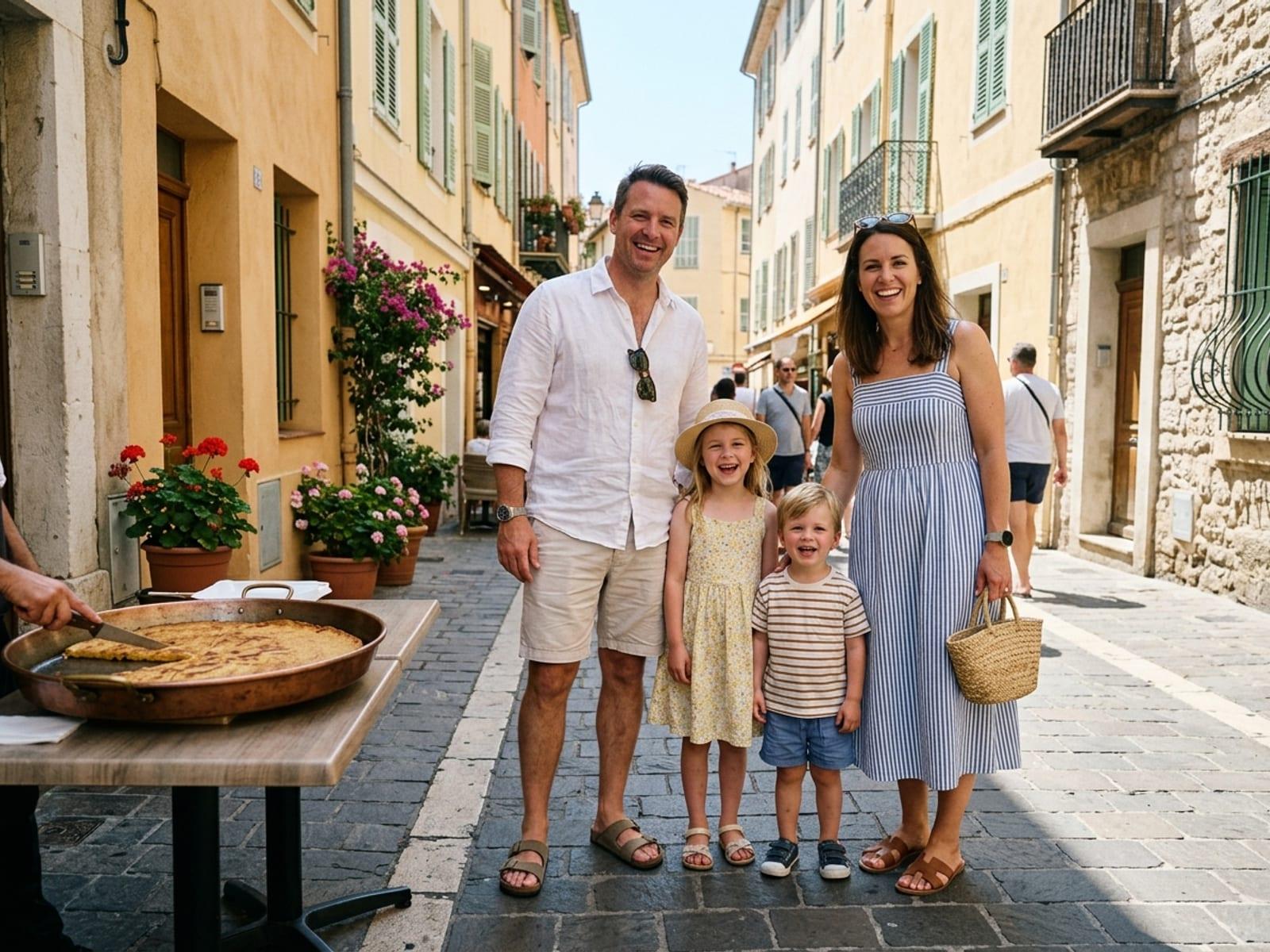
Walk through the old town of Nice and you may see a huge round copper pan being pulled out of a wood-fired oven, its thin golden layer cut up with a spatula on the spot. That's socca. It's made from nothing more than chickpea flour, water, olive oil and salt. The top is blistered and crisp in places, the underside soft and moist, and it gets a grind of black pepper as soon as it comes out. Once it cools it turns tough and loses its flavor, so the best plan is to wait by the oven and eat it hot.
A chickpea flatbread passed between port towns
Dishes of baked or fried chickpea flour turn up all around the Mediterranean. The closest relative of Nice's socca is farinata from Liguria, the Italian region just to the east, and the City of Nice's own website describes socca as a specialty that came from Liguria. Nice belonged to the House of Savoy until the mid-19th century, and people and food moved constantly between it and Ligurian ports such as Genoa. In Genoa, there are records of rules governing the production of chickpea flour from the 15th century, which suggests how ordinary and important the flour was to life in these port towns.
On the French side, socca was eaten not only in Nice but in other towns on the Côte d'Azur such as Menton, Antibes and Cannes. In Menton, a well-known socca seller called "La Tatouna" is said to have kept a stall from 1917 to 1970. Toulon has a very similar dish called cade.
Copper pans and a fierce oven
To make socca, a loose batter is poured thinly into a wide, oiled, round copper pan and baked fast in the strong heat of a pizza oven or wood-fired oven. The City of Nice specifies a large round tin-lined copper pan. When it's done, the whole pan comes out to the front of the shop, and the socca is cut with a spatula into rough squares and triangles.
It has long been eaten as a starter, a light lunch or a snack before dinner. Adults pair it with chilled Provençal rosé or pastis, the anise-flavored aperitif. People gather by the oven waiting for the next pan to come out, and that wait is part of the fun.
Everyday Niçoise food to order alongside
Places that sell socca often have other Niçoise dishes too. Pissaladière is bread dough topped with onions cooked slowly over low heat until soft and sweet, then baked; it takes its name from pissala, a paste of salted sardines or anchovies. Pan bagnat is a round bread roll stuffed with tuna, raw vegetables and plenty of olive oil, originally a portable meal for fishermen and workers. Closer to an everyday snack is tourte de blettes, a pie of Swiss chard leaves, pine nuts and raisins; the sweet version, dusted with lots of powdered sugar, is an easy one for children to like.
If you're looking for restaurants serving traditional Niçoise food, watch for the "Cuisine Nissarde" label. A local association started it in 1995, and today it's run by the Nice tourist office, which selects restaurants on criteria such as traditional recipes, quality of ingredients and hospitality. Niçoise cuisine was also added to France's inventory of intangible cultural heritage in 2019.
Tips for eating socca with kids
Fresh socca is seriously hot, so let it cool a little before handing it to a child. Some places grind on a generous amount of pepper, so for the kids' portion ask for it "sans poivre" (without pepper). It's made from chickpea flour with no wheat, but children with legume allergies can't eat it. The same shops often bake bread and pizza as well, so if wheat is a concern, ask the staff.
Socca gets hard and loses much of its taste once it's cold. Rather than taking it back to the hotel, order an amount you can finish on the spot while it's hot. One portion shared by the family, with another if you're still hungry, usually works well. Depending on when the next pan comes out you may have to wait a bit, so head out early, before the children get too hungry. Instead of filling up on socca alone, share small amounts of pissaladière and tourte de blettes too; it's an easy way for kids to find a flavor they like.
Start from Cours Saleya in the old town
Most socca shops are in Vieux Nice, the old town. On its south side, running parallel to the seafront, Cours Saleya is the old town's main pedestrian street, and in 1861 it became the site of Nice's first authorized flower and vegetable market. It was leveled into a promenade in the 18th century and given a metal roof in 1900, changing with the times while remaining the city's pantry. Depending on the time of day there's a flower market or a produce market, and for families it works well to look around the morning market first and then stop for socca. Market days and hours can change, so check the tourist office's information before you go.
If the kids need to run around after eating, the Promenade du Paillon park stretches north just beyond the old town. It's a long, narrow park built over the former course of a river, opened in 2013 and enlarged in 2025 to about 20 hectares. Its "water mirror" of about 3,000 square meters has 128 jets hidden in it, and children race about every time the water shoots up or a mist rolls across. In summer, bring a change of clothes and a towel so water play doesn't turn into a problem. There's also a playground area, which makes it a handy place to rest after a socca snack.
The lanes of the old town are narrow and get crowded around lunchtime. A baby carrier is easier than a stroller, and in sunny months don't forget hats and water. Lanes of ochre and pale yellow walls with green shutters are also where you'll get photos that feel unmistakably southern French. You can see how your family might look gathered around a pan of socca with pokesta's AI-generated photos ($1 per photo, and the first one is free).
When to go and how to get there
Socca is available all year. The airport is Nice Côte d'Azur Airport (NCE), about 7 km west of the city center. Tram line 2 links the airport with the city center and the port.
In February, you can watch a Nice Carnival flower battle on Place Masséna and head just south into the old town for socca before or after. From mid-June to mid-July, it's worth driving inland to the lavender fields of the Valensole plateau. Entry requirements for France depend on your nationality, so confirm them through your own government's official information before you travel.
References