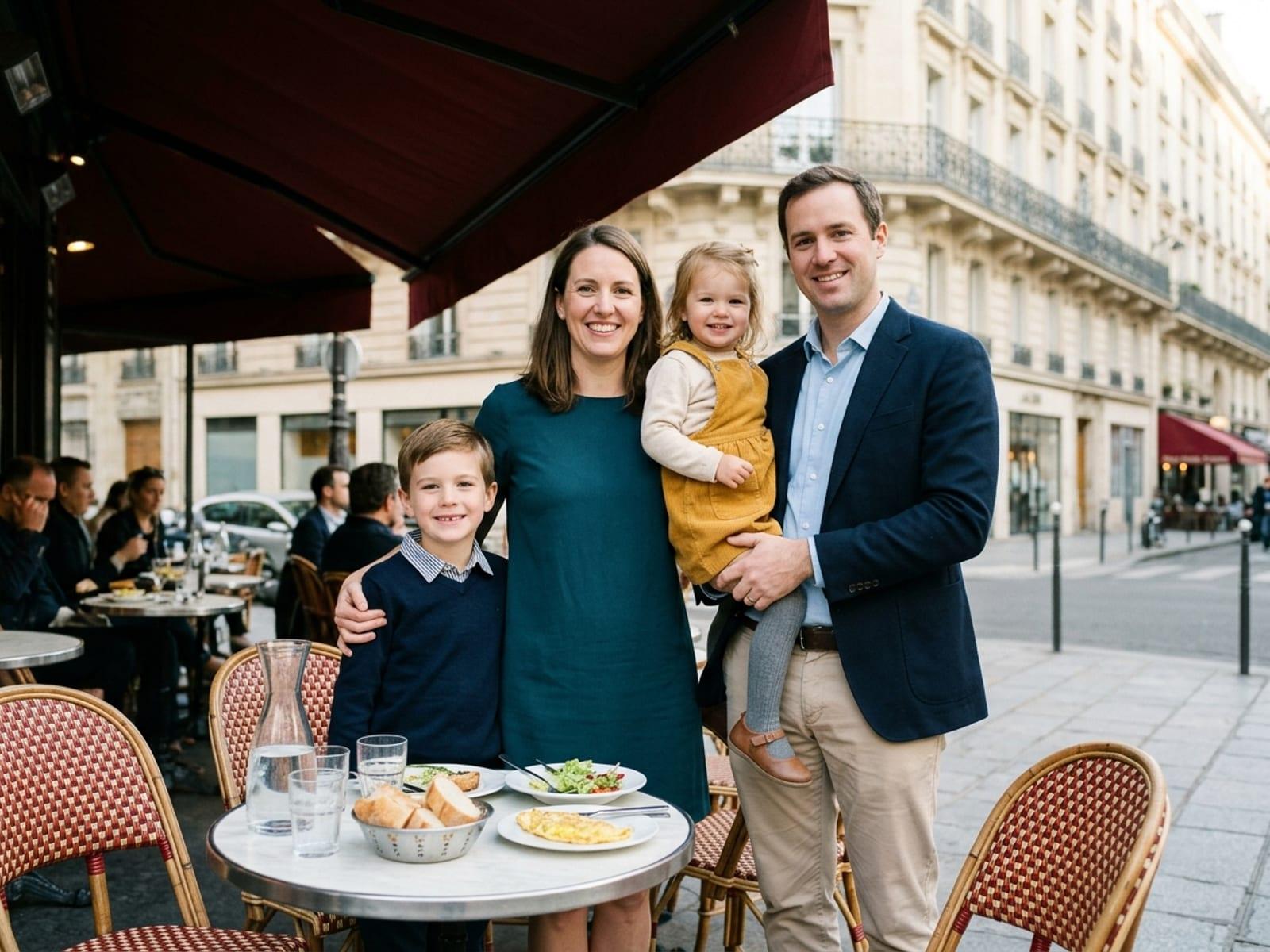
What catches families out most when eating in France isn't etiquette so much as timing. Most restaurants open for lunch at around noon and for dinner at around 7:30 p.m., and close in between. If you're looking for a hot meal at 5 or 6 p.m., when children get hungry, a brasserie serving the same menu all day is your best bet. Beyond that, pick a place from the menu posted outside, ask for free tap water and request the bill yourself. Know that routine and you can eat out calmly even with small children.
Lunch from noon, dinner from 7:30
French restaurants generally open for lunch at noon and close at around 2:30 p.m., then open again for dinner at around 7:30 p.m., with many taking last orders between 10 and 11 p.m. Plenty of them also close one day a week. Go out in the evening with young children and they may be getting sleepy by the time all the food arrives, so families often find it easier to book a proper restaurant for lunch and keep dinner light.
Brasseries and cafés fill the gaps. A brasserie usually opens every day and serves the same menu from morning to night, so you can get a hot meal at odd hours. Many cafés open early, close around 9 p.m. and serve breakfast. French children often have hot chocolate from a bowl or a cup for breakfast.
Around 4 p.m. comes the goûter, the children's afternoon snack. Traditionally it was bread with butter and jam, or a pain au chocolat. Buying something at a bakery or pastry shop and eating it in a park is a good way to bridge the gap until dinner. For how to order at the counter, see the Paris baguette and how to buy bread at a boulangerie.
Choose from the menu outside before you go in
French law requires restaurants to post their menu and prices outside during opening hours, starting no later than 11:30 a.m. for lunch and 6 p.m. for dinner. You can compare dishes and prices before stepping in, so this is the moment to check whether there's something your kids will eat.
Learn a few menu words, too. In French, "menu" means a set meal combining a starter, main course, dessert and so on, while the list of dishes you order individually is called "à la carte." At lunchtime some restaurants offer a reasonably priced "formule," where you choose two courses: starter and main, or main and dessert. Some also have a children's set menu, the "menu enfant," so look out for one.
Prices for the most commonly ordered drinks must also be posted outside, so you can get an idea of what a child's juice will cost before you go in.
For small, popular restaurants and for weekend lunches, booking ahead takes the stress out. When you book by phone or online, give the number of adults and children and say whether you have a stroller or need a high chair, so the restaurant can plan where to seat you. If you're running late for your booking, call ahead; it's simple courtesy.
When you walk in, start with "Bonjour." In many restaurants you wait at the entrance for staff to show you to a table. If you've booked, give your name.
Tap water is free
When you're asked what you'd like to drink, you can have tap water. By law, customers eating or drinking at a table must be offered drinking water, chilled or at room temperature, free of charge. Ask for "une carafe d'eau" and it arrives in a glass carafe. Ice often isn't included unless you ask, so if the kids want cold water, add "avec des glaçons" (with ice). Mineral water and sparkling water are charged.
Bread usually comes in a basket with the meal, and if the children can't wait, a piece of bread to start can settle them down.
Allergens are listed on the menu
In France, restaurants are required to show the allergens in the dishes they prepare, either on the menu or in a binder customers can ask to see. If your child has an allergy, check the menu first, and if you're still unsure, ask the staff. Saying "J'ai une allergie" (I have an allergy) and showing a note naming the allergen is the most reliable approach.
Dishes made from scratch on the premises under set conditions can carry a "fait maison" (homemade) label and logo, a useful guide when you want food that was actually cooked in the kitchen.
Ask for the bill, and tip if you like
In French restaurants the bill often doesn't arrive by itself once you've finished eating. Good service means not rushing guests, so when you're ready to leave, catch the waiter's eye and say "L'addition, s'il vous plaît." If the kids are getting restless, ask for the bill when you order dessert to cut down the wait.
Prices in French restaurants and cafés already include tax and service. Since 1984 the service charge (generally around 15%) has been included in the bill, and a ministerial order of 1987 requires displayed prices to be "prix service compris" (service included), so tipping isn't obligatory. If you do tip, rounding up to the next euro is the norm for a small bill, and up to about 5% for a larger one; anything above that counts as very generous, and even in upscale restaurants 10% or more is seen as out of place. Card machines often have no option for adding a tip, so leave some coins if you want to. By law, a tip belongs to the server who received it.
If you're planning a last dinner of the trip, you can see how your family might look in slightly smarter clothes around a terrace table with pokesta's AI-generated photos ($1 per photo, and the first one is free).
Pick restaurants by what the kids want to eat
Main courses are often generous, so sharing from an adult's plate can work well for small children. If you need an extra plate, ask for "une assiette, s'il vous plaît." Children wandering around during the meal can easily collide with staff carrying food, so bring something they can play with while seated, like a small picture book or sticker book.
With little ones, it helps to build up gradually: get used to eating out at brasseries and cafés first, then try regional restaurants outside Paris. In Lyon, the bouchons with their red-and-white checked tables, and in Brittany, crêperies serving buckwheat galettes both have plenty of dishes children find easy to choose. In Alsace, tarte flambée at a Strasbourg winstub is a relaxed dish you roll up and eat by hand. Entry requirements for France depend on your nationality, so confirm them through your own government's official information before you travel.
References