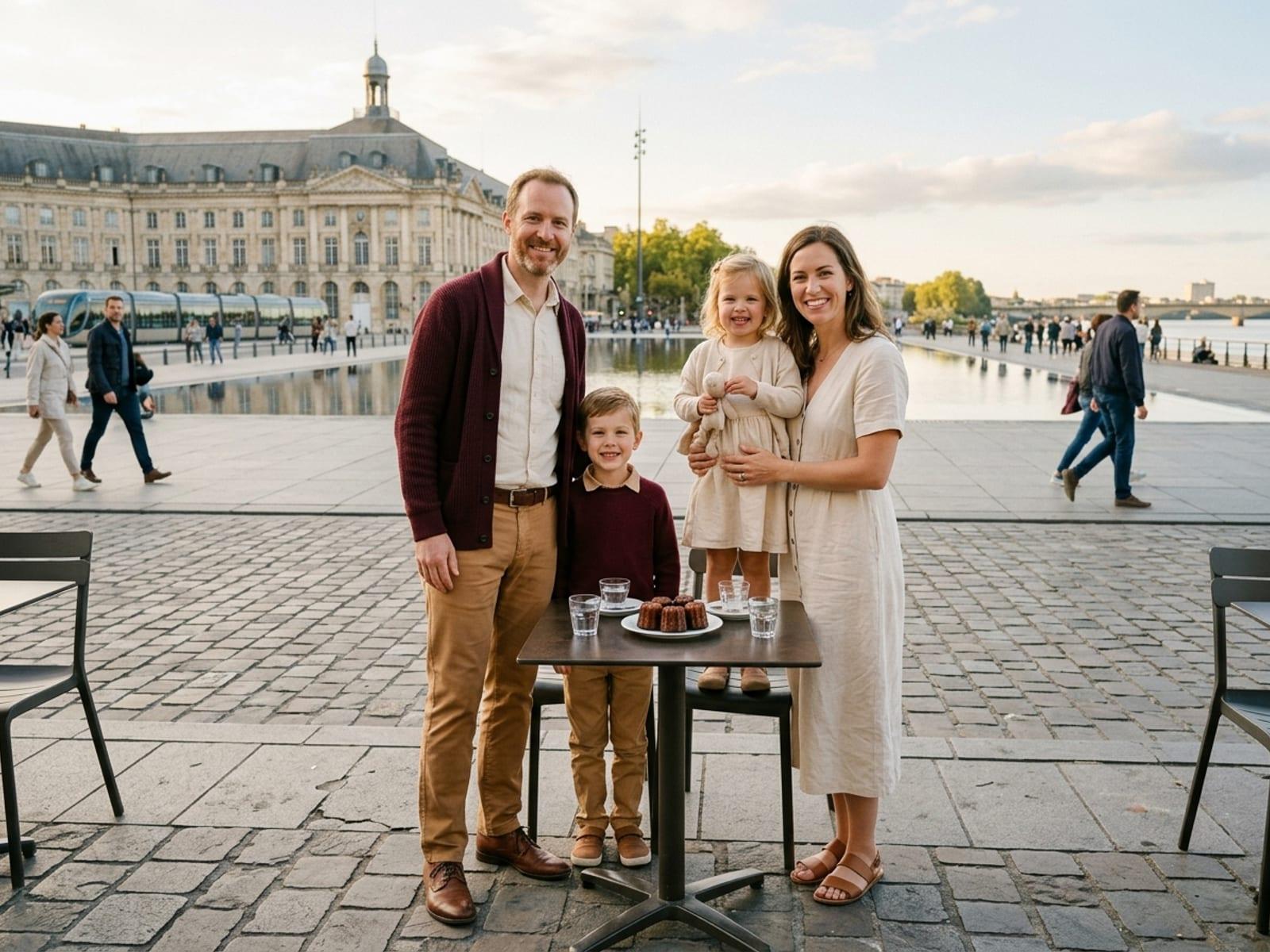
Dark brown and crisp outside, soft and moist inside: the canelé, a small fluted cylinder of a cake, is the specialty of Bordeaux, the port city in southwest France. They're sold year-round; walk around town and you'll see rows of little copper-colored canelés lined up in bakery and pastry shop windows. They're the perfect size for each person in the family to pick one and compare. The batter is flavored with rum, and that's really the only thing to keep in mind before giving one to a child.
Egg whites for wine, and a convent legend
There's a well-known story about where canelés came from. Bordeaux winemakers have long used egg whites to clarify wine in the barrel. The leftover yolks, so the story goes, were given to the nuns of the Annonciades convent in Bordeaux, who used them in small cakes. No documents have been found to back this up, though, and one of Bordeaux's long-established canelé makers itself writes that it isn't certain the nuns really made them in the 18th century.
What is certain is that Bordeaux had pastry makers called canauliers. They formed a guild in 1663, and by 1785 there were at least 39 shops in the city. There were disputes with the pâtissiers' guild over batters made with milk and sugar: a 1755 ruling broke the pâtissiers' monopoly, while a 1767 decree limited canaulier shops in the city to eight. At least 10 of the 39 were clustered in the Saint-Seurin district. The cakes then disappeared for a time, and at the start of the 20th century an unnamed pastry maker is said to have revived an old recipe, adding rum and vanilla. The canelé first appears in a literary work in 1937.
The name comes from the fluted copper mold it's baked in. The original French spelling was "cannelé," but in 1985 local makers formed the Confrérie du Canelé de Bordeaux and, to protect the ones made in Bordeaux, registered the spelling "canelé," with one "n" fewer, as the group's trademark. The Académie française, which looks after the French dictionary, still recommends the double "n." That's why the spelling differs from shop to shop.
About ten years after the trademark was registered, there were at least 800 makers in the Aquitaine region, 600 of them in the Gironde department, where Bordeaux is. In 1992 an estimated 4.5 million canelés were eaten in the Gironde alone.
Milk-and-egg batter, baked in copper
The ingredients are flour, milk, eggs, sugar and butter, with rum and vanilla for flavor. The batter is very runny, and it's poured into copper molds, which conduct heat well. Traditionally the molds are coated with beeswax; as beeswax became expensive, a mixture of beeswax and butter came into use too. Because heat moves through the copper so quickly, the outside caramelizes into a dark, crisp shell while the inside bakes up moist, almost like custard.
The Bordeaux tourist office points to an even, attractive color as the sign of a canelé that's authentic and fresh. When choosing one in a shop, look for a glossy finish all over, without patches of burnt and pale. You might worry that the dark color will taste bitter, but that color is exactly where the canelé's toasty flavor comes from.
Pick a size and taste your way around
Canelés come in a few sizes. The classic one is about 5 cm tall and weighs around 60 grams. A smaller one is about 3.5 cm and 30 grams, and the bite-sized version is about 2 cm and 15 grams. Depending on the size, a canelé works for breakfast, an afternoon snack or dessert after dinner.
For small children, bite-sized is best. Some kids find the outside hard, so it helps if an adult breaks one in half and hands over the soft inside first. There's rum in the batter, so if that concerns you, ask at the shop before you choose.
Canelés have traditionally been sold in boxes of 8 or 16. Some shops also make savory canelés filled with things like cheese, or ones flavored with Armagnac instead of rum.
Rather than buying a big one for everyone at a single shop, it's more fun to visit two or three shops, buy one at each, and compare them on a park bench. The depth of color, the softness inside and the strength of the rum differ clearly from shop to shop. To enjoy the contrast between the crisp shell and the moist center, eat them the day you buy them.
Bordeaux has other local sweets too, such as the dune blanche ("white dune") from Cap Ferret on the nearby Atlantic coast, a crisp pastry filled with whipped cream, and the simple macarons of the wine town of Saint-Émilion. If you want to add one more treat after canelés, start there.
What to wear, and getting around town
On a trip built around food, there's no dress code. Bordeaux is full of pale stone buildings, so cream, camel or a deep wine red will sit well against the streets in photos. You can see what a family photo with canelés in hand might look like among Bordeaux's stone facades with pokesta's AI-generated photos ($1 per photo, with your first one free).
Trams run through the center, which makes the city easy to get around with children. If you're hopping between pastry shops, bring a small box or cool bag so your paper bags don't get squashed, and the canelés make it back to the hotel in good shape.
If you're coming from Paris, buying a baguette at a bakery one morning and eating canelés in Bordeaux one afternoon makes a nice way to trace France's culture of flour and eggs with your kids.
Bordeaux's airport also works as a starting point for the rest of the southwest. To the east, the Périgord holds Sarlat's winter black truffle market, and heading south along the Atlantic coast brings you to the Basque Country and Espelette, the chili pepper village.
35 minutes by tram from the airport, two hours from Paris
Canelés are on sale all year. Fly into Bordeaux-Mérignac Airport (BOD); tram line A takes about 35 minutes to reach the city center at the town hall. From Paris, the TGV high-speed train takes about two hours.
Pastry shops each have their own closing days and shorter hours, so if you have a particular shop in mind, check when it's open. Entry requirements for France depend on your nationality, so check your own government's official information.
Start with small ones, one for each member of the family. Once you can tell the shops apart, go back to your favorite on the day you leave and try the classic full-size one.
References