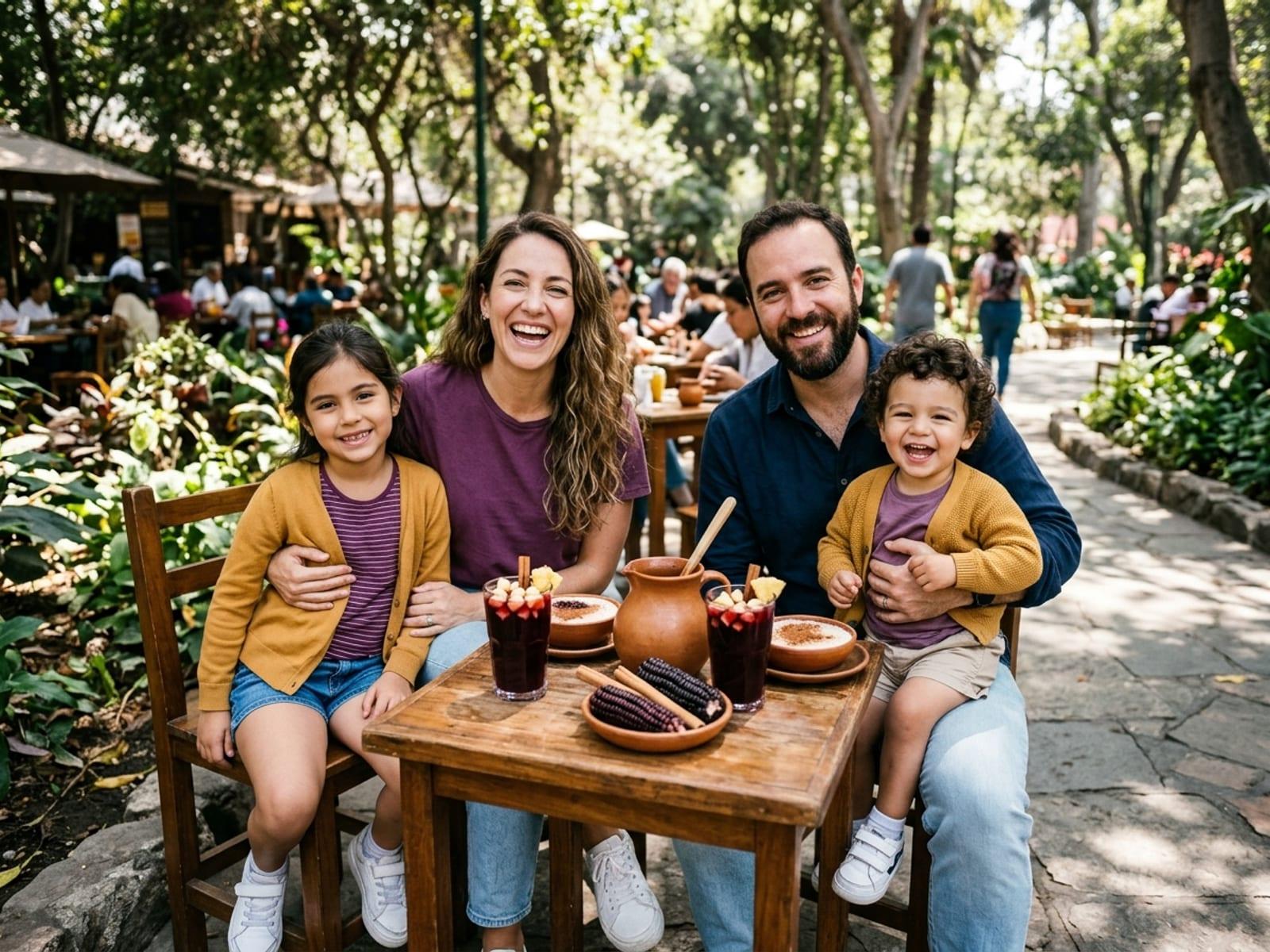
Chicha morada is a sweet Peruvian drink made by simmering near-black purple corn with pineapple peel, cinnamon and cloves, and you can order it by the glass at almost any eatery in Lima and across Peru, all year round. It isn't fermented and contains no alcohol, so children can have the same drink as adults, but it is sweetened with sugar, so dilute it with water or keep portions small for little ones. Mazamorra morada, a warm dessert made from the same corn, is cooked most often in October, the month of the Señor de los Milagros processions.
It starts with corn so purple it's nearly black
Chicha morada is made from maíz morado, purple corn. It's widely grown in the Andean highlands, and its kernels are a deep purple close to black.
At home, the cobs are simmered slowly in water with pineapple peel, pieces of quince, cinnamon and cloves. The liquid is strained and sweetened with sugar or chancaca, an unrefined cane sugar, then finished with chopped fruit and lime juice. The color comes from anthocyanins, pigments the corn contains in large amounts.
Turning purple corn into a drink is a very old habit. Spanish-language Wikipedia says it was used in rituals and festivals more than 3,000 years ago and spread across various pre-Inca cultures. The first written record of the modern recipe dates from the 1870s, in the writings of the Frenchman Camille Pradier-Fodéré.
It's called chicha, but it isn't alcohol
There's more than one drink called "chicha" in Peru. In the Andes, people have long drunk chicha de jora, an alcoholic drink made from fermented corn. That's the one you may be offered after a meal at a regional eatery such as an Arequipa picantería. Chicha morada is brewed rather than fermented, so it contains no alcohol. If you say the full name, "chicha morada," when you order, there's no room for confusion.
Restaurants and eateries in Peru almost always have it, and you can order it by the glass. It's also drunk in Chile, Bolivia and other countries where many Peruvians have settled, and it's exported to North and Central America, Europe, Australia, Japan and elsewhere. Supermarkets and kiosks sell it as a powder, a concentrate, and in bottles and cans, handy for keeping everyone hydrated on the road.
Mazamorra morada, thick and warm
Thicken the chicha morada liquid with sweet-potato flour or similar and you get mazamorra morada, a dessert. Dried fruit such as prunes and dried peaches go in, and it's finished with a dusting of ground cinnamon. Many people like it warm, though it's also eaten cold.
Mazamorra morada is often served as a combinado, half and half on one plate with arroz con leche, Peru's rice pudding. Put rice pudding between two portions of mazamorra and the three-band arrangement is called a bandera peruana, a Peruvian flag.
Purple October, and a yellow soda
In Lima, October is known as the "purple month." It's the season of the Señor de los Milagros procession, when people dressed in purple carry a sacred image through the city, and mazamorra morada is made especially often at this time. Chicha morada is also a common partner for anticuchos and picarones, the street-stall snacks that multiply at this time of year.
The other drink you'll see on Peruvian tables all the time is Inca Kola, a golden-yellow soda. It was created by Joseph Robinson Lindley, who had moved to Peru from Britain, and first went on sale on July 28, 1935. Its main flavor comes from an herb Peruvians call hierba luisa, and the exact recipe is a secret. Visitors sometimes describe the taste as like bubblegum. It outsells Coca-Cola in Peru, which makes it one of very few soft drinks in the world to beat Coca-Cola on home ground, along with Scotland's Irn-Bru. In 1999 The Coca-Cola Company bought a 40% stake in the company. It's a sugary soda, so for children a small glass to compare with chicha morada is plenty.
After dinner: lúcuma and rice pudding
Peru also has a few sweets worth trying with children. One is lúcuma, an Andean fruit. Lúcuma juice, ice cream and milkshakes are loved all over Peru, and the most common ice cream flavors in the country are said to be lúcuma, chocolate, vanilla and strawberry. Pick lúcuma at an ice cream shop and kids can compare it with chocolate or vanilla.
Arroz con leche, the rice pudding that pairs with mazamorra morada, is one of the most common desserts in Peruvian homes and restaurants today. Among sweets born in Lima, suspiro a la limeña is well known: a cream of milk, sugar and egg yolks topped with meringue made with port wine and dusted with cinnamon. The meringue contains alcohol, so keep that in mind before serving it to small children. All of these are very sweet, and one portion shared by the family is about right.
Things to watch when kids drink it
Chicha morada is sweetened with sugar. For small children, dilute it with a little water or keep the serving small. Homemade chicha at eateries sometimes has chopped fruit floating in it, so watch that little ones don't choke. The deep purple is hard to wash out of clothes, so on a white-shirt day bring a bib or napkins. On hot days or long journeys, a bottle from a kiosk helps keep children hydrated.
For children with fruit allergies, remember that pineapple, apple, quince and similar fruits may be used. Mazamorra morada is full of dried fruit as well. If you're wary of ice in drinks, say "sin hielo" (no ice) when you order.
To see what your family might look like raising glasses of purple chicha together, you can try pokesta's AI photos ($1 per photo, and your first one is free).
When to go and getting there
Chicha morada is available all year, everywhere in Peru. Mazamorra morada is easier to find in October. Lima's international gateway is Jorge Chávez International Airport (LIM). If you want to make it at home, the powdered and concentrated versions make good souvenirs. Entry requirements for Peru depend on your nationality, so check your own government's official guidance before you travel.
References