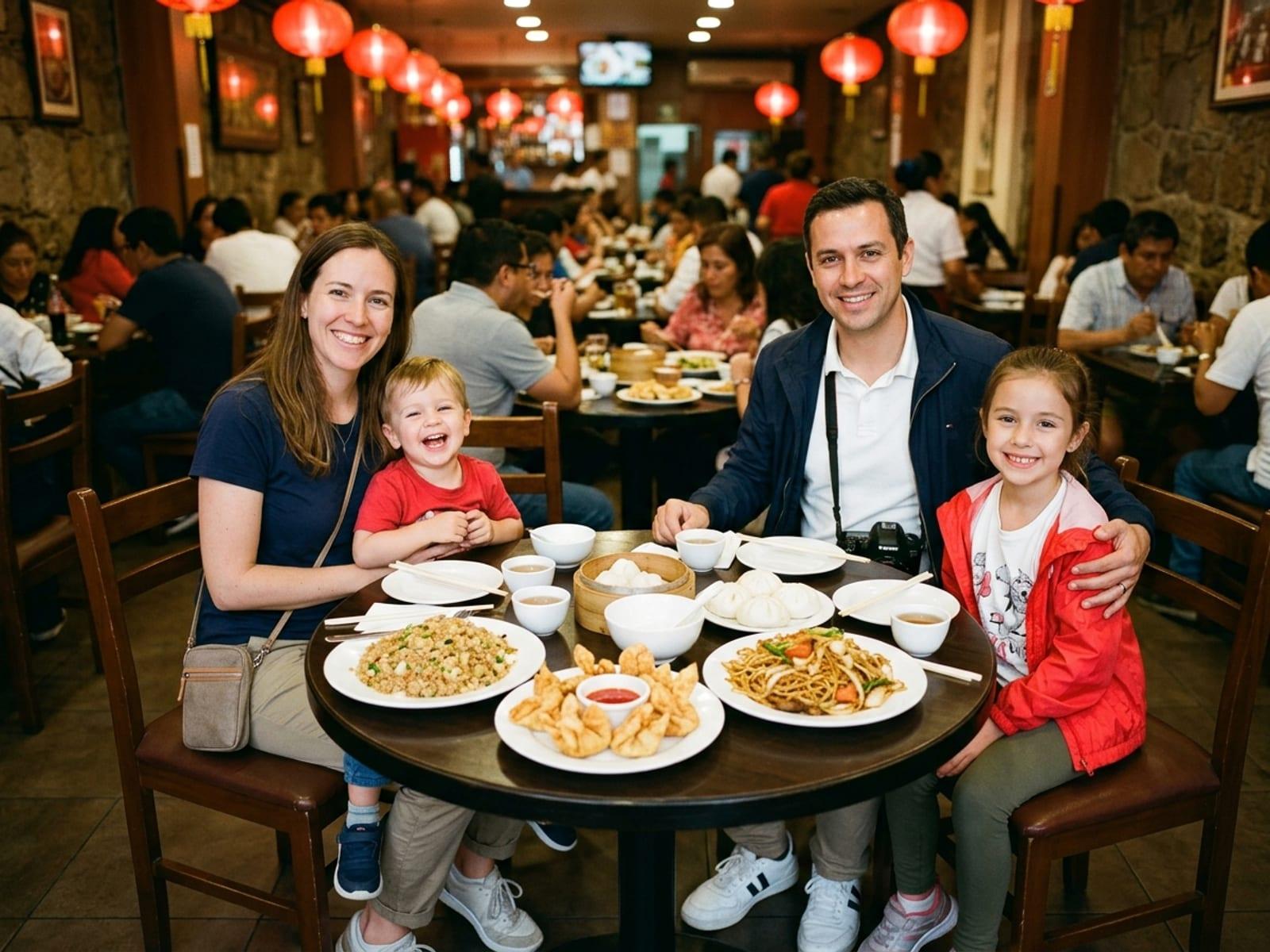
Chifa is the Peruvian style of Chinese food, and the name for the restaurants that serve it, born when the cooking of Chinese immigrants who arrived from 1849 onward met Peruvian ingredients; its birthplace is the Barrio Chino in Lima's historic center. Chifas and Chinese grocers line the pedestrian Calle Capón and the streets around it, and the dishes to order first are arroz chaufa, Peruvian fried rice, and crisp fried wontons. Portions are big, so order a little less than you think and share, and visit in daylight over lunch, since the area gets crowded.
A history of Chinese immigration that began in 1849
Chinese immigration to Peru began in 1849. The first 75 people were brought to work on the large coastal plantations, which needed labor after slavery ended. Over the next 25 years or so, roughly 100,000 more are thought to have arrived. Most came as contract laborers, bound to work for a set number of years.
Once their contracts ended, many moved to the cities, and a Chinese community gradually took shape in Lima. By around 1854, Chinese residents were already living together around Calle Capón, near the Central Market. "Capón" means a castrated pig, a name that comes from the pig trade carried on here in colonial times. The neighborhood changed shape again and again: it was looted between 1881 and 1883, during the War of the Pacific with Chile, and in 1909 part of it was demolished on public-health grounds. A Chinese mutual-aid association was founded in 1882, and clan and hometown associations and Taoist temples still stand around the street. Spanish-language Wikipedia describes a temple to Guan Yu (Guan Di) built in 1868 as the oldest Taoist temple in South America. One association still teaches lion dance, dragon dance and kung fu, and at the Guan Yu temple kept by another association, people consult fortune-telling sticks.
Chifa, a word that comes from "eat rice"
The word "chifa" is thought to come from a Cantonese phrase meaning "to eat rice," or to eat a meal. One theory is that in the 1930s people in Lima picked it up from hearing "time to eat!" called out in Chinese family eateries. Lima's first chifa, Kuong Tong, opened on Calle Capón in 1921, and in 1950 chifa recipes appeared in a Peruvian cookbook for the first time.
Chifa cooking is marked by using sweet and salty flavors in equal measure. High-heat stir-frying and soy sauce spread well beyond chifa into Peruvian home cooking, lomo saltado being the best-known example. The ginger, soy sauce and bok choy now found in Lima kitchens are also a legacy of Chinese immigrants.
What to order: chaufa, wontons and the "airport"
Chifa menus are long, and the first visit can be bewildering. Start with arroz chaufa, Peruvian fried rice. At inexpensive places a plate of it is a main course on its own; at upscale ones it comes as a side. Wantán frito, crisp fried wontons, are a starter you dip in tamarind sauce, hoisin or soy sauce. They're finger-sized, which makes them easy to share with children.
For noodles there's tallarín saltado, a stir-fry along the lines of chow mein, and for soup, sopa wantán. Main dishes include kam lu wantán, made with wontons, pollo chi jau kay, a chicken dish, and chicken or pork flavored with tamarind. A heaped plate combining chaufa and tallarín saltado is called an aeropuerto ("airport"), a dish that appeared in the 1990s.
To drink, there's jasmine tea or Inca Kola, Peru's yellow soda. For dessert, look for min pao, steamed buns with a sweet filling. Some places serve adults a "Chinese-style" pisco sour made with lychee or similar.
With kids, ask about portions and heat first
Chifa portions are big, so order fewer dishes than there are people and add more if needed. A heaped plate like the aeropuerto can be enough for two. Chaufa, fried wontons and wonton soup are simple, rice- or wheat-based dishes that most children take to easily. If one of your kids doesn't like spicy food, say "sin picante" (not spicy) when you order and check whether chili is used.
Some restaurants seat you at round tables with a lazy Susan. Have an adult sit next to the children so nobody spins it hard enough to tip over a hot dish.
Soy sauce and wonton wrappers often contain wheat and soy, and stir-fries often contain egg. If a child has allergies, show the staff a card listing the foods they can't eat, written in Spanish.
Walking Calle Capón
Chinatown sits inside Lima's historic center, right by the Central Market. The landmark at its entrance is a Chinese-style gate on the corner of Jirón Ucayali and Jirón Andahuaylas. It was a gift in 1971, and the words above it mean "under heaven, all people are brothers." In 1999, the 150th anniversary of Chinese immigration, Calle Capón beyond the gate was closed to traffic and turned into a pedestrian street.
Calle Capón and nearby Jirón Paruro are lined with chifas and with shops selling Chinese groceries, dried goods and medicinal herbs. English-language Wikipedia names San Joy Lao and Wa Lok among the long-running chifas. Opening hours and closing days vary by restaurant and can change, so check before you go. At Lunar New Year, lion and dragon dancers come out and the street gets even livelier; the Mid-Autumn Festival is celebrated too. Lunar New Year follows the lunar calendar, so it falls on a different date each year between late January and February. Lion dances move to loud drums and cymbals, so for small children sensitive to noise, watch from a little way back or be ready to cover their ears.
Being close to the Central Market, the area is busy with shoppers and porters carrying loads. Hold your children's hands, and a baby carrier will get you around more easily than a stroller. Carry valuables in front of you, and don't walk along holding your phone out. Go in daylight and make lunch at a chifa part of the plan. At lunchtime some chifas also serve a set lunch, the menú, with soup, a main and a drink. For more sights in the old town, see our piece on Lima's historic centre.
To see what your family might look like around a round table under red lanterns, you can try pokesta's AI photos ($1 per photo, and your first one is free).
When to go and getting there
Chinatown is worth a visit at any time of year. Lima's international gateway is Jorge Chávez International Airport (LIM), and from there you'll take a taxi or similar to the historic center. Chifas are also found in other parts of Lima and in other Peruvian cities, so comparing them as you travel is part of the fun. Entry requirements for Peru depend on your nationality, so check your own government's official guidance before you go.
References