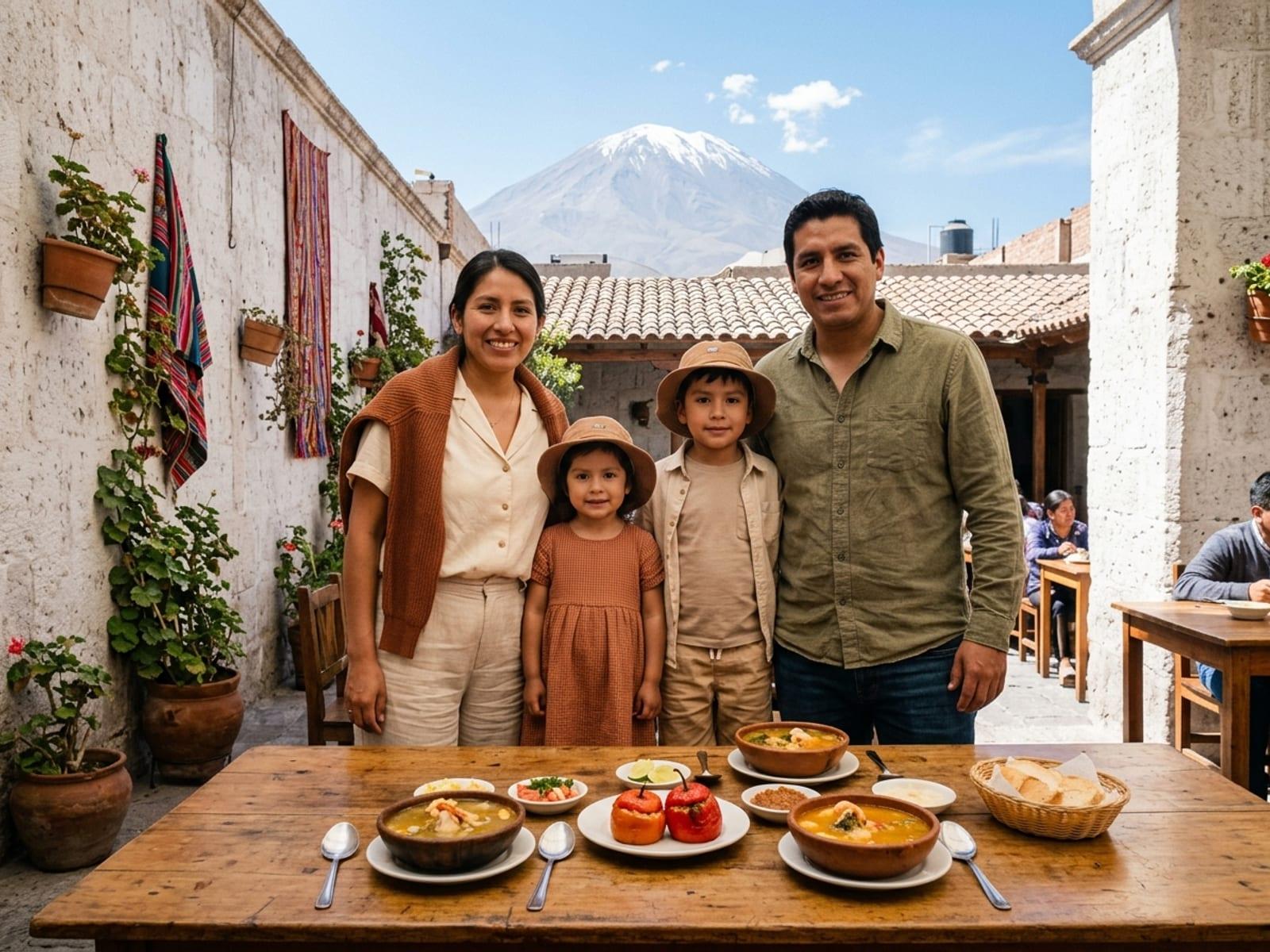
Picanterías are traditional lunch-only eateries in Arequipa, southern Peru, that serve the city's home cooking, and in 2014 they were declared part of Peru's national cultural heritage. The draw is the set lunch served from about noon to 3 p.m., with a soup fixed by the weekday: chaque on Monday, chairo on Tuesday, and so on through the week. With children, leave the fiery rocoto relleno to the adults and order milder plates such as pastel de papa, chicharrón or a soup with corn in it.
From chicha bars to home-cooking restaurants
Picanterías started out as places serving chicha, a fermented corn drink. In Arequipa they were known as chicherías by the 16th century and poured chicha de guiñapo, made from black corn. Serving food only became widespread in the 19th century. The Peruvian writer Ricardo Palma recorded the word "picantería" in a 1903 work.
People came to a picantería to talk as much as to eat. In the old days, a white flag hung outside a house along the road meant there was chicha, and if chili peppers were hanging there too, there was food that day. Elsewhere you might call it a tavern. Guitars and charangos, small stringed instruments, hung on the walls, and customers would trade songs back and forth; as travelers from all over swapped verses with locals, new popular songs came out of it.
On April 23, 2014, Arequipa's picanterías became national cultural heritage as places where regional food is cooked, sold and eaten. The following year, 2015, the chicherías and picanterías of Lambayeque, La Libertad, Piura and Tumbes in the north, and of Cusco, received the same recognition.
A soup for every day of the week
The picantería's signature is the almuerzo, a set lunch that changes daily: a big bowl of soup followed by a smaller second course. It's served from noon until around 3 p.m., and once it's gone, it's gone.
The soup is set by the day of the week, and nearly every picantería keeps to the same order. Monday is chaque, Tuesday chairo, Wednesday chochoca, Thursday either guiso rojo, a red stew, or a soup made from black freeze-dried potatoes, Friday the sopa de viernes ("Friday soup") and Saturday timpusca. Sunday is the exception: breakfast is served from early morning until about 10:30 a.m., with dishes like caldo blanco (white broth) and adobo, a pork stew. Some places vary the Friday to Sunday lineup.
For travelers, the fun part is that you can plan around the soup of the day. If you're in town for two or three days, going on different days gets you different soups. Sunday-morning adobo is a weekend treat for people in Arequipa.
A la carte: rocoto relleno and friends
Apart from the set lunch, you can order regional dishes one at a time from midday until around 5 p.m. The best known is rocoto relleno, a round red rocoto pepper stuffed with meat, olives and more, then baked. It used to come with roasted potatoes, but these days more places pair it with pastel de papa, layers of thinly sliced potato and cheese baked together. In 2016, Arequipa held its first rocoto relleno festival, where the world's largest rocoto relleno was made. Other dishes include chupe de camarones, a river-shrimp soup; ocopa arequipeña, a green sauce poured over boiled potatoes; solterito de queso, a salad of cheese, fava beans and onion; and fried pork ribs and chicharrón, fried pork with the skin on.
Rocoto is a very hot pepper, and its heat comes through clearly even when stuffed and baked. For children, it's safer to choose dishes with no heat, like pastel de papa, chicharrón or a soup with corn in it. Portions are generous everywhere, so ordering a few dishes for the family to share works well.
The picantería is a daytime place, and traditionally it closes around dusk. Head out expecting dinner and you may find the doors already shut. The chicha de jora brought out after the meal is a fermented corn drink that contains alcohol, so it isn't for children. Order them a glass of chicha morada, the purple corn drink, which is simmered rather than fermented.
The range of Arequipa's cooking is remarkable. One survey recorded 194 regional dishes, including 40 starters along with soups, stews, mains and desserts. You can't eat them all in one trip, but even one or two visits to a picantería give you a taste of that variety.
For dessert, queso helado with no cheese in it
Arequipa's signature dessert is queso helado. The name means "frozen cheese," but there's no cheese in it. Milk, condensed milk, flour made from chuño (freeze-dried potato) and cinnamon are cooked together, then frozen in a metal vessel set into a wooden tub packed with ice and salt, stirred all the while with a wooden spoon. The name is said to come from the layers that form, like thin slices of cheese. It's usually finished with a dusting of cinnamon.
It's a sweet born from the milk of cattle brought by the Spanish, and the Santa Catalina Monastery in Arequipa is said to be one of the first places it was made. You'll often see it sold from street carts, and a serving is just the right size to share with a child as you walk around town. Since 2012, Queso Helado Day has been celebrated every year on the fourth Sunday of January on Arequipa's Plaza de Armas.
To picture your family around a table in a white-stone courtyard, you can try pokesta's AI-generated photos ($1 per photo, and your first one is free).
When to go and getting there
Picanterías are open all year, but days off and opening hours vary from place to place, so check before you go. Arequipa's gateway is Rodríguez Ballón International Airport (AQP), and most people arrive on a domestic flight from Lima or elsewhere.
Central Arequipa sits at about 2,300 m. That's lower than Cusco or Puno, but take it easy on the day you arrive and keep an eye on how your children are doing. The historic center, lined with buildings of sillar, a white volcanic stone, is a UNESCO World Heritage Site. In February you could also head up to even higher ground for La Candelaria in Puno and take a boat out to the reed-built Uros Islands on Lake Titicaca. Entry requirements for Peru depend on your nationality, so check your own government's official information before you travel.
References