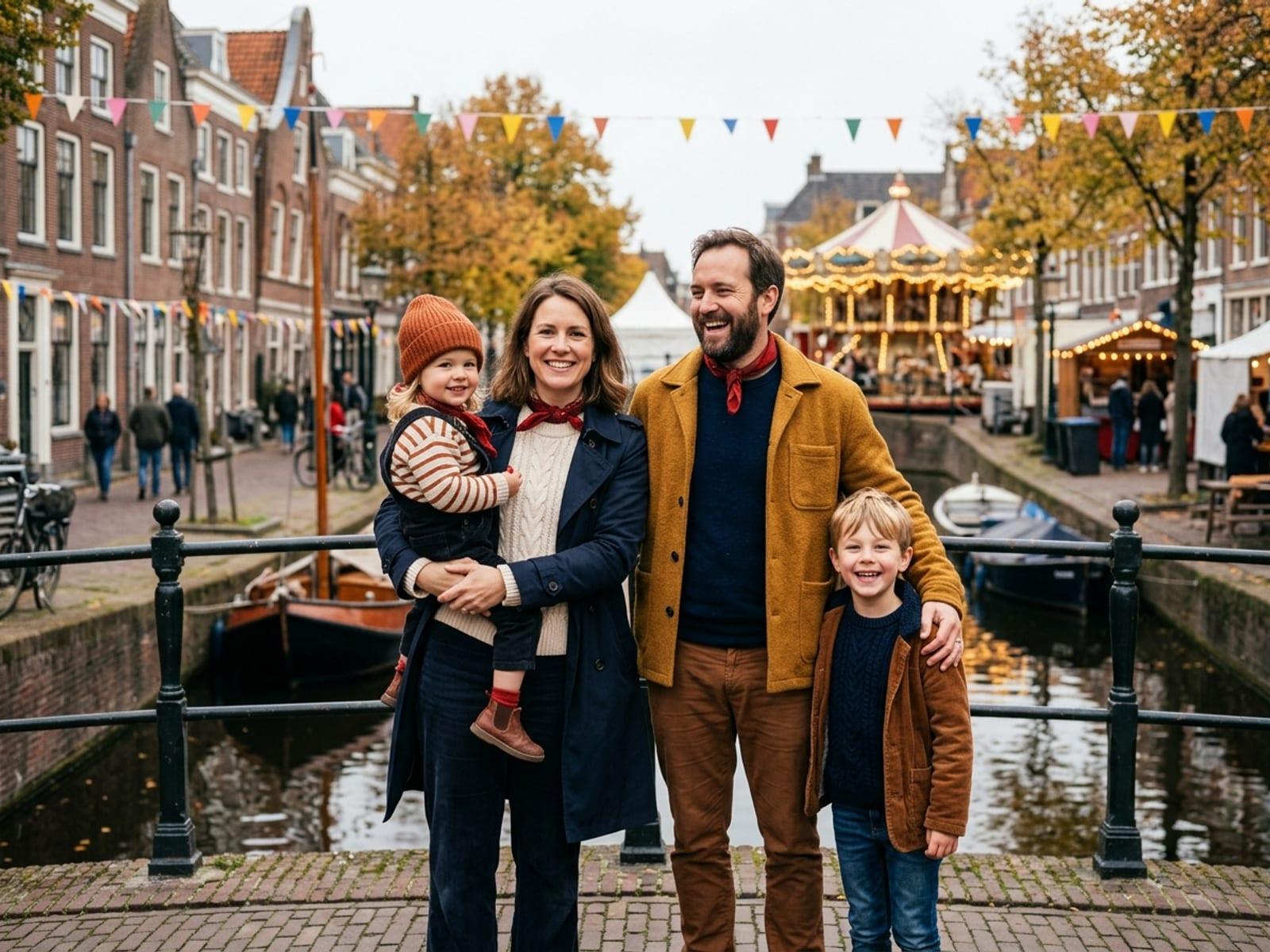
In Leiden, the university town between Amsterdam and The Hague, 3 October is the liveliest day of the year. It's called Leidens Ontzet, the Relief of Leiden. On this day in 1574, the town was freed from a Spanish siege that had lasted almost a year, and more than 450 years later the whole town still celebrates. The day starts with a 7 am reveille and moves through herring and white bread, a mash of vegetables called hutspot, a big afternoon parade and fireworks at night. The main day is 3 October every year (moved to Monday when it falls on a Sunday), and direct trains run from Schiphol to Leiden Centraal. With children, build the day around the morning reveille and herring through to the afternoon parade, and skip the evening, which turns into an adult party.
The town was saved by breaching the dikes
The siege of Leiden began in October 1573, in the middle of the Eighty Years' War, when the Dutch were fighting for independence from Spain. Leiden was starved out, and once the food ran out its people went hungry. That same year, Alkmaar, the town now known for its cheese market, had driven off its own Spanish siege by flooding the land around it, and Leiden would eventually be saved the same way.
The rebels' rescue plan was a very Dutch one. They cut through the dikes and flooded the surrounding land, then sailed a fleet of flat-bottomed boats across the water towards the town. When the wind shifted and the water rose, the Spanish withdrew on the night of 2 October. The next day the rebel soldiers known as the Watergeuzen, or Sea Beggars, entered the town by boat and handed out herring and white bread to the starving residents.
Hutspot has its own legend. In the abandoned Spanish camp, an orphan boy named Cornelis Joppensz is said to have found a pot left behind, full of a stew of carrots and onions. There's a statue of the boy holding the pot at Leiden Lammenschans station. William of Orange is also said to have founded Leiden University to reward the town for its sacrifice.
At 7 am, trumpets wake the whole town
The festival is run by the 3 October Vereeniging, an association founded by local citizens in 1886. It opens on the evening of 2 October with the Taptoe, a procession of local groups and bands. In 2026 it began at 19:30 under the theme "a ribbon of light", and earlier that evening there was also a communal meal of hutspot from a giant pot.
On the morning of the 3rd, everything starts at exactly 7:00 with the Reveille, trumpets sounding from the town hall tower. Herring and white bread are then handed out at De Waag, the old weigh house, and from 8:00 people sing hymns together in the Van der Werfpark. At 10:00 there's a commemoration service in the Pieterskerk, where a service of thanksgiving was held on the day of the relief itself and became a yearly tradition.
In the afternoon comes the Grote Optocht, the big parade, with costumed residents and floats on that year's theme winding through the centre; in 2026 it ran from 13:00 to 16:00. At the same time, old boats decked with flags gathered along the Galgewater canal for a "historic harbour", and the city museum, De Lakenhal, opened for free in the morning (both in 2026). The Lakenhal tells the story of Leiden's art and history, and for the 450th anniversary in 2024 it held an exhibition tracing the history of the festival parade. It's a good place to spend the wait with children and talk about why the day is celebrated. The night ends with fireworks from around 23:15 (they were cancelled in 2025 because of strong winds). Throughout the festival a travelling funfair (kermis) fills squares in the centre, and in front of the Pieterskerk there's a "nostalgic kermis" with old-fashioned carousels and rides. Times and locations shift a little each year, so check the association's official website for the current programme.
Tasting herring, white bread and hutspot
Eating is a big part of the festival. The morning herring and white bread recreate the food handed out on the day of the relief. The Dutch way to eat herring is to take the lightly salted raw fish by the tail, lift it up, tip your head back and bite from below, the same way people eat the new-season Hollandse Nieuwe herring in June. For a child who isn't keen on raw fish, a piece of the white bread is still a way of eating the same thing everyone else is.
Hutspot is a mash of boiled potatoes, carrots and onions. On 3 October it's traditionally served with klapstuk, slow-braised beef rib, or rookworst, a smoked sausage. It's mild and slightly sweet, easy even for toddlers who have just moved on to family food. During the festival it's served at restaurants and stalls in the centre, and supermarkets stock everything you'd need to make it.
What to wear, and how to plan the day with children
There's no traditional costume. Early October in Leiden is cold in the mornings and evenings, and it rains a lot. Layer a jacket or trench coat over a knit and pack a raincoat. On festival day, bunting hangs across the streets and the whole town turns bright. Keep the family in calm autumn colours and add one accent, like a red scarf or ribbon, so you don't disappear into the background in photos. You can also try out the family on a canal bridge in autumn with pokesta's AI-generated photos ($1 per photo).
With children, it's realistic to focus on the morning and early afternoon. From the 7:00 reveille to the hymn singing, the mood is fairly calm, and in 2026 there was a children's area and street-theatre festival on the Garenmarkt square from 10:00 to 13:30. Crowds line the route for the afternoon parade, so a baby carrier beats a pushchair. From the early evening, outdoor stages and bars keep going until late across the centre, and it becomes a party mainly for adults. Plan to be back at your hotel with young children while it's still light.
The festival is said to draw around 200,000 people each year. The streets in the centre fill up completely, so agree on a meeting point in case anyone gets separated, and put a card with your contact details in your child's pocket.
When to go and how to get there
The main festival day is 3 October every year; when it falls on a Sunday, it moves to the Monday. In 2027, 3 October is a Sunday, so the main day is expected to be Monday 4 October. With the Taptoe the night before and the funfair opening even earlier, two nights gives you time to see it all without rushing.
The gateway airport is Amsterdam Airport Schiphol (AMS). Direct Intercity trains run frequently from the airport station to Leiden Centraal, and the old town is a walk from there. Hotels in Leiden fill up during the festival, so staying in nearby The Hague or Haarlem and coming in each day is another option. Rules for entering the Netherlands vary by nationality, so check your own government's official information before you travel.
On a first visit, the two things to catch are the 7 am trumpets and the early-afternoon parade. Whether to stay on into the evening can wait until you see how the kids are doing when the parade ends. The month after, in November, Dutch children are waiting for Sinterklaas to arrive.
References