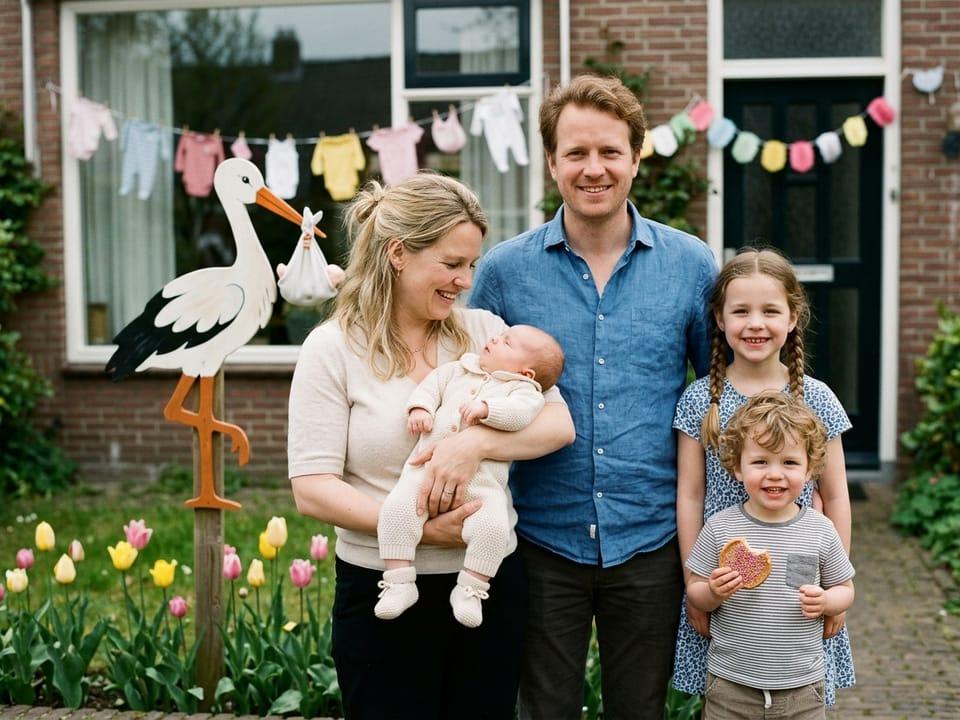
When a baby is born in the Netherlands, everyone who comes to visit is offered beschuit met muisjes: a round Dutch rusk, buttered and covered with sugar-coated aniseeds. The first days after the birth are the kraamtijd, when a maternity carer from kraamzorg comes to the house to look after mother and baby. With so much of this time spent at home, home is also the natural place for your first family photos.
Life during the kraamtijd, and when to take photos
The kraamverzorgende checks on the health of mother and baby, helps with breastfeeding questions, and takes care of light housework and even visitors. How many hours of care you get is decided for each family according to a national protocol. She is there to care for you and the baby, so don't ask her to be the photographer; fit the photos in between her visits and take them yourselves.
The priority in these days is the mother's recovery. Keep each photo session to about ten minutes, and do it when she says she's up for it. Babies are easiest to photograph right after a feed, when they're full and drowsy and their faces, hands and feet are relaxed.
The kraamvisite, when grandparents and friends come round, is a photo opportunity too. Take a picture of each visitor sitting down with the baby in their arms, and you'll have a record of who came to meet them and when.
Muisjes, the scene-stealer
Muisjes means "little mice": aniseeds coated in sugar. In the 17th century, aniseed was believed to help with breastfeeding. Today pink and white means a girl and blue and white means a boy; the blue ones only arrived in 1994. For royal births, orange muisjes come out.
Because the colour gives the news away, a plate of muisjes is a birth announcement in itself. Keep the plate on a table away from the baby and compose with the rusks in front and the baby and family softly blurred behind; you get both in one frame without bringing food near a newborn. An older sibling handing out beschuit to visitors, or crunching into one with muisjes rolling everywhere, makes a photo you can only take in these few days.
For a photo you plan to use on the geboortekaartje, the birth announcement card, leave some empty space for text when you shoot; the layout will be much easier later. If you've put a stork or a birth sign out front, take a picture of the older sibling standing next to it.
Safety rules for photographing a newborn
The baby's safety always comes before the photo. Throughout the shoot, an adult's hand should be able to reach the baby at any moment. Never lay the baby alone on a raised surface such as the edge of the sofa, a table or the side of the bed; photograph them on a blanket on the floor or in a parent's arms. Warm the room first if you take photos with the baby undressed. Don't use flash close to the baby's face.
Some of the newborn poses you see in professional portfolios, such as a baby resting their chin on their hands, are made by combining several shots in which an assistant supports the baby. Don't try to copy them at home. A baby sleeping, wrapped up, in their own natural position makes the loveliest picture anyway.
Light and framing
Daylight from a window is the best light you have. Turn off the ceiling lights so different colours of light don't mix, and skin tones come out true. A white sheet or shirt on the side opposite the window bounces light back and softens shadows.
Bring your phone down to the baby's eye level. Close-ups of a tiny hand gripping a parent's finger, the soles of the feet or the eyelashes are the shots that will astonish you in a few years with how small everything was.
For family photos, sit together on the bed or sofa facing the window so the light falls on your faces. When an older sibling holds the baby, have them sit down, with an adult right beside them supporting the baby's head. With a tripod and self-timer, the person taking the photo gets to be in it too. Take three kinds of shot, the whole scene, a waist-up portrait and a close-up of hands, and the album practically lays itself out.
Newborn photographers versus your own phone
Photographers who specialise in newborns may come to your home or work from a studio. If you book one, check their experience with newborns and how they handle safety, whether they build in breaks for feeding and changing, and whether older siblings can be included. Having them come to you means the mother doesn't have to go anywhere so soon after the birth.
If you take the photos yourselves, the tips above are all you need. What matters most isn't a flawless shot; it's that the mother doesn't overdo it and the baby stays safe.
Grandparents who live in another country may not be able to come and meet the baby right away. In that case, pokesta can create a photo of the whole family gathered around the new baby with AI, from each person's own phone photos ($1 per photo, the first one free).
References