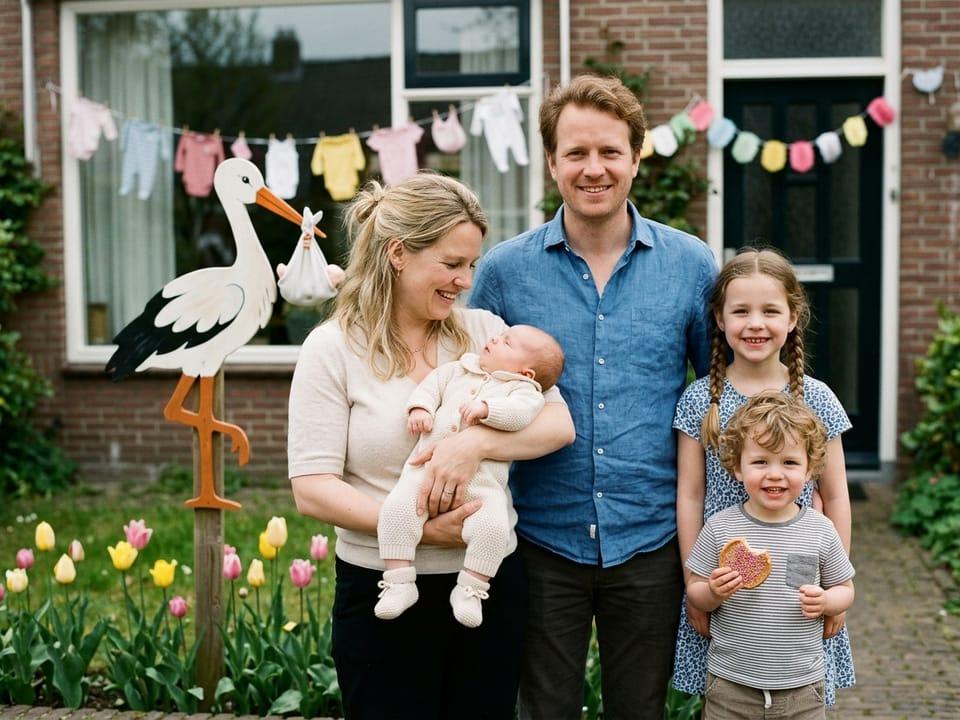
Geboortekaartje With a Photo: Getting the Birth Card Picture Without Booking a Photographer
pokesta Editorial Team · Updated November 6, 2026
You don't need a photographer for the photo on a geboortekaartje, the Dutch birth announcement card. One photo taken by a window in the first days after the birth is enough, and a modern phone camera has far more resolution than a card-sized print needs. The bigger costs are the cards and the stamps: a domestic stamp costs €1.40 as of October 2026, so posting 50 cards is €70 before you've paid for a single card. Choose the design before the birth, take the photo yourselves, and leave studio portraits for later if you still want them.
The card announces the birth, so it goes out early
A geboortekaartje is how parents tell family, friends and acquaintances that the baby has arrived. Besides the name and date, cards often give the weight and length, sometimes a short poem, and often an address and visiting times for the kraambezoek, the visits to come and meet the baby. That is why it is sent soon after the birth rather than weeks later.
You can pick a standard design from a printer, which is printed once the baby's details are known, have a designer make one, or make it yourself. Online printers let you prepare almost everything in advance. Kaartje2go, for instance, saves a design in your account, so after the birth you only change the date, weight and length, and it sends a free proof with paper and envelope samples. Registering the birth (geboorteaangifte) has its own deadline: within three days, at the municipality where the baby was born, and it is the father's or co-mother's legal duty. Having the photo ready in those same few days keeps the card and the paperwork moving together.
One window, three framings
Take the photo at home in the first days, when the baby sleeps a lot, ideally just after a feed. Use the brightest window in the house, switch off the ceiling lights so their colour doesn't mix with daylight, and lay the baby on a blanket on the floor or bed, or in a parent's arms. Keep an adult's hand within reach the whole time; the safety basics are in our guide to family photos at home during the kraamtijd.
Because you may not have settled on a layout yet, shoot the same scene three ways. A landscape frame with the baby on one side and empty blanket on the other, which leaves space for the name. A portrait frame with room above the head. And a close-up of hands or feet for cards with a small photo window. Plain backgrounds work best: a white sheet, a knitted blanket, a parent's dark jumper. Busy bedding competes with the text. Ten minutes with good light beats an hour of trying.
A phone file is plenty if you upload the original
Printers usually work at around 300 pixels per inch. An A6 card, about 10.5 × 14.8 cm, then needs roughly 1,240 × 1,750 pixels for a photo that fills the front, and most phone cameras deliver several times that. Problems come from the file rather than the camera. A photo forwarded through a chat app may arrive compressed, and a tight crop throws away most of the pixels. Upload the original from your phone or cloud backup, and if the order tool warns that the image is too small for the size you picked, change the crop instead of clicking past the warning.
Go easy on filters. A newborn's skin is often red or blotchy in the first days. A little brightening helps; heavy smoothing makes the baby look like a doll on paper.
Cards and stamps: count the postage first
Card prices depend on format, paper and quantity and change over time, so check the total in the order tool before committing to a design. Kaartje2go suggests ordering five to ten more than your list, for the people you forget. Cards ordered there before 21:00 on a working day go in the post the same day, and as of October 2026 it gives 10% off birth cards if the baby isn't born on the due date.
PostNL kept its standard domestic stamp at €1.40 when its tariffs changed on 12 July 2026, and since that date letterbox mail is delivered within two delivery days as standard. Cards to family abroad need an international stamp at a higher rate, so check PostNL's current tariff before you buy. Printers such as Kaartje2go can also post the cards for you from an uploaded address list on a date you choose. A quick sum before ordering avoids surprises: the number of cards times the card price, plus the number of cards times the stamp.
A photographer, a home visit or your own phone
A studio newborn shoot gives you posed, evenly lit images, but its timing rarely suits a card. Puur Kinderfotografie, a studio in Assendelft, recommends newborn shoots within the first 21 days and holds its photo-ordering session within 14 days after the shoot, so the finished file can arrive several weeks after the birth. A photographer who comes to your home spares the mother the trip, but still means booking a date ahead and moving it if the baby arrives late or someone is unwell. Your own phone is the only option that works on day two, costs nothing extra and never needs rescheduling.
A professional session earns its price for other things: a group portrait while grandparents are visiting, or posed newborn images that need training and an assistant to do safely. Neither has to be on the card.
Send the card now, think about portraits later
Post the card with your own photo while the news is fresh; a paid session can still happen at three or six months if you want one. If family abroad hasn't met the baby and you'd like everyone in one frame for a print or a later card, pokesta turns phone photos you already have into a new baby family portrait with AI, for $1 per photo, with the first one free. It's a created image rather than a moment that took place, so it complements the card photo instead of replacing it. Start with the picture you took by the window: try a free first portrait.