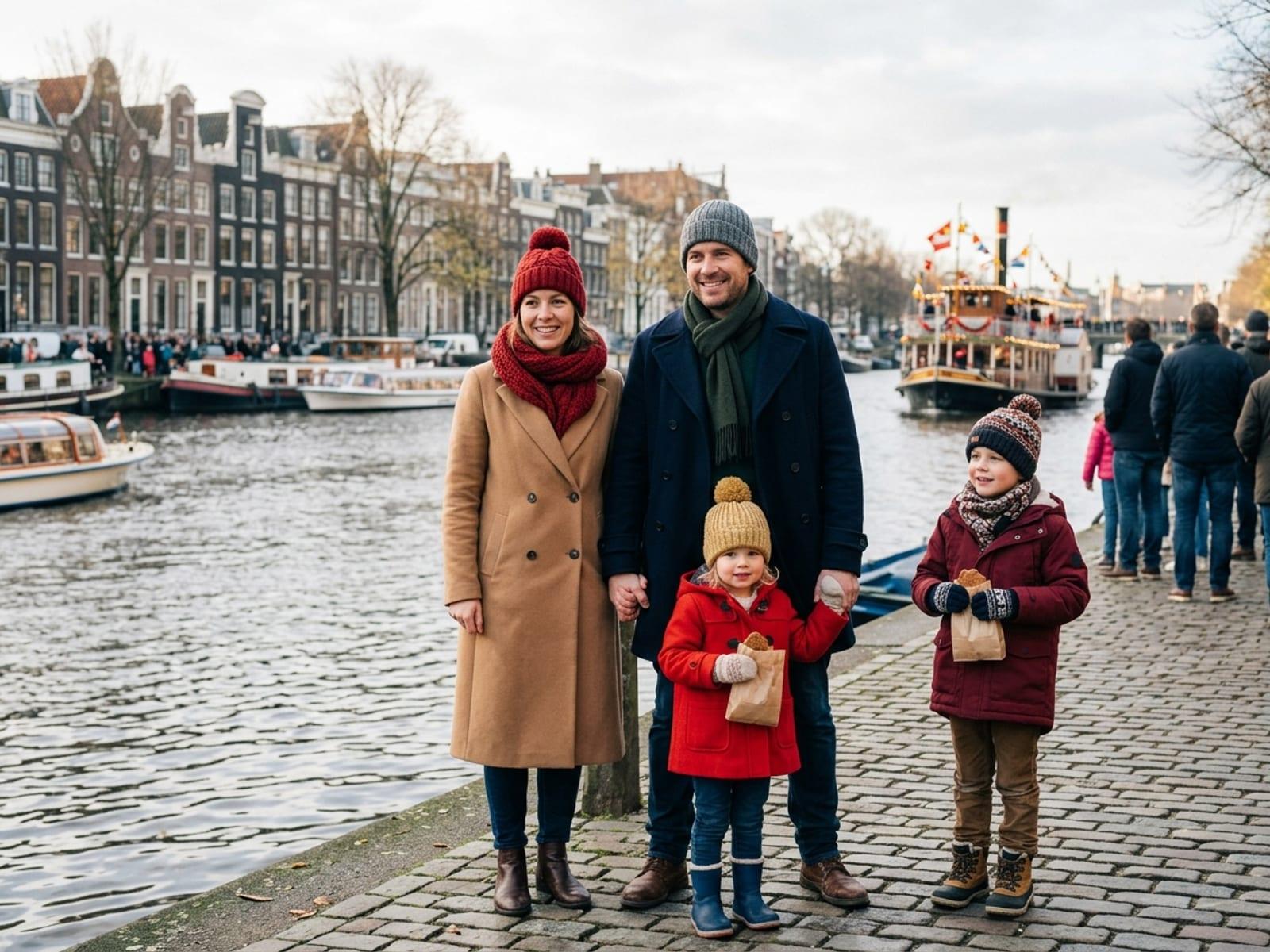
In mid-November, Dutch children get the day they've been waiting for all year. Sinterklaas, a white-bearded saint in a red bishop's robe, sails into the country on a steamboat, officially "from Spain". His arrival is called the intocht, meaning the entry or arrival, and it opens about three weeks of presents, sweets and songs that last until the evening of 5 December. Visiting families can watch two kinds of arrival: the national one, broadcast live on television, and the local parades that towns hold for themselves. Amsterdam's version, with the saint coming up the river, is one of the best suited to a canal city. The organisers have announced Amsterdam's 2026 arrival for Sunday 15 November.
A children's season that grew out of St Nicholas's feast day
Sinterklaas is based on St Nicholas, a 4th-century bishop in Asia Minor. He is the patron saint of children and sailors, and in the Netherlands and Belgium there is a long tradition of giving children presents around his feast day on 6 December.
In the Netherlands, though, the big night is the eve of the feast, 5 December. It's called pakjesavond, "parcel evening". The family gathers, a sack turns up at the front door, and everyone takes out their parcels and opens them. Presents often come with a homemade poem that gently teases the recipient about their habits, and part of the fun is the "surprise", a gift wrapped up in some deliberately odd or disguised way. In Belgium and parts of the southern Netherlands, some families find their presents on the morning of the 6th instead.
Between the arrival and the 5th, children set their shoes by the fireplace or the window at night, with a carrot, some hay or a little water for Sinterklaas's horse. The white horse was called Amerigo until 2019; since then it has been Ozosnel, which means "oh so fast". They sing a Sinterklaas song before bed, and in the morning there may be a small sweet or toy in the shoe. That happens a few times over the weeks as they count down to parcel evening.
The national arrival falls on the same weekend each year
By tradition, the intocht takes place on the first Saturday after St Martin's Day (11 November). The harbour town where the boat docks changes every year, and the arrival is shown live on national television. For 2026, the national intocht has been announced for Saturday 14 November in Grave, a town in the province of North Brabant. The year before, it was on Texel, an island in the Wadden Sea.
Separately from the national broadcast, many towns hold their own arrival parade on the same weekend or the one after. For visitors, these local parades are much easier to see. Throughout the season, a children's TV programme called the Sinterklaasjournaal, on air since 2001, runs every day, reporting on the steamboat's journey and the small mishaps along the way as if they were news. For Dutch children, the intocht is the day they get to see the next episode with their own eyes.
In Amsterdam, he comes up the Amstel by boat
Amsterdam's arrival takes a form only a canal city could manage. In 2026 it falls on Sunday 15 November, the day after the national intocht, and the times and route will be posted on the organisers' official website. They hadn't been published as of 27 October, so here is how the previous year went. In 2025 it was likewise the day after the national arrival, Sunday 16 November. According to the city's official tourism information, the steamboat carrying Sinterklaas came up the Amstel, appeared near the Omval in the south of the city at around 10:15, and reached the National Maritime Museum (Het Scheepvaartmuseum) at around 11:30. There he received the key to the city.
Once ashore, Sinterklaas and his Pieten (helpers) make their way, partly on horseback and partly on foot, past Rembrandtplein, along Utrechtsestraat and the Weteringschans to Leidseplein. At around 14:30 he traditionally addresses the crowd on Leidseplein. Times and the route change from year to year, so check that year's announcement.
There's one thing worth knowing about the Pieten. For a long time they appeared as Zwarte Piet, "Black Pete", with their faces painted black. Criticism that this was racist grew strongly from the 2010s, and most towns and TV programmes have now switched to roetveegpiet, "soot-smudge Pete", who just has a few streaks of soot on his cheeks from climbing down chimneys. It's a subject to approach with respect as a visitor.
Dress warmly, and keep a bag of sweets handy
There's no set costume. Some children wear a paper copy of Sinterklaas's mitre or a Piet's feathered cap, but for visiting families, warm winter clothes are plenty. Amsterdam in November can be cold by the river even when it's sunny, and rainy days aren't unusual. A thick coat, a knitted hat and gloves are the basics, and a scarf in red, burgundy or gold makes the photos look like the season.
Along the route, the Pieten sometimes throw out handfuls of pepernoten or kruidnoten, small round biscuits spiced with cinnamon, cloves and the like. Shops at this time of year are also full of speculaas (spiced biscuits), chocolate letters shaped like people's initials, and marzipan animals. Buy a chocolate letter with your child's initial and you have a ready-made prop for your holiday photos. By now the town squares also have stalls selling oliebollen, the sugar-dusted fried dough balls that stay on sale until New Year's Eve.
With small children, pick a spot by the river and go early
The most popular places to watch are around the National Maritime Museum, where the boat docks, the Omval near the start, and Leidseplein, where Sinterklaas speaks. Leidseplein gets very crowded by early afternoon, so with young children it's easier to claim a spot along the Amstel early to see the boat, then catch the parade somewhere along the route. Keep your bags light so you can lift a child onto your shoulders.
Pushchairs are hard to move along a parade route, and a baby carrier makes both watching and getting around easier. You'll be waiting outdoors from the morning, so bring hot drinks and snacks and find out where the toilets are. From late November into early December, theatres and museums around the city also put on Sinterklaas events for children, so if parade day turns out bitterly cold, an indoor event on another day is a good alternative. In 2025, for example, Sinterklaas "stayed" at the Muiderslot, the castle in Muiden just east of Amsterdam, from 18 November to 5 December, and at weekends he and his Pieten greeted visitors one by one. The Concertgebouw put on a Sinterklaas concert for ages 4 and up, and Museum Ons' Lieve Heer op Solder, known for its hidden attic church, ran sessions for children aged 4 to 8. The line-up changes every year, so check that year's listings.
The shoe tradition works in a hotel room too. Put your child's shoe on the windowsill with a carrot beside it, and if there are pepernoten in it the next morning, your child wakes up the way Dutch children do all through the season. You can also see how a photo of the family lined up in winter clothes in the canal city might turn out with pokesta's AI-generated photos ($1 per photo).
When to go and how to get there
The arrival is on a weekend in mid-November, and parcel evening is 5 December. For Amsterdam's arrival, the date is announced first, and the times and route follow later on the organisers' website and the city's tourism site. In 2026 the date is Sunday 15 November. The gateway airport is Amsterdam Airport Schiphol (AMS), and trains from the station beneath the airport reach Amsterdam Centraal in under 20 minutes. The National Maritime Museum is within walking distance of Centraal.
If you'd like to see the televised national arrival in person, wait for that year's announcement before you plan, since the host town changes every year. Large crowds descend on small towns, so check for road closures and temporary parking too. Rules for entering the Netherlands vary by nationality, so check your own government's official information before you travel.
Once December arrives, you'll want photos of the family opening parcels at home as well. You can make a Sinterklaas family photo or browse everyone's posts. Children get another day in the spotlight in April, when they run their own stalls in the Vondelpark on King's Day, the country's big orange holiday.
References