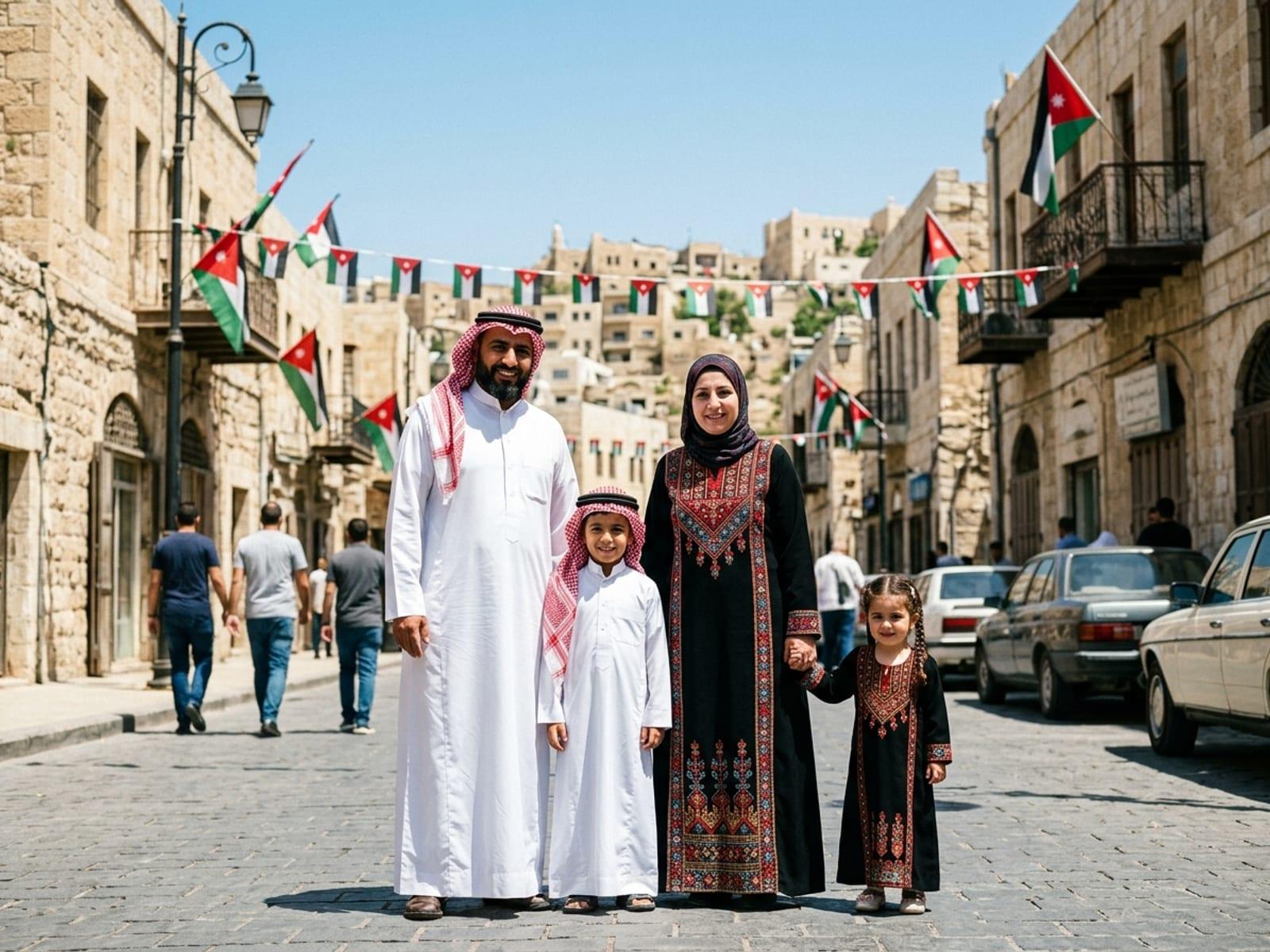
Jordan Independence Day falls on May 25 every year and is a public holiday, with government offices closed. In Arabic it is Eid al-Istiqlal. On this day in 1946, the parliament of Transjordan ratified the Treaty of London with Britain and gave Emir Abdullah the title of king, turning an emirate under the British Mandate into an independent kingdom. In the capital, Amman, there are official ceremonies, a military parade, a gun salute and fireworks, and the streets fill with black, white, green and red flags.
From emirate to kingdom on May 25, 1946
Modern Jordan began as the Emirate of Transjordan, established under Emir Abdullah in 1921. Negotiations with Britain ended in the Treaty of London, signed in London on March 22, 1946. On May 25 the parliament of Transjordan ratified it and, the same day, changed the ruler's title from emir to king. The country became the Hashemite Kingdom of Transjordan, later renamed the Hashemite Kingdom of Jordan. The mandate officially ended on June 17, when the ratifications were exchanged in Amman, and Jordan joined the United Nations in December 1955.
On the day, an official ceremony attended by the royal family and government and military figures includes award presentations, the presentation of military colors and a parade. A 21-gun salute is fired in the capital, and there are fireworks for the public. The ceremony itself is mostly for officials, so what visitors really get to enjoy is the flag-decked city and the fireworks at night.
The 80th anniversary in 2026 brought celebrations across the country from May 23 to 25, and on May 25 the Jordan Gate Towers in western Amman hosted a fireworks and laser show.
The government often moves public holidays to other days to join them up with the weekend, so which days offices and shops close around May 25 changes from year to year. Check the latest announcements when planning your itinerary.
Four colors and a star with seven points
The flag is what you'll see most on Independence Day. Jordan's flag was officially adopted on April 16, 1928, back when the country was still an emirate, which means it was in use 18 years before independence. It is based on the flag of the Arab Revolt against the Ottoman Empire in 1916. The anniversary of that revolt is marked together with Army Day on June 10, a separate occasion from Independence Day.
The three horizontal stripes are, from top to bottom, black, white and green. Black stands for the Abbasid Caliphate, white for the Umayyads, and green for the Fatimids (or, in some accounts, the Rashidun caliphs). The red triangle at the hoist represents the Hashemite dynasty and the Arab Revolt. Inside the red triangle is a white star with seven points. It represents the unity of the Arab peoples, and the seven points are said to refer to the seven verses of Al-Fatiha, the opening chapter of the Quran.
Several Arab countries have flags in similar colors, but the white seven-pointed star in the red triangle is what marks Jordan's. When you spot a flag in the street, ask the kids how many points the star has.
A 126.8-meter flagpole, and a photo with the flag behind you
Amman has a landmark made for looking up at the flag. The Raghadan Flagpole, in the grounds of the Royal Palace, is 126.8 meters tall and flies a flag measuring 60 by 30 meters. King Abdullah II raised the first flag on June 10, 2003. At the time it was the tallest free-standing flagpole in the world, but in 2004 a 130-meter flagpole went up in the southern port city of Aqaba and took the title.
For family photos, look for a viewpoint with the flagpole in the distance, or try the Roman Theater and the Citadel hill covered below. From the Citadel you look out over hillsides packed with white stone houses and flag-decked streets.
A holiday walk from the Citadel down to downtown
If you want to walk around looking at the decorations, an easy route pairs downtown Amman (Wasat al-Balad in Arabic) with the Citadel hill that rises to its north. On the Citadel you'll find the columns of the Roman Temple of Hercules and the remains of an Umayyad palace and mosque from the early 8th century. Try to find a spot on the hill where you can fit both the Roman columns and a Jordanian flag into one frame.
At the bottom of the hill is the Roman Theater, built in the 2nd century, with seating for around 6,000. In front of it is Hashemite Plaza, where a Roman public square once stood. In the heart of downtown stands the Grand Husseini Mosque, built in 1924 on the site of an Umayyad mosque and named after Sharif Hussein bin Ali of the Hashemite family. The Hashemite name that the red triangle on the flag represents is written into the city's buildings, too.
Downtown streets are lined with shops selling clothes, odds and ends and snacks, and the Gold Souk, reached from King Faisal Street, is packed with jewelers. Holiday opening hours vary from shop to shop, so if shopping is the goal, the days before or after are a safer bet. On crowded streets a baby carrier is easier than a stroller, and keep hold of your children's hands.
Traditional dress or the flag's colors?
For a celebratory photo in traditional dress, the best-known outfits are, for women, a long black dress (thobe) with cross-stitch embroidery in red and other colors, and for men, a white robe with the red-and-white checked shemagh headscarf held in place by a black cord called an agal.
Visitors don't need a full traditional outfit. Casual clothes in one of the flag's four colors, or a red-and-white shemagh loosely draped around the neck, are enough to blend right into the mood of the day. Jordan is a predominantly Muslim country, so even on a holiday, clothes that cover shoulders and knees are the baseline. The sun is getting strong in Amman by May, so bring hats and water for the daytime and a light layer for watching the fireworks at night.
In crowded places, hold your children's hands and agree on a meeting point in case you get separated. Small children who don't like loud bangs may enjoy the fireworks more from a hill a little way off. Mansaf, Jordan's national dish, is a celebration meal eaten on Independence Day as well as at weddings and Eid.
You can also create a photo of your family among the flags with an Independence Day AI photo. pokesta's AI photos cost $1 per photo, so you can try both traditional dress and flag colors and compare. Other families' creations are in the community gallery.
When to go and how to get there
Independence Day is May 25 every year; the date doesn't move. Islamic holidays, however, shift about 11 days earlier each year, so in some years late May can fall close to another holiday. Check how that year's holidays line up before booking flights and hotels.
The gateway is Queen Alia International Airport (AMM), about 30 km south of central Amman. The Roman Theater and the Citadel are close to the city center and easy to combine with a holiday walk. The situation in the Middle East can change at short notice, and travel advice and entry requirements vary by nationality. Check your own government's latest official information while planning and again before you leave.
References
- Wikipedia, "Independence Day (Jordan)" https://en.wikipedia.org/wiki/Independence_Day_(Jordan)
- Wikipedia, "Treaty of London (1946)" https://en.wikipedia.org/wiki/Treaty_of_London_(1946)
- Wikipedia, "Public holidays in Jordan" https://en.wikipedia.org/wiki/Public_holidays_in_Jordan
- Jordan Gate, "Jordan Gate Towers to Host Fireworks, Laser Show for Jordan's 80th Independence Day" (May 20, 2026) https://jordangate.jo/blog/jordan-gate-towers-to-host-fireworks-laser-show-for-jordans-80th-independence-day
- Jordan News, "PM Pays Homage to Jordanians on Great Arab Revolt, Army Day Anniversary" https://www.jordannews.jo/Section-109/News/PM-Pays-Homage-to-Jordanians-on-Great-Arab-Revolt-Army-Day-Annivesary-36058
- Wikipedia, "Flag of Jordan" https://en.wikipedia.org/wiki/Flag_of_Jordan
- Wikipedia, "Raghadan Flagpole" https://en.wikipedia.org/wiki/Raghadan_Flagpole
- Wikipedia, "Downtown Amman" https://en.wikipedia.org/wiki/Downtown_Amman
- Wikipedia, "Mansaf" https://en.wikipedia.org/wiki/Mansaf