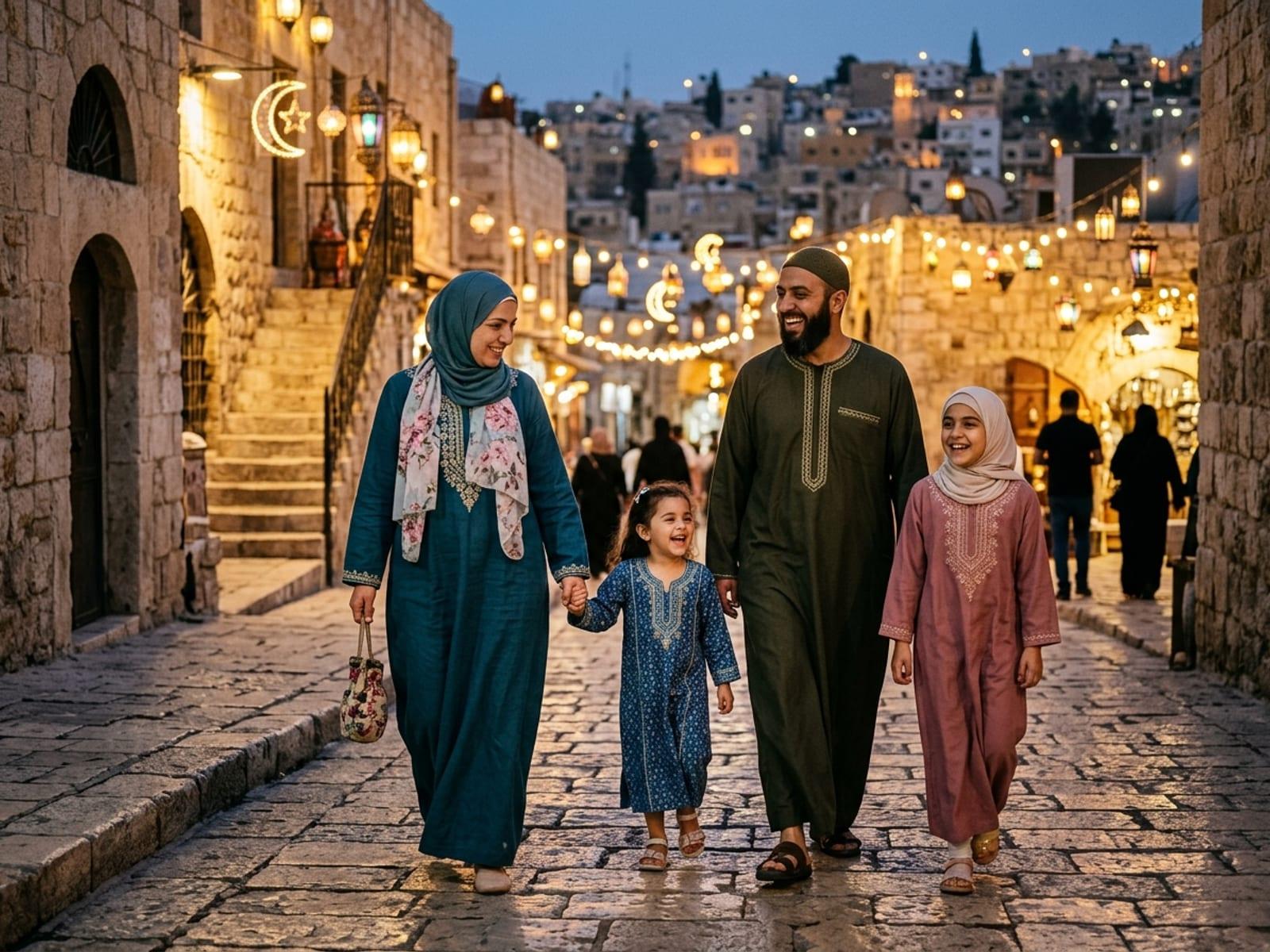
Ramadan in Jordan is expected to begin on or around Monday, February 8, 2027 and to last until about March 8; in 2028 it should start around January 28. The first day is confirmed only when the thin crescent after the new moon is sighted, so the official date is announced shortly beforehand. During this Islamic month of fasting, a day in Amman splits in two at sunset. The streets are quiet and unhurried in the daytime; then the sun goes down, families sit down to eat at the same moment all over the city, and the evening stays lively until late. Visitors don't have to fast, but knowing a little about how the month works means the daytime calm won't catch you off guard, and you can enjoy the evenings as a family.
Set by the moon, and about 11 days earlier every year
Ramadan is the ninth month of the Islamic (Hijri) calendar. That calendar follows the phases of the moon, and its year is about 10 to 11 days shorter than the solar year, so Ramadan drifts a little earlier each year. Going by Saudi Arabia's Umm al-Qura calendar, it is expected to run from February 8 to March 8 in 2027 and from January 28 to February 25 in 2028. The start of the month is confirmed by whether the thin crescent after the new moon has been sighted, so dates can differ by a day or so between countries, and the official date is announced only shortly beforehand.
When Ramadan ends, Eid al-Fitr, the festival of breaking the fast, begins. In Jordan, people get new clothes and shoes ready for Eid and decorate their homes. The Eid morning prayer is held at mosques and in open spaces where large crowds can gather. Afterward, families gather at the home of the eldest relatives, and you may see small children lining up in front of the adults to receive a little pocket money. If your trip overlaps with Eid, expect transport and shop hours to be different from usual.
Iftar: the table that waits for sunset
Fasting means no food or drink from dawn until sunset. It is an obligation for Muslims who have reached puberty; children who haven't, older people, travelers, people who are ill, and women who are pregnant or breastfeeding are exempt. So if you're invited into a Jordanian home, don't be surprised to see children your own kids' age eating normally at lunchtime. Before dawn there's a meal called suhur, and at sunset the fast is broken with iftar. Iftar traditionally opens with dates, recalling the Prophet Muhammad's practice of breaking his fast with three of them, and water is the usual drink.
Seasonal drinks and sweets are part of every Ramadan table in Jordan. Qamar al-din, a sweet drink made from dried apricots, and tamar hindi, a sweet-sour tamarind drink, are popular this time of year. The signature sweet is qatayef: small pancake-like rounds filled with cream, nuts or sweet cheese. In Jordan it's sold almost exclusively during Ramadan, which makes it a true taste of the season. It also has a long history; it appears in a 10th-century cookbook from the Abbasid era. There are two main styles. Asafiri are folded in half around cream and eaten as they are, while others are filled with nuts and similar fillings, then fried or baked and soaked in syrup. If you spot a shop cooking the batter out front in the late afternoon, stop and watch with the kids.
As sunset approaches, the food goes on the table and everyone waits for the signal. That short pause, with the whole family waiting together, is what late afternoons feel like this month. Whether visitors can join an iftar meal depends on the hotel or restaurant, so ask where you're staying well in advance.
Drink out of sight by day, and check this year's opening hours
It's polite not to eat or drink in front of people who are fasting during the day. Children still need to stay hydrated, of course, and giving them drinks regularly in your hotel room, in the car or somewhere out of the way is perfectly fine. When you're out during the day, simply not walking around with a drink in hand is enough. Restaurant etiquette in Jordan also covers opening hours and eating out during Ramadan.
Opening hours for shops and sights can change during Ramadan. The Baptism Site near the Dead Sea, for example, normally admits visitors until late afternoon, but during Ramadan the last entry moves up to 3 p.m. Check the current year's hours for the places you want to see. Around iftar time, most people are at home eating, so plan travel and meals with the exact sunset time in mind and you won't end up rushing.
Dress even more modestly than usual. Clothes that cover shoulders and knees are the baseline, with a light layer for evenings out. When photographing mosques from outside, stand where you won't be in the way of people heading to prayer, and ask before taking pictures of people.
Out as a family on lantern-lit nights
On Ramadan nights, streets and squares are hung with lanterns called fanous, along with crescent-moon decorations. The lantern custom is said to go back to the Fatimid Caliphate, when crowds carrying lights came out to welcome the caliph al-Mu'izz. In Jordan, people also hang these lanterns at home as Eid decorations. A walk under the lights with the kids after iftar sticks in the memory, all the more for the contrast with the quiet daytime.
Each night of Ramadan, mosques hold optional prayers called tarawih. One of the odd-numbered nights in the last ten days is believed to be Laylat al-Qadr, the Night of Power, when the Quran was first revealed. It is considered the holiest night of the year, so be especially quiet when passing mosques during this period. It's a time of prayer for local people, not a spectacle for visitors.
Ramadan is also a month of giving. Many people choose this month to pay zakat, the set share of their wealth given to those in need. Explaining to children that the month isn't only about fasting, but also about sharing meals and helping people who are struggling, makes what they see in the streets easier to understand.
Ramadan currently falls in the shift from winter to spring, and Amman's nights are chilly. Don't forget jackets for the kids. On days you'll be out late, build in a nap so the children stay in good spirits.
Embroidered jalabiyas and elegant clothes in soft colors look lovely in a family photo under the lanterns. To get a feel for it before your trip, you can try a Ramadan night family photo with pokesta's AI photos ($1 per photo), and see what other families have made in the community gallery.
When to go and how to get there
As explained above, Ramadan moves about 11 days earlier each year, and in the late 2020s it falls between January and March. The gateway is Queen Alia International Airport (AMM), about 30 km south of central Amman. To take in the old city at night, stay in or near the center so you can walk out after iftar.
Families with a sweet tooth should also try knafeh, Amman's famous dessert, which you can enjoy after Ramadan too. The situation in the Middle East can change at short notice, and travel advice and entry requirements vary by nationality. Check your own government's latest official information while planning and again before you leave.
References