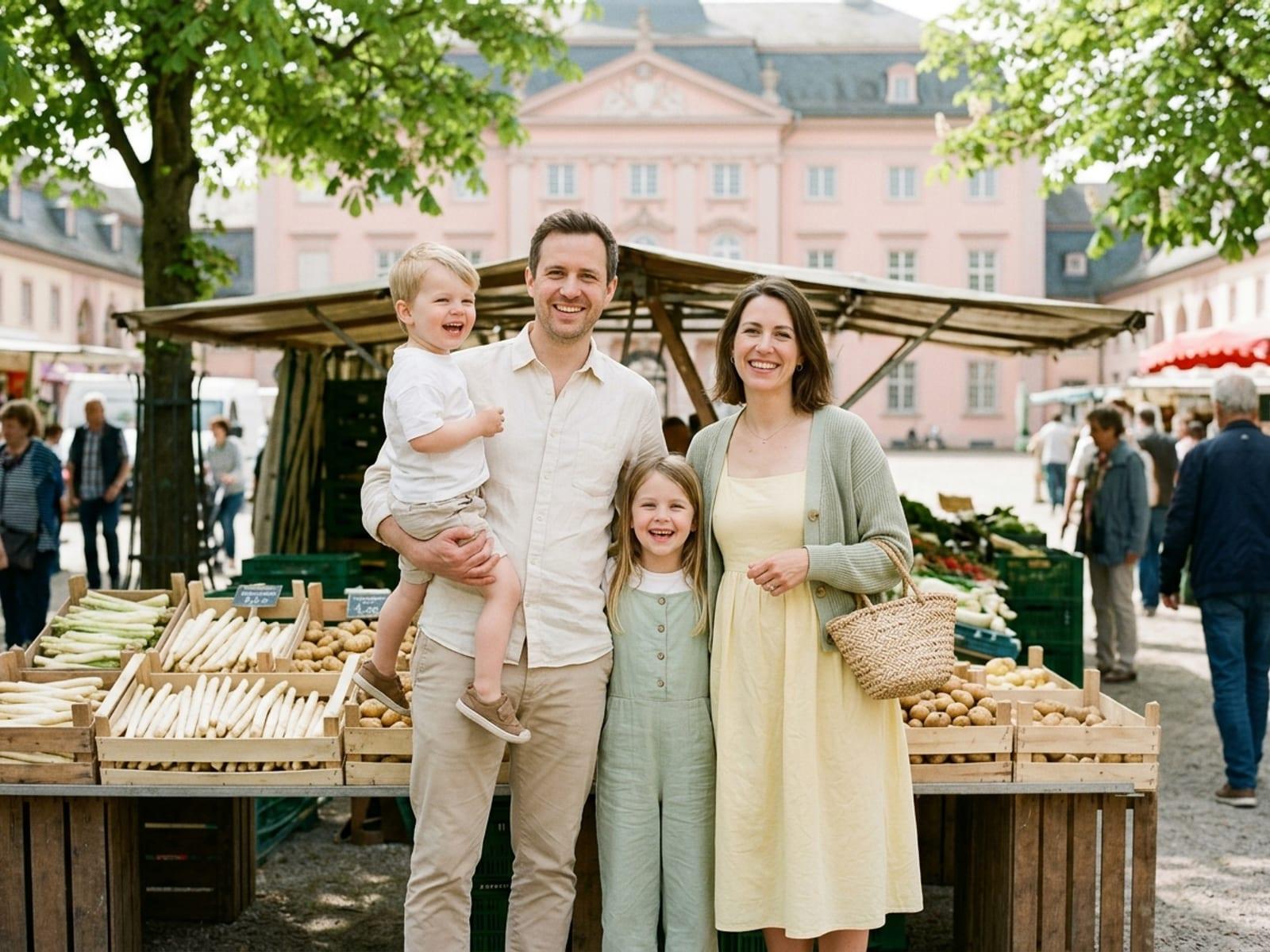
From mid-April until 24 June, German tables are taken over by white asparagus. The Germans call it Spargel, and this time of year is Spargelzeit, asparagus season, when thick white spears turn up at roadside stands, in markets and on restaurant menus everywhere. If you want to eat this "white gold" in season in a town that grows it, Schwetzingen, a palace town near Heidelberg, is an easy place to aim for.
Grown under earth to stay white
White asparagus isn't a different plant from green asparagus. Soil is heaped high over the rows where the shoots come up, and because they grow without sunlight, they never photosynthesize and stay white. In the fields, you'll recognize it by the long rows of mounded earth. Each shoot is dug out of the soil by hand, one at a time.
It's said to be less bitter and more tender than green asparagus, but the skin near the base is tough, so it always has to be peeled before cooking. That chore is part of the ritual of a spring kitchen in Germany.
The season traditionally ends on 24 June, St. John's Day. Harvesting beyond that weakens the plants so they won't produce well the following year, and after that date fresh German asparagus all but disappears from the shops. Because the season is so short, the German way is to eat it again and again during those two and a half months or so. Besides "white gold," it's also called "edible ivory" and "the royal vegetable," and about half of Germany's white asparagus is sold at roadside stands and open-air markets. If you spot a little hut selling produce at the edge of a field while you're traveling, that's a sure sign of the season.
A local specialty that began in the palace garden
Asparagus has been grown in Schwetzingen since 1668, when Charles Louis, Elector Palatine, had it planted in the palace garden. At first it was grown only for the elector's own table. When the court later moved to Munich, the asparagus was forgotten, until in 1820 the garden director, Zeyher, began growing it again in the palace kitchen garden. By the middle of the 19th century it had spread to the town's farmers, and in 1894 the first asparagus market was held. From around 1910, varieties bred in Schwetzingen made its name as an asparagus town, and in 2018 the whole town celebrated 350 years of cultivation.
On the square in front of the palace stands the Spargelfrau, a bronze statue of a farm woman selling asparagus by the sculptor Franz Müller-Steinfurth. Town squares usually honor kings and heroes. A statue of a woman selling vegetables says a lot about how proud Schwetzingen is of its specialty.
The classic: hollandaise and potatoes
The most traditional way to eat it is peeled and boiled, with hollandaise sauce made from butter and egg yolks and a side of boiled new potatoes. In northern Germany and the Netherlands, people also like it with ham, boiled eggs and melted butter. The seasoning is always simple, so you can taste the asparagus itself, with its faint sweetness and just a hint of bitterness.
During the season, some restaurants add a separate asparagus menu to their usual one. For children, a creamy asparagus soup is another option. Kids who aren't sure about the look of the spears often find soup much easier.
When buying at a market or farm stand, look for spears with moist cut ends and tightly closed tips that feel heavy in your hand. The more uniform the thickness and shape, the higher the price. If you're only cooking them yourself, slightly crooked or thinner spears taste just as good.
Spring events, and how families can enjoy them
In season, freshly dug asparagus is sold in town and at farm stands around it. In May the town has held an event in its center with an asparagus-peeling contest, restaurants serving asparagus dishes out on the street and stalls from nearby winemakers. In 2025 it took place on 10 May, but the date and program change from year to year, so check with the local tourist office. The festivities are opened by the Spargelkönigin, the asparagus queen chosen by the town, who also hands out the peeling-contest prize. Schwetzingen celebrates the season more than once: there's an asparagus festival on the first weekend of May, and in April the Spargellauf, a running race around the palace gardens. The Baden Asparagus Road, a tourist route, also runs south from Schwetzingen, so if you're driving, you can head south and stop at farm stands in other growing areas along the way. Keep going south and you reach the Black Forest, home of the Black Forest cherry cake.
After the asparagus, the classic thing to do in Schwetzingen is walk through the palace gardens. These large gardens combine French and English styles. Among the buildings in them are a garden mosque said to be the oldest in Germany (built out of the 18th-century taste for the exotic and not a working place of worship) and a Rococo theater built in the mid-18th century. From late April to early June, the Schwetzingen Festival brings music to the theater and other venues, right in the middle of asparagus season. Opening hours and admission can vary by season, so check the palace's official website.
Everyday spring travel clothes are fine. April can still be chilly, though, so bring a layer. For photos in front of the palace, white, cream and pale green go well with both the asparagus and the palace walls. You can also see how a family photo with a basket of asparagus and the palace behind you might turn out with pokesta's AI photos ($1 per photo).
When to go and how to get there
The season runs from the first spears in mid-April until 24 June, and the start shifts with each year's weather. May has the most events in town and mild weather, which makes it the easiest month for a family trip.
Schwetzingen is about 10 km southwest of Heidelberg and 15 km southeast of Mannheim, and has a station on the railway between Mannheim and Karlsruhe. The nearest major airport is Frankfurt (FRA). The simplest route is a long-distance train from the airport station to Mannheim, then a local train onward. Spring is also the season for Frankfurt's seven-herb green sauce at the apple wine taverns, so it's worth stopping there on your first or last night. You can also stay in Heidelberg and visit on a day trip. Entry requirements for Germany depend on your nationality, so check your own government's official information before you travel.
A food with a short season gives you a reason to be in a particular place at a particular time. Since peeling is part of the experience, consider a place to stay with a kitchen and cook a bunch from the market together as a family. With a vegetable peeler, even primary school children can help.
References