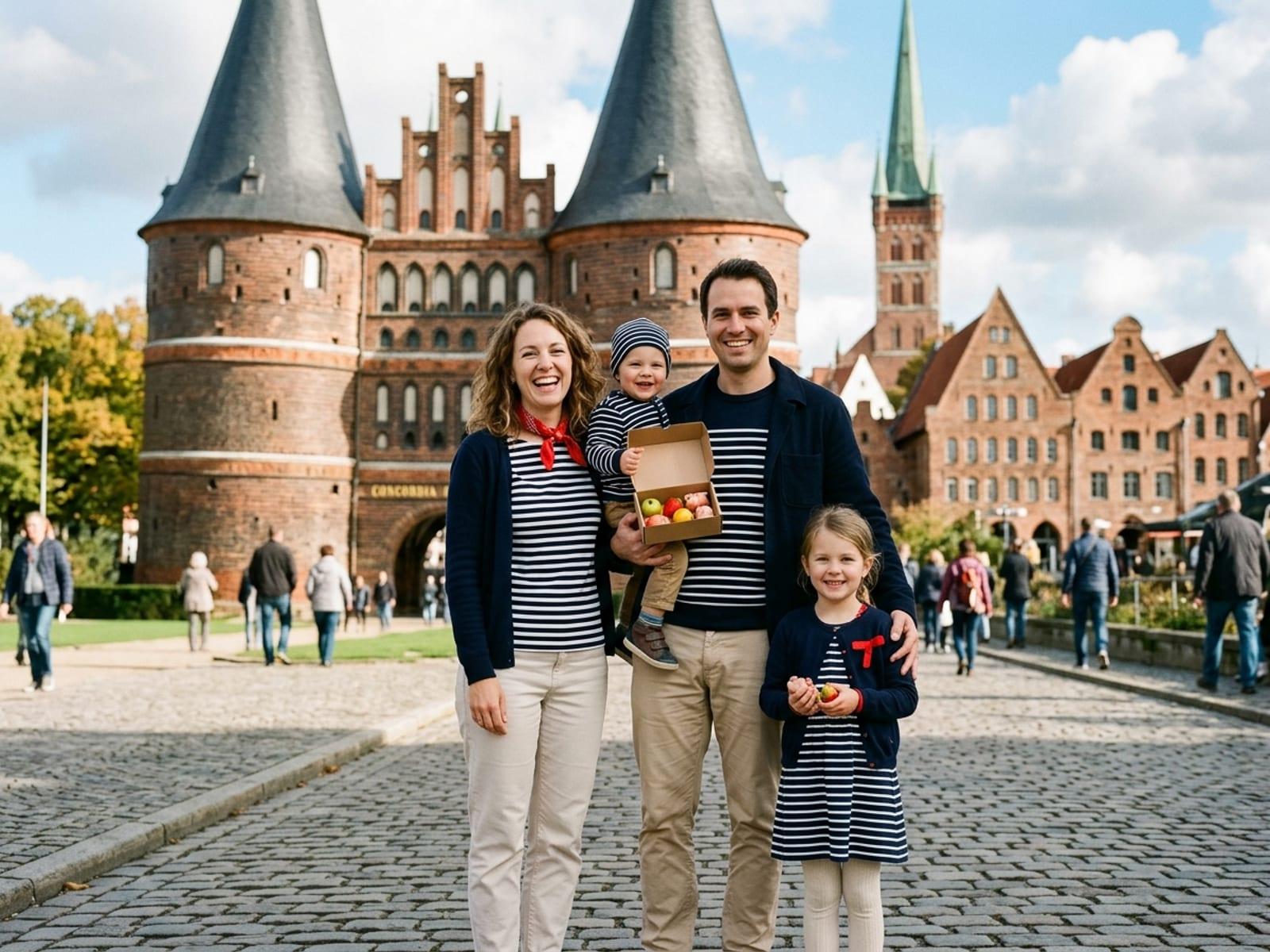
Marzipan is a sweet made by working ground almonds and sugar into a paste, and the northern German city of Lübeck is famous for it. The name "Lübecker Marzipan" is protected as an EU geographical indication, so only marzipan made in a defined area to a defined recipe can use it. Lübeck's old town, known for its red-brick Holstentor gate, is also a UNESCO World Heritage Site, and you can buy marzipan there all year, picking out pig- and fruit-shaped pieces with the kids as you walk (though children with nut allergies can't eat it).
The rules behind the name, and how much almond goes in
Marzipan starts as Marzipanrohmasse, raw marzipan paste. It's made from two parts almonds to one part sugar, cooked and stirred to drive off moisture, and German guidelines say it may contain no more than 17 percent water and must have at least 28 percent almond oil. The marzipan you find in shops is this raw paste with more sugar added.
Only marzipan made in Lübeck and the neighboring towns of Bad Schwartau and Stockelsdorf may be called Lübecker Marzipan, a name protected as an EU geographical indication since 1996. Local makers voluntarily hold themselves to a standard of at least 70 percent raw paste and no more than 30 percent added sugar. The higher grade, Lübecker Edelmarzipan, has at least 90 percent raw paste and no more than 10 percent sugar. The more almond there is, the less sweet the marzipan and the stronger its almond flavor.
Königsberger Marzipan sounds similar, but it's marzipan with a toasted, browned surface, and that name is a generic term anyone anywhere can use. Taste the two side by side and you'll see how much difference a little browning makes.
A shop from 1806, and the story of a marzipan town
Marzipan first appears in Lübeck's guild records in 1530, but the city only came to be called a "marzipan town" after 1800. In 1786 a confectioner named Maret opened a shop, and Johann Georg Niederegger, who worked there, became a master confectioner with a business of his own in 1806. Over the following decades about a dozen marzipan factories sprang up in the city.
Niederegger's flagship store stands in the heart of the old town, opposite the town hall. It has a shop and a café, and upstairs a marzipan museum. The writer Thomas Mann is said to have been a customer. The company is said to have used less sugar than other makers ever since its founder's day. Lübeck has several other long-established marzipan makers too, and each has its own recipes and shapes.
The town also knows how to make headlines. Lübeck's makers have entered the Guinness World Records with Erwin, a giant marzipan pig (2001), a dress made from 25,000 marzipan sweets (2002) and a relief of Leonardo da Vinci's The Last Supper made from five tonnes of marzipan (2003). Start with these stories, and children grasp right away that marzipan is a sweet you can sculpt like modeling clay.
On marzipan's origins, Lübeck has a legend that during a famine in 1407, almonds and sugar were all the town had left, so people made bread from them, and that was the start of marzipan. Critics point out that almonds and sugar were expensive goods at the time and could easily have been traded for bread or fish, so the story doesn't hold together. Tell it to your children as an old town tale.
With children, go for the shapes
Since marzipan is so easy to mold, much of it comes shaped like fruit, vegetables and animals. The one with the most meaning in Germany is the Marzipanschwein, a marzipan pig. It's a popular good-luck gift, and comes in sizes from small enough to sit in a child's palm to large ones meant as presents. You'll also often see Marzipankartoffeln, small round "marzipan potatoes."
There are lots of other ways to eat it too: bars like a chocolate bar, bite-sized pieces coated in chocolate, or marzipan baked inside a whole cake. If it's your first time, buy a small assortment, have everyone in the family taste one of each, and then go back for more of the ones you liked.
One thing to keep in mind is that marzipan is essentially almonds. Anyone with a nut allergy can't eat it. Almonds also turn up in many of the other sweets in these shops, so if you're visiting with a child who has an allergy, be careful with samples in the store as well. Assortment boxes mix lots of different sweets, so check the ingredients list before handing any to a child.
Walking the World Heritage old town
Lübeck's old town was added to UNESCO's World Heritage list in 1987. The city flourished as the center of the medieval Hanseatic League, and its old town sits on what is effectively an island ringed by water, lined with red-brick churches and merchants' houses. The Holstentor, the gate at the western entrance to the old town, was built between 1464 and 1478. Its two round towers side by side are the classic backdrop for a Lübeck souvenir photo.
The old town is small enough to explore on foot, but much of it is cobbled, and a stroller can be hard going in places. This is a northern port city, and the wind off the sea can be cold, so bring an extra layer whatever the time of year. Port-town clothes like a Breton-striped top with a navy jacket look great against the red brick.
You can see what a family photo in front of the Holstentor with a box of marzipan might look like with pokesta's AI photos ($1 per photo). If you visit in winter, you could also combine Lübeck with Nuremberg's Christmas market and make it a Christmas market tour of Germany.
When to go and how to get there
Marzipan is on sale all year round. In December Lübeck has its own Christmas market, including a handicrafts market inside the Hospital of the Holy Spirit. In summer you can add a day at the beach in Travemünde, a district of the city on the Baltic coast.
The nearest airport is Hamburg (HAM), about 74 km southwest of Lübeck. Regional express trains run every 30 minutes from Hamburg Hauptbahnhof to Lübeck Hauptbahnhof. Stay in Hamburg on a Saturday night and you can have a herring roll at the Sunday-morning Fischmarkt by the harbor before moving on to Lübeck by lunchtime. Marzipan keeps fine at room temperature, but chocolate-coated pieces can melt in summer, and if you pack it in checked luggage, wrap the boxes so they don't get crushed. Rules on bringing food into a country depend on where you're going home to, so look those up too. Entry requirements for Germany depend on your nationality, so check your own government's official information before you travel.
Buy one box to take home and one piece to eat on the spot. If your family can taste the difference in almond content, you're already Lübeck marzipan experts.
References