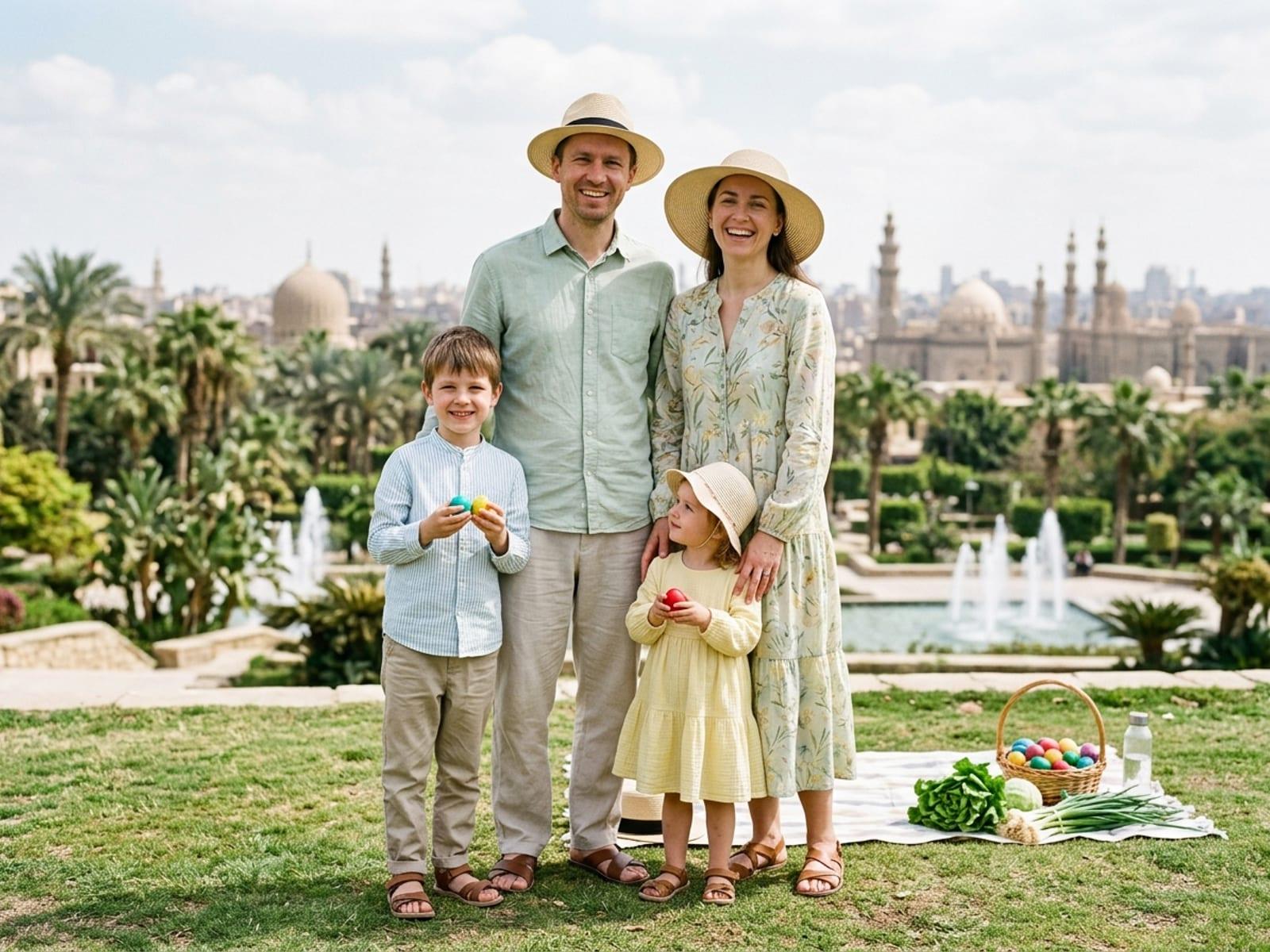
Sham el-Nessim 2027 falls on Monday, May 3, the day after Coptic Easter on May 2. It is a national spring holiday that Muslims and Christians celebrate together, and the custom is to color hard-boiled eggs and spend the whole day outdoors. Egypt's parks and the banks of the Nile fill up with families on picnic blankets from early in the morning. It's one of the few Egyptian holidays a visitor can join in without any special preparation.
A day for "smelling the breeze," said to go back to ancient times
Sham el-Nessim means roughly "smelling the breeze" in Arabic. Its origins aren't clearly recorded, but it is widely believed to date back to ancient Egypt, and one theory traces the name to Shemu, the ancient Egyptian word for the harvest season. It is often described as a spring festival tied to the changing seasons of the Nile and the start of the farming year. Some accounts say it was being celebrated by around 2700 BC at the latest, though how much of those early celebrations survives in today's customs is unclear. Still, for Egyptians it is a spring tradition handed down from the age of the pyramids.
When Egypt became Christian, the day was linked to Easter, and after Islam spread it kept its Easter-based date. That's why it remains a seasonal holiday everyone celebrates, rather than a festival of any one religion.
The date follows Coptic Orthodox Easter
Sham el-Nessim falls on the Monday after Easter as celebrated by Egypt's Coptic Orthodox Church. The Coptic Church sets Easter by the Julian calendar, so it often comes later than Easter in the Western churches, and the date changes every year.
In 2027 Coptic Easter is on May 2, five weeks after Western Easter on March 28, so Sham el-Nessim is on Monday, May 3. In 2028, Eastern and Western Easter coincide on April 16, putting Sham el-Nessim on Monday, April 17. In 2029 Easter is on April 8, which makes it Monday, April 9.
The government announces the holiday officially, and not very far ahead. In 2025, the prime minister's decree making Monday, April 21 a paid holiday for the public and private sectors was reported on April 14, a week before. Check again as your trip gets closer. In 2027 Labour Day falls on Saturday, May 1, two days before Sham el-Nessim, and leisure spots across the country get very crowded. Some calendars list Coptic Easter Sunday as a holiday too, though the 2025 decree named only the Monday. The Eid al-Adha holiday follows around May 16, on a date that depends on the moon.
Colored eggs, and pungent fesikh
The one thing every table needs on this day is colored hard-boiled eggs. Families dye and display eggs at home, and an old custom has people writing wishes on eggs and hanging them from trees or the eaves of their houses. For children it's the best part, and even when you're traveling, if you can get hard-boiled eggs and food coloring at your hotel, you can set aside time to dye eggs as a family.
You don't need special equipment. Let the boiled eggs cool, dip them in warm water with food coloring dissolved in it, then take them out and let them dry once they're the color you want. Simmering onion skins gives you a liquid that dyes eggs a soft reddish brown. If children draw patterns or write their names on the shells in crayon before dyeing, those parts stay white, so everyone can tell whose egg is whose. The dyed eggs travel well in their shells, so you can take them straight to a picnic in the park.
The other signature food is fesikh, gray mullet that has been salted and fermented. It's known for its powerful smell and saltiness and is usually eaten with lettuce and green onions. Lupin beans also turn up on this day, and medieval records mention chickpeas too. Badly prepared fesikh can cause food poisoning, though, and cases are reported in Egypt every year, mostly around this holiday. The Ministry of Health urges people to buy it from known vendors and check the expiry date. If you want to try it, have just a little from a shop with a solid reputation rather than from a street seller. It's safest for young children and pregnant women to skip it.
Where Cairo families spend the day
Egyptians spend the day in parks and green spaces, along the Nile and at zoos. Large numbers of families head every year to Al-Qanater, the Nile-side gardens north of Cairo in Qalyubia Governorate, and to the city's parks. In 2014, more than 500,000 people were reported to have visited Al-Qanater alone. For visiting families, Al-Azhar Park in the historic Darb al-Ahmar district is the easiest choice, and it pairs well with the Khan el-Khalili bazaar and El Fishawy coffeehouse in the old city. It covers about 30 hectares and opened in 2005. It has landscaped gardens, fountains and a playground, and from the paths on its high ground you can see the domes of the Muhammad Ali Mosque. A stretch of 12th-century Ayyubid city wall, uncovered while the park was being built, is worth a look too.
How people celebrate depends on the town. In 2014, more than 70,000 people were reported to have visited the Giza Zoo, beaches such as Hurghada on the Red Sea were packed, and in Aswan Governorate entry fees were waived at 140 public parks. Some towns, like Port Said, keep an old custom of burning effigies. Where in Egypt you spend the day makes a big difference to what you see.
Plenty of people also walk along the Nile or take boat rides. Everywhere gets busy fast from late morning, so with children it works well to arrive early, claim a shady spot, and head off in the early afternoon before the crowds peak.
Prepare for crowds and strong sun
In April and May the midday sun in Cairo is already fierce. With hats, sunscreen, plenty of water, a blanket and some light food, spending half a day in a park is easy enough. Wear things that block the sun but let the air through, such as long-sleeved cotton shirts or dresses. Families around you will be dressed up for the day, so bright colors will make your photos feel springlike too.
With so many people out, public transport and park entrances get crowded. Agree with your children on a place to wait if you get separated, and give them a note with a parent's phone number. Near the water, keep your eyes on them. When you take family photos, face a direction where other families won't end up in the shot, and don't point your camera at other people's children.
You can see how a photo of your family holding colorful eggs might look with pokesta's AI photos ($1 per photo, and your first one is free). Other families' Sham el-Nessim photos are worth a look too.
When to go and getting there
Cairo's gateway is Cairo International Airport (CAI), about 15 km northeast of the city. Domestic travel picks up from Coptic Easter through Sham el-Nessim, so book airport transfers and hotels early. To reach Al-Azhar Park or other city parks, a taxi or ride-hailing app is the most reliable option.
This time of year, while spring is still comfortable, is also a good time to combine the trip with the Pyramids of Giza. Once May arrives, though, the heat builds, so do outdoor sightseeing in the morning. Entry requirements and safety information for Egypt vary by nationality, so check your own government's official information before you leave.
References