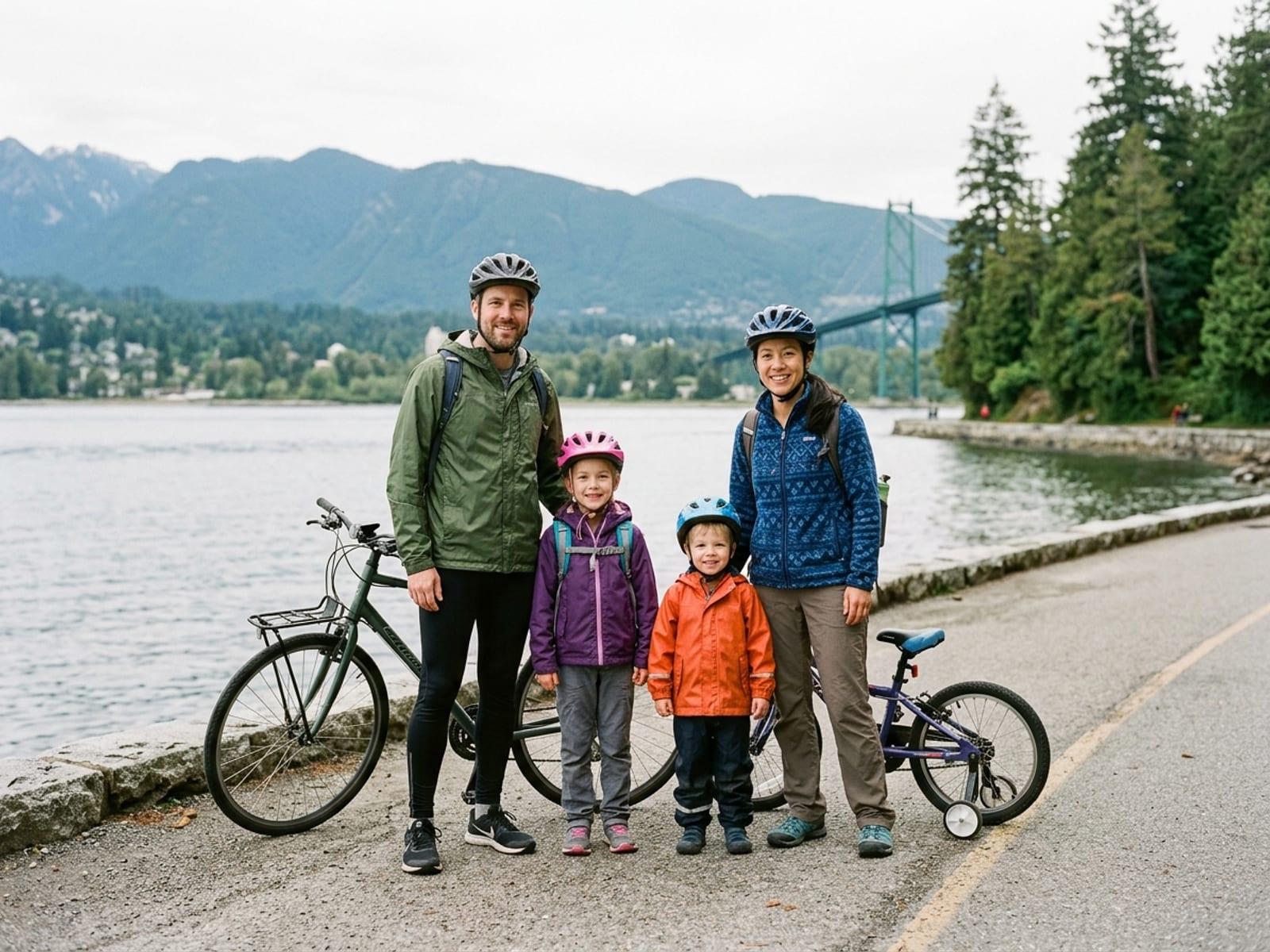
Within walking distance of downtown Vancouver's towers lies a 405-hectare park thick with giant cedars and firs. This is Stanley Park, opened in 1888. All the way around it runs the Seawall, a waterfront path 8.8 km long. For a family, the day almost plans itself: rent bikes and ride the Seawall, stop for the totem poles and the lighthouse on the way, and spend the afternoon at the aquarium. The drier summer months are the easiest time to do it.
From Indigenous land to a forest beside the city
The peninsula this forest grows on has been lived on and used by Indigenous peoples for thousands of years. Evidence of human settlement more than 3,000 years old has been found, and the Squamish people had a large village inside what is now the park. The Musqueam people also drew on the resources of the area.
The park officially opened on September 27, 1888, and was named after Lord Stanley, then Governor General of Canada. It was designated a National Historic Site of Canada in 1988, and in 2013 it was named the world's best park in user ratings on a travel website. From the park's north end, the Lions Gate Bridge stretches across to the mountains of the North Shore.
The Seawall: two hours on foot, one on a bike
Work on the Seawall began in 1917, and it took decades to complete the loop around the park. The stretch around the park alone is 8.8 km, and the full waterfront path through the city runs to 22 km.
Walkers have their own lane, separate from the lane for bikes and in-line skates, and the bike lane is one-way, counterclockwise. Walking the loop takes about two hours; cycling, about one. With kids, a bike is the easiest way to do it. There are no bike rental shops inside the park, so rent near the park entrance, around the corner of Denman and Georgia streets, before you head in. According to Destination Vancouver, some shops rent child seats and trailers, and locks and helmets are included with rentals. On summer weekends especially, check ahead that the shop has a size that fits your child.
If you're not sure you can manage the full loop, don't ride as far as you can and turn back. Stick to the one-way rule and decide in advance where you'll cut out. Destination Vancouver suggests a shorter option if you get tired: from Second Beach on the west side, return toward the rental shops past Lost Lagoon.
The waterfront path is windy and the weather changes quickly, so bring a light jacket and rain gear even in summer. Check that the rental helmets fit your children's heads properly, too.
Totem poles and a lighthouse at Brockton Point
Ride counterclockwise from the downtown side, past the harbour at Coal Harbour, and you reach Brockton Point at the park's eastern tip. Its ten totem poles are among the most popular attractions in British Columbia. The first four were brought down from Alert Bay to the north in 1924, others later came from Haida Gwaii and elsewhere, and in 1962 the collection moved to its current site. Many have been replaced with replicas, with the originals preserved in museums. In 2009 a new pole by a Squamish Nation carver was raised.
Each pole is carved with animal and human figures stacked one above another. Guessing the animals with your children is a fun way to look at them, but the poles tell the histories of Indigenous families and clans. Don't touch or climb them, and view them from a little distance. Just beyond stands a white lighthouse, built in 1914, marking the easternmost point of the park.
Past Brockton Point, you'll see a statue of a woman in a wetsuit sitting on a rock offshore. Continue around to the north, pass under the Lions Gate Bridge and come out on the west side, and Siwash Rock appears, rising from the water like a pillar. If you still have energy, Destination Vancouver also suggests leaving the park and riding from the beach at English Bay along False Creek to Granville Island, then coming back on a small ferry.
Canada's largest aquarium, and a miniature train
The Vancouver Aquarium, which opened in 1956, is inside the park and is the largest aquarium in Canada. There are exhibits where you can see sea otters and sea lions, touch tanks with local sea life, play areas for children, and scheduled talks about the animals. Whales and dolphins are no longer kept there. Check the official website for admission, hours and booking.
A favourite with small children is the Stanley Park Miniature Railway, which runs through the forest. The current line has operated since 1964, and its locomotive is a replica of Canadian Pacific Railway No. 374, which pulled the first transcontinental passenger train into Vancouver in the 1880s. There are seasonal runs with different decorations, and operating days vary by time of year, so check the City of Vancouver's official page.
Things to watch with kids
The park is big, and once you're on the forest trails there are fewer people around. Wild animals live in the woods, so keep your children in sight and don't approach or feed any animals. Keep food bags closed while you carry them.
If you're cycling, talk to your kids before you start about the one-way rule and about staying out of the walkers' lane. When they get tired, take a break at one of the beaches along the way. Third Beach and Second Beach on the west side have concession stands where you can fill up on ice cream or a burger, and Second Beach also has an outdoor pool.
You can see what a family photo with your bikes stopped on the Seawall, sea and mountains behind you, might look like with pokesta's AI photos, at $1 per photo with your first one free.
Getting from the airport to the park
The gateway airport is Vancouver International Airport (YVR). Take the SkyTrain's Canada Line from the airport to Waterfront Station downtown, then bus, taxi or walk to the park entrance. Fares from the airport stations include an extra airport surcharge. The park is open all year, but the drier summer is the easiest time to get around. Canada's entry requirements depend on your nationality, so check your own government's official information before you travel.
For a sweet side trip in British Columbia, you can cross to Vancouver Island and visit the home town of the Nanaimo bar. Heading inland, you can add fruit picking in the Okanagan Valley in summer and autumn, or the Rockies' Lake Louise and Moraine Lake.
References