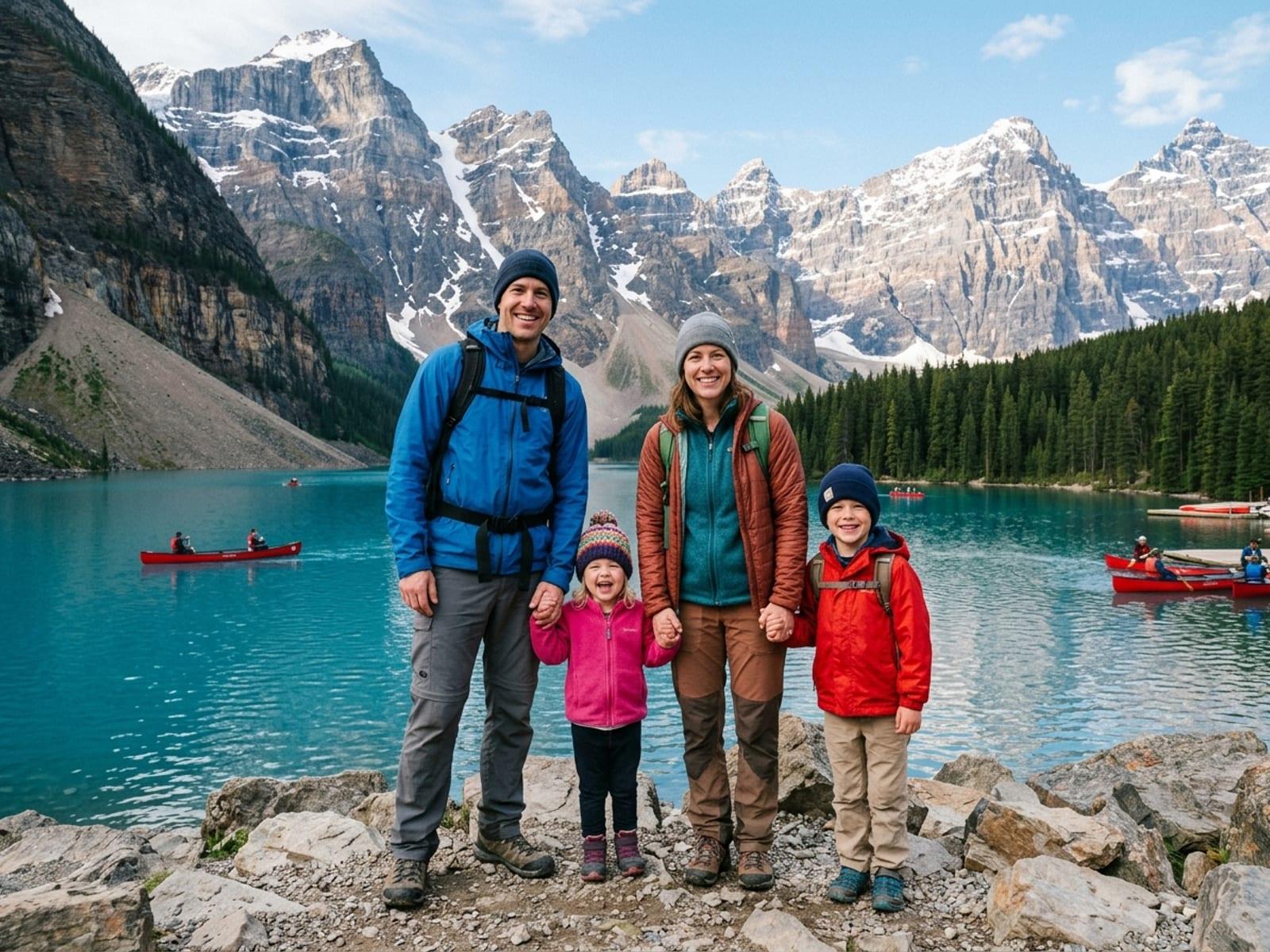
Lake Louise and Moraine Lake, in Banff National Park in the Canadian Rockies, owe their turquoise colour to rock flour ground by glaciers, and they look most vivid from late June to around September. The road to Moraine Lake is now closed to private cars all year, so families today book the Parks Canada shuttle and see both lakes by bus. For small children, the 300-metre Rockpile trail at Moraine Lake is about the right size.
Canada's first national park, and its two lakes
Banff National Park was established in November 1885 as Rocky Mountains Park, the first national park in Canada. It lies west of Calgary, about 128 km by road to the town of Banff. The hamlet of Lake Louise is about 54 km further northwest, where the Trans-Canada Highway meets the Icefields Parkway, the road that runs between the glaciers.
Lake Louise sits at 1,750 metres. It's about 2 km long and 500 metres wide, and 70 metres deep at its deepest point. It's named after Princess Louise Caroline Alberta, a daughter of Britain's Queen Victoria. The Stoney Nakoda people, who have long lived in the area, called it the "lake of little fishes." On the east shore stands the Chateau Lake Louise, a hotel built by the Canadian Pacific Railway in the early 20th century.
Moraine Lake, at about 1,884 metres, is in the Valley of the Ten Peaks, roughly 14 km in from the hamlet of Lake Louise. The view of the peaks lined up behind it appeared on the back of Canadian twenty-dollar bills in 1969 and 1979, and people still call it the "Twenty Dollar View."
The turquoise comes from rock flour
The colour of both lakes comes from rock flour, a fine powder of rock ground down by glaciers. In summer, meltwater flowing in from the glaciers carries this very fine powder into the lakes. The particles stay suspended in the water and scatter light, which produces that turquoise colour.
That's why the colour is most vivid in summer, when the melt is well under way. Moraine Lake is fed by snow and glacier water and doesn't reach its full level until mid to late June. Earlier in the season the water is lower and the view may not look like the photos. If your children ask why the water is that colour, you can tell them it's because glaciers grind the mountains into powder, and the powder floats in the lake.
Getting to Moraine Lake by shuttle
Since 2023, the road to Moraine Lake has been closed to private vehicles all year. The only ways in are the Parks Canada shuttle, public transit, licensed tour operators, and the lakeside lodge for its overnight guests. You can also cycle or walk up the road, but it's 10 km each way.
When we checked Parks Canada's information in October 2026, the Lake Louise shuttle ran from May 15 to October 12, and the Moraine Lake shuttle and the Lake Connector between the two lakes ran from June 1 to October 12, weather permitting. Shuttles leave from the Park and Ride lot at the Lake Louise ski resort. Reservations open in mid-April, and some extra seats are released on the morning two days before departure. You can book up to 10 seats in one reservation, so you can secure seats for the whole family at once.
One ticket covers Lake Louise, Moraine Lake, the connector between the lakes and the return trip to the parking lot. You need a national park pass separately. Fares, booking fees and schedules change from year to year, so always check Parks Canada's official page. Parks Canada notes that on busy days you may wait 30 minutes to an hour at the stops.
For people who want to see sunrise on the lakes, there are early "Alpine Start" departures from the Lake Louise lakeshore parking lot at 4 and 5 a.m. Getting small children moving at that hour is hard work, though, and daytime shuttles are plenty for a family trip. Build a relaxed plan around naps and meals, such as one lake in the morning and the second after lunch. Allow for waiting time at the stops, and think ahead about snacks, drinks and bathroom breaks.
Walking with kids: start with the short trails
The most popular trail at Moraine Lake climbs the Rockpile, a mound of boulders heaped at the end of the lake. It's about 300 metres long with roughly 24 metres of climbing, short enough for small children. From the top you look down on exactly the view printed on the twenty-dollar bill.
At Lake Louise, just walking along the shoreline is enough to take in the scenery. On the northeast shore there's a boathouse with rentals, and in summer people paddle out in canoes. Families with more stamina can hike 3.5 km through the forest, climbing about 400 metres, to the Lake Agnes Tea House. The Canadian Pacific Railway first built it in 1901 as a rest stop for hikers. It's open from June to October and can only be reached on foot or on horseback.
More than 50 species of mammals live in Banff National Park, including grizzly bears, black bears, elk and moose. On the trails, don't let children run ahead, never leave food unattended, and keep away from wildlife. Mornings and evenings by the lakes are cold even in summer, so pack a fleece and a waterproof jacket for everyone. You can see what a family photo against a brilliant blue lake might look like with pokesta's AI photos, at $1 per photo with your first one free.
Season and getting there
The lakes look their best from late June to around September. In winter, Lake Louise freezes, and people skate and ice fish on it. The gateway airport is Calgary International Airport (YYC); from there, drive through the town of Banff to Lake Louise. You need a national park pass to stop and sightsee in the park, and passes are frequently checked at Lake Louise, especially in summer. Long stretches of the highways through the park are fenced, which has greatly reduced collisions between animals and vehicles. If you spot elk or bears by the road while driving, don't stop and get out of the car. Canada's entry requirements depend on your nationality, so check your own government's official information before you travel.
A summer Rockies trip can also take in the Calgary Stampede in July, or head west into British Columbia for fruit picking in the Okanagan Valley and a final day at Vancouver's Stanley Park.
References