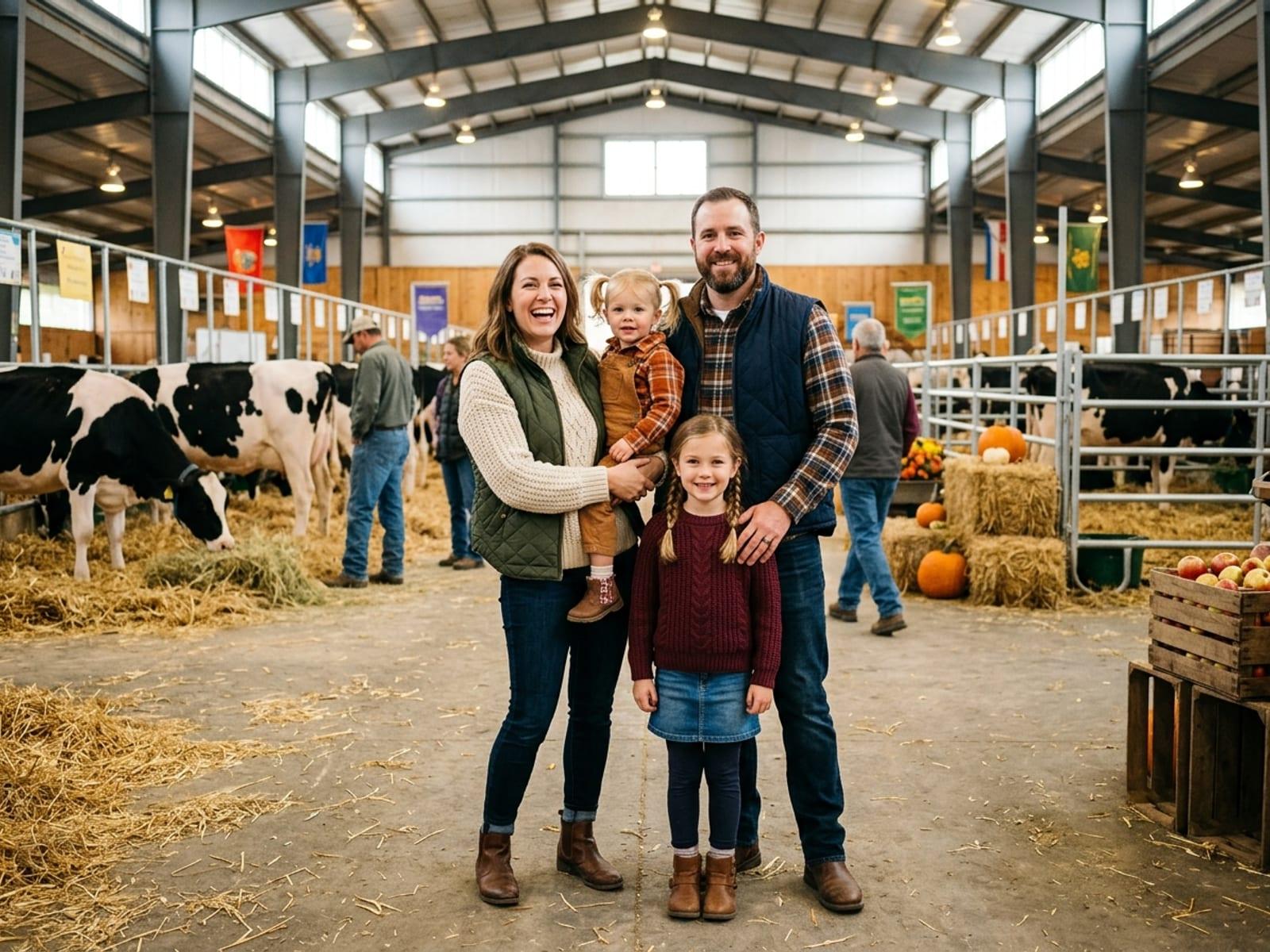
For about ten days each November, the Royal Agricultural Winter Fair fills Exhibition Place on Toronto's waterfront, putting livestock competitions and an international horse show under one roof. Is it free? No: general admission is a paid ticket, bought on the fair's website or at the gate. A ticket to the Royal Horse Show, though, includes entry to the fair on the same day. Inside you'll find cow-milking demonstrations, border collies herding sheep and sculptures carved from butter, the kind of thing that stops children in their tracks, and because it's all indoors, a cold, rainy day outside doesn't spoil anything. The 2026 fair, in its 104th year, runs from November 6 to 15.
A farm fair with a royal name
The fair began in 1922 as a livestock show in the Coliseum building at Exhibition Place, on Toronto's waterfront. Even before it opened, in 1920, it had received permission from King George V to use the word "Royal" in its name.
Today the fair also fills the Enercare Centre, and Toronto's tourism agency bills it as the largest indoor agricultural and equestrian event on earth. Thousands of animals raised by breeders and producers come to be judged, and there are also categories for grain, fruit and vegetables. For farmers, it's the place to show off a year's work.
Exhibits for the kids, horses for the grown-ups
One of the fair's best-known sights is the butter sculpture. Inside a dedicated display trailer, sculptors carve figures out of huge blocks of butter, and you can watch them work from outside. The fair also runs an at-home Butter Sculpture Challenge, inviting people to carve their own butter sculptures and enter them.
There's plenty of hands-on contact with animals. At the petting farm, the people who care for the animals answer questions, and in the dairy area you can see cows being looked after, calves and milking up close. The Animal Theatre has herding dog demonstrations, with border collies moving flocks of sheep, and the SuperDogs show, full of jumping and racing dogs. For younger children there's the Farm and Play Zone, with interactive displays and things to play with.
For adults, the main event is the Royal Horse Show, at the heart of the fair since its earliest days. International-level riders compete in show jumping, dressage and other disciplines. For 2026, rodeo events such as bull riding, familiar from the Calgary Stampede out west, are also on the schedule, at 11 a.m. and 2 p.m. The horse show has its own reserved-seat ticket, and that ticket also covers general admission to the fair that day, so book early once you know which day you want.
There's also an unusual event that mixes horses and dogs. In the Royal K9 Equine Challenge, a horse and rider jump a course while a dog runs an obstacle course alongside them, and each team of person, horse and dog competes together. For a child who loves both animals, it's hard to beat.
Food is part of the draw too: paid events where Canadian chefs teach cooking, and a showcase of food grown and made in Ontario. A holiday market was added in 2026, so the November fair doubles as an early Christmas shopping trip.
Where food comes from, shown as real work
What makes this fair good is that it presents farming as a job rather than a spectacle. The city's tourism board highlights beekeeping, wool auctions, milking cows and homemade jam as ways for visitors of any age to learn what farmers do. For kids who only see milk and honey on a supermarket shelf, watching a cow give milk or seeing honey gathered from a hive is more of an eye-opener than you might expect.
The show halls are filled with animals that farmers have spent a year raising. It's an unfamiliar place for them, so before you go in, tell your kids not to lean over the rails or shout. When you take photos, stay where you won't get in the way of the animals or their handlers, and ask before you shoot. Flash can startle animals, so turn it off.
Practical tips for a day with kids
The grounds are large, and the exhibits are spread across several buildings. Trying to see everything will wear children out, so check the map and that day's demonstration times as soon as you arrive, and narrow your list to two or three must-sees. The herding dog and SuperDogs shows run at set times, so they make a good backbone for the day. Food courts get packed around noon; eating a little earlier or later makes it easier to find somewhere to sit the kids down.
If you bring a stroller, avoid the livestock aisles at their busiest or switch to carrying your child in that section. Pack light and bring one big bag to stuff coats into, so your hands are free indoors.
Some children are startled by the smells and noises in the animal areas. Wash hands after touching any animals. Straw bedding can end up on the floor of the livestock aisles, so wear shoes you don't mind getting dirty. The mechanical bull ride has a minimum height of 48 inches (about 122 cm), and riders under 18 need a waiver signed by a parent or guardian.
Expect a big temperature difference between getting there and being inside, so dress in layers you can easily shed. November in Toronto is cold, sometimes with flurries. Once you're in, take off your coat; a plaid shirt or sweater looks right at home among the cows and hay bales in photos. You can try a picture of the whole family among the cows and horses with pokesta's AI photos, at $1 per photo, with your first one free.
For 2026, the fair is open from 9 a.m. to 6 p.m. on Sundays and Mondays and from 9 a.m. to 8 p.m. Tuesday through Saturday. Adult and child admission prices are set each year and shown on the fair's ticketing page, and you can also buy at the gate, which takes Visa, Mastercard, debit and cash. Chef classes are priced separately, so work out who in the family wants to see what before you buy.
When to go and how to get there
The fair runs for about 10 days from early to mid-November each year. In 2026 the dates are November 6 to 15. Check the official site for the 2027 dates.
The gateway airport is Toronto Pearson International Airport (YYZ). The UP Express train runs from the airport to Union Station downtown in about 30 minutes, every 15 minutes. From Union Station, the simplest way to Exhibition Place is one stop west on GO Transit to Exhibition station; the 509 streetcar also goes there. If you're coming in by train from the suburbs, look at the combo pass that bundles a GO Transit round trip with fair admission: in 2026 it cost C$48.28 for a single rider and C$103 for a family of two adults and two children. It must be booked online, covers one same-day round trip only and isn't valid on the UP Express. Walk east from Union Station instead and you reach the St. Lawrence Market, where a peameal bacon sandwich makes a good start before heading to the fair.
If the fair leaves you wanting more of Ontario's food, the Kawarthas, northeast of Toronto, have a whole bakery route devoted to butter tarts, the province's pioneer-era sweet.
Canada's entry requirements depend on your nationality, and some travelers need an eTA (Electronic Travel Authorization) before flying. Check the Government of Canada's official website, and look at your own government's travel advice for safety information.
References