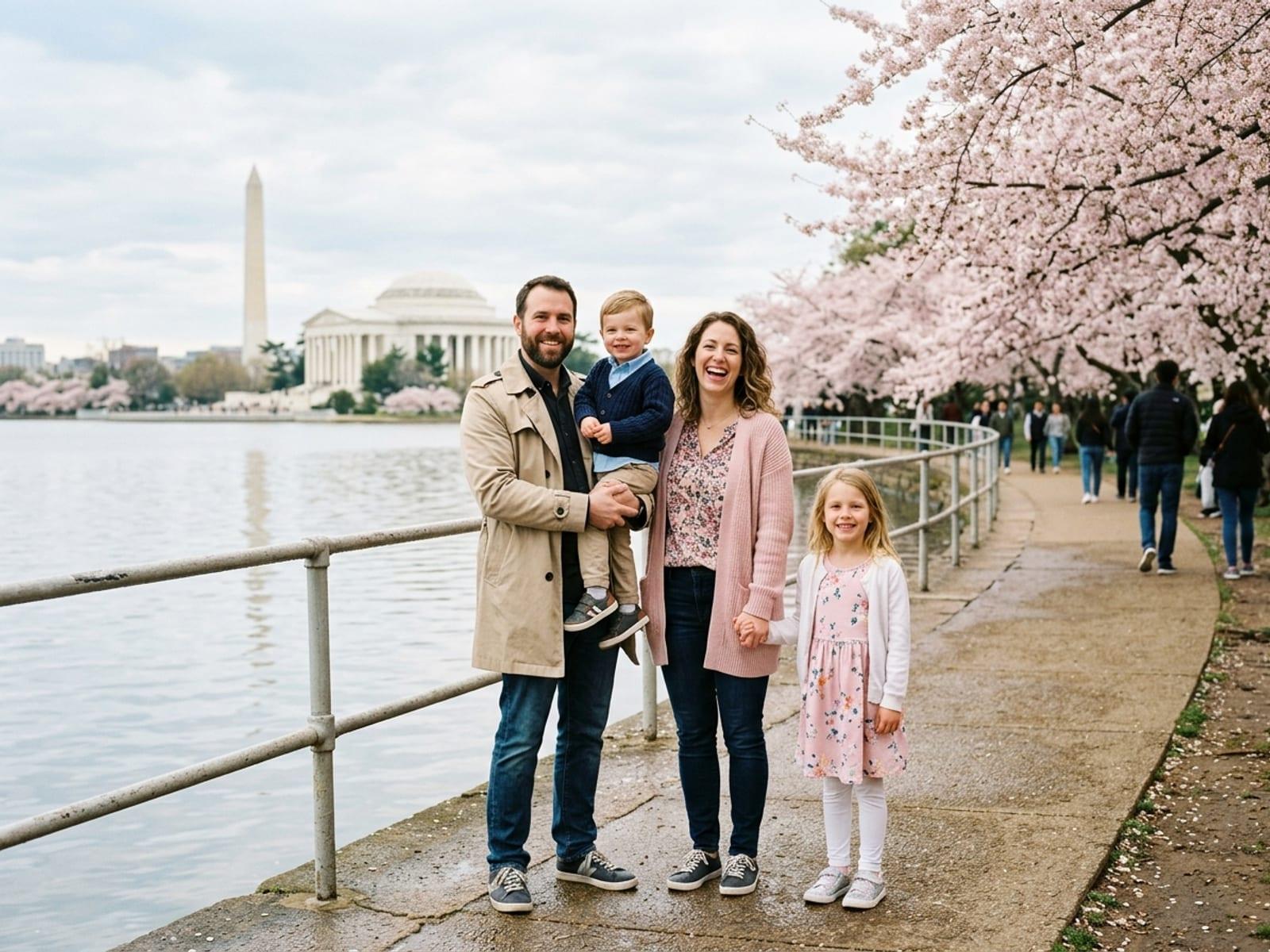
Spring in Washington, D.C. starts with cherry blossoms turning the Tidal Basin pale pink. The 2027 National Cherry Blossom Festival runs for about three weeks, from March 20 to April 11. Peak bloom itself depends on the weather and arrives sometime between late March and early April. Walk the water's edge in the morning around peak bloom, add a weekend kite festival or the parade, and children will have plenty to keep them busy.
3,020 trees from the city of Tokyo
The trees were a gift of friendship from Tokyo's mayor, Yukio Ozaki. The first shipment of 2,000 trees, in fact, was found to carry insects and disease during inspection in 1910 and had to be burned. A new shipment of 3,020 trees in 12 varieties arrived on March 26, 1912. The next day, First Lady Helen Taft and Viscountess Chinda, wife of the Japanese ambassador, planted the first two Yoshino cherry trees on the north bank of the Tidal Basin. Both trees are still standing, with a bronze plaque nearby.
In 1915 the United States sent flowering dogwoods to Tokyo in return. In 1954, to mark the 100th anniversary of the first treaty between the two countries, Japan gave a stone lantern about 300 years old; a ceremonial lighting of the lantern is still part of the festival. In 1965 another 3,800 Yoshino trees were given, and many of them were planted around the Washington Monument. As a festival, it began with a three-day celebration organized by the city in 1934 and has been held every year since 1935.
Residents have fought for the trees, too. In 1938, when people learned that cherry trees would be cut down to build the Jefferson Memorial, some chained themselves to the trees in protest, an episode known as the "Cherry Tree Rebellion." The compromise was to plant more trees along the south side of the Tidal Basin. In 1958 the city of Yokohama gave a five-tiered stone pagoda, which stands on the southwest shore. Of the 3,020 trees that arrived in 1912, 1,800, or about 60 percent, were Yoshino; the other eleven varieties went mainly to East Potomac Park. Walk both areas and you will notice differences in flower color and timing.
Peak bloom means 70 percent of the Yoshino blossoms are open
The National Park Service (NPS) defines peak bloom as the day when about 70 percent of the Yoshino blossoms are open. It usually falls between the last week of March and the first week of April. Even so, the records range widely, from March 15 in 1990 to April 18 in 1958, and recent years have moved around too: March 17 in 2024, March 28 in 2025 and March 26 in 2026.
According to the NPS, predicting peak bloom more than 10 days out is almost impossible. The buds pass through five stages on their way to opening: green color visible in the buds, florets visible, extension of florets, peduncle elongation, and finally puffy blossoms, when pink flowers push out from the wide green bases. NPS staff watch the buds and post which stage the trees have reached. Follow these updates for a week or two before you leave and the likely peak date gradually comes into focus. The blossoms last several days at their best and stay longer if the weather is cool and calm, but rain or strong wind can strip them quickly. Rather than aiming for a single date, it is safer to plan a stay of several days in the middle of the festival.
Kites, a parade and a Japanese street festival
Throughout the festival, mostly on weekends, there are events families can enjoy. In the official 2027 schedule, the Blossom Kite Festival on March 27 fills the spring sky with color. The National Cherry Blossom Festival Parade is planned for the morning of April 10 on Constitution Avenue, and the same weekend brings the Sakura Matsuri street festival with Japanese food and performances. For children, the National Park Service also runs a Junior Ranger program, the same kind it offers in parks such as Yellowstone. Times, venues and whether tickets are needed change from year to year, so check the official website.
The main viewing areas are around the Tidal Basin, in East Potomac Park and on the Washington Monument grounds. The Tidal Basin seawall has been rebuilt, and 306 trees were removed for the project. In December 2025 the NPS announced that the Tidal Basin seawall was complete and laid out plans to replant 426 trees in spring 2026, including 269 cherry trees. The new seawall has a wider walkway that should be easier for strollers, but the freshly planted young trees are still small, so in places the view will look different from older photos.
Take photos early and dress in layers
On a peak-bloom weekend the Tidal Basin is packed by late morning. For relaxed family photos, early morning is the best time. With fewer people around, you can frame the white dome of the Jefferson Memorial across the water and the blossoms neatly behind your family. Don't pick blossoms, pull on branches or climb the trees, and tell children before you start: look, but don't touch.
Late March and early April in Washington can swing between cold mornings and warm afternoons, so a cardigan or light coat that is easy to take off is handy. One soft pink item of clothing or accessory goes nicely with the blossoms and also makes your family easier to spot in a crowded photo. Going all the way around the basin is a long walk, so wear shoes you are used to.
After photos by the water, the Smithsonian museums along the National Mall make a good place to rest. There are 11 Smithsonian museums and galleries on the Mall, including the National Museum of Natural History and the National Air and Space Museum, and almost all of them are free. They are also a good backup on a rainy day when the blossoms are out of the question.
To see how your family might look together under the cherry blossoms, you can try pokesta's AI photos ($1 per photo).
When to go and getting there
The main international airport is Washington Dulles International Airport (IAD), about 42 km west of downtown. Since 2022 the Metro's Silver Line has run to the airport, so you can reach the city center without changing trains. Ronald Reagan Washington National Airport (DCA), which mainly handles domestic flights, sits even closer to the city. Head north by train and you can detour for a Philadelphia cheesesteak.
Hotels fill up around peak bloom. The 2027 festival dates are already published on the official website. Book early for dates that cover the middle of the festival, then adjust the order of your outings once the bloom forecast comes out. U.S. entry requirements depend on your nationality, so check your own government's official information before you go.
Even the experts find it hard to call peak bloom for a single tree. Leave some slack in your dates, catch one clear morning, and you will have your family's spring photo.
References