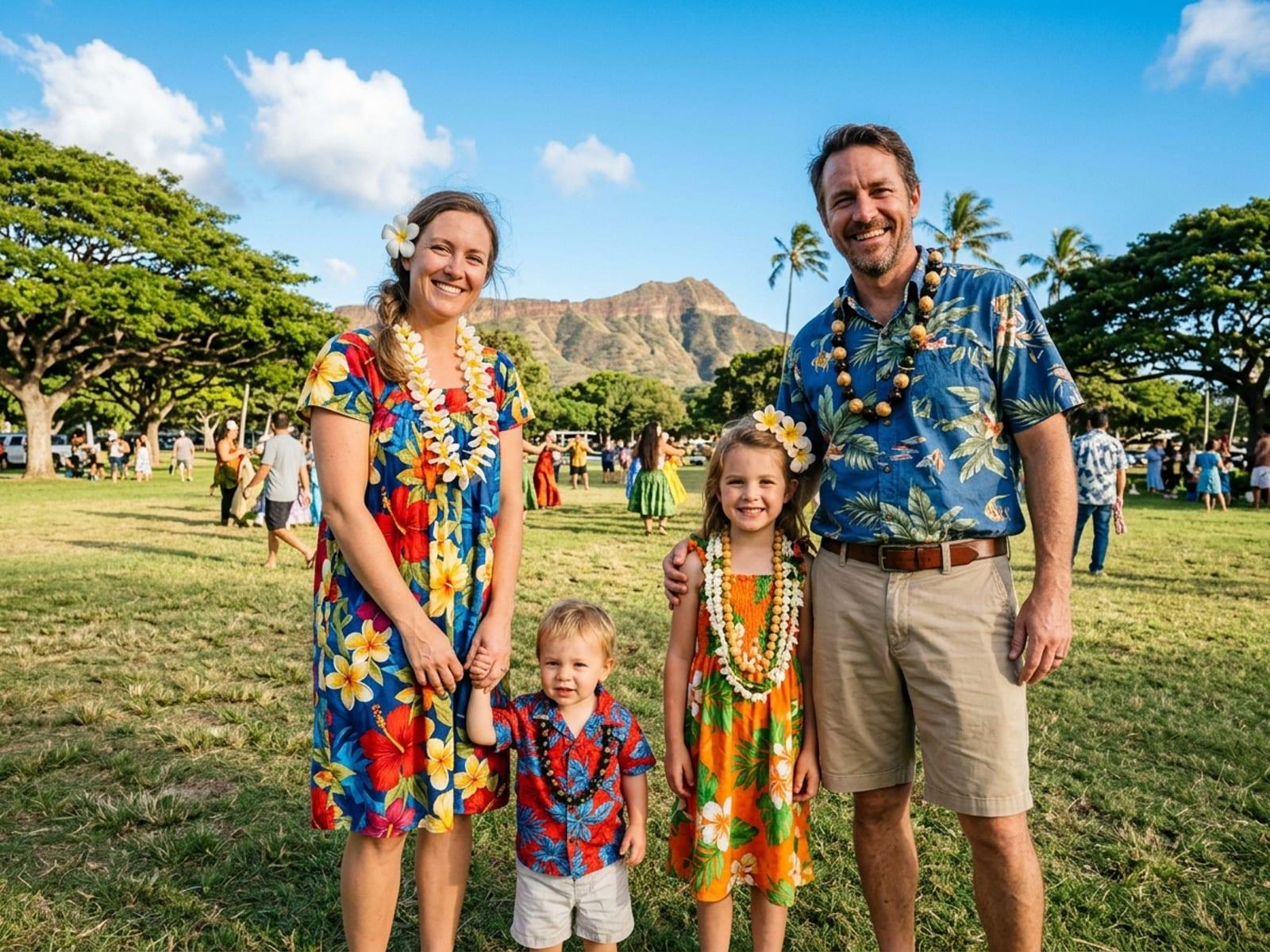
In Hawaii, May 1 is Lei Day. True to the saying "May Day is Lei Day," flower lei are given all over the islands, and schools and parks hold hula and music events. In Honolulu, the biggest celebration takes over Kapiʻolani Park from morning until late afternoon.
It began with a proposal for a holiday of Hawaii's own
Lei Day is a relatively young festival, born in Honolulu in the late 1920s. At the time, Hawaii celebrated holidays from the U.S. mainland and from immigrants' homelands, but none rooted in Hawaiian culture itself. Don Blanding, a poet and writer who contributed to a local newspaper, proposed a day celebrating the custom of making and wearing lei. It was the writer Grace Tower Warren who suggested May 1 and coined the phrase "May Day is Lei Day." In 1929 it was officially recognized as a holiday, and it has been celebrated on that date every year since.
Lei have long been given in Hawaii to express respect, love and welcome. Flowers are only one material; lei are also made from leaves, seeds and nuts, shells and feathers. Lei Day is also a day for passing on to the next generation the craft of lei making and the spirit of aloha that lei carry.
Honolulu's celebration: a full day at Kapiʻolani Park
Honolulu's largest Lei Day event is the celebration organized by the City and County of Honolulu at Queen Kapiʻolani Park, east of Waikiki. In 2026 it was held for the 98th time, with free admission. It ran from 9 a.m. into the late afternoon, opening with the Royal Hawaiian Band and continuing all day with performances by hula groups, Hawaiian music, lei-making workshops and craft booths.
One highlight is the investiture of that year's Lei Queen and her Lei Court. The Lei Court is made up of women representing the eight main Hawaiian islands, each wearing the lei that symbolizes her island. Each island has its own color and material: Hawaiʻi Island is red, with lehua blossoms; Maui pink, with lokelani roses; Oʻahu yellow, with ʻilima flowers; Kauaʻi purple, with mokihana; and Niʻihau white, with shells. Learning the colors beforehand makes the ceremony more fun to watch.
Another is the lei contest. More than 200 entries are displayed, and you can walk around enjoying the scent of the flowers as you look. There is also a category for lei made by children. By tradition, at the end of the celebration the displayed lei are taken to Mauna ʻAla, the Royal Mausoleum where Hawaiian royalty rest, and to Kawaiahaʻo Church.
In 2026, for example, the Royal Hawaiian Band welcomed visitors at 9 a.m., the Lei Court investiture began at 10 a.m., master lei makers gave demonstrations from around 11:30 a.m., and the contest lei went on display at 12:30 p.m. With children, a good plan is to watch the investiture in the morning and tour the displays in the early afternoon.
Beyond Oʻahu, each island holds its own events, such as the Lei Day Festival in Hilo on Hawaiʻi Island, concerts on Maui and the lei contest at the Kauaʻi Museum. If your trip includes Hawaiʻi Island, the family-run Kona coffee farms line the volcanic slopes on its west side, and some welcome visitors.
Schools in Hawaii also hold May Day programs around May 1, where children dance hula and play the roles of the Lei Queen and Lei Court representing each island.
What to wear: aloha shirts, muumuus and lei
There is no dress code for the Lei Day celebration, but you'll see lots of aloha shirts and muumuus, the loose, flowing floral dresses. If your family coordinates prints or colors, it's easy to match them to the colors of your lei, and your photos will look bright and festive. Shops around Waikiki sell children's aloha shirts and muumuus too.
The lei are the stars of the day. You can buy them at the venue or at florists around town, but fresh-flower lei wilt quickly, so put them on the day itself. The sun is strong, so bring hats and sunscreen.
Lei etiquette, and a day on the park lawn
When you give a lei, place it gently over the person's shoulders so that it hangs evenly in front and behind. In Hawaii it is customary to add a light kiss on the cheek, but between visitors a smile and an "aloha" is plenty. Turning down a lei is considered rude, so accept it and wear it while you're with the person who gave it.
By tradition, a pregnant woman is given an open-ended lei, one whose ends are not joined. A closed lei is considered unlucky for the unborn baby, so a maile-leaf lei or a haku lei worn on the head is often chosen instead. If someone in your family is expecting, keep this in mind when choosing.
The venue is a large, grassy park and fairly easy to get around with a stroller. Shade is limited, though, so bring a picnic mat and drinks and take breaks under the trees as you watch. Parking is likely to be crowded; walking or taking the bus from Waikiki is more reliable.
Flights to Honolulu and the ESTA
- When: May 1 every year. The City and County of Honolulu's celebration is held at Kapiʻolani Park (9 a.m. to 5 p.m. in 2026). The program and times are announced each year on the city and county's official website
- Getting there: the gateway is Daniel K. Inouye International Airport in Honolulu, with nonstop flights from the U.S. mainland as well as cities across Asia and Oceania (about 5 to 6 hours from the U.S. West Coast). From the airport to Waikiki takes about 30 minutes by car
- Entry: requirements depend on nationality. Citizens of countries in the U.S. Visa Waiver Program don't need a visa for tourist stays of up to 90 days but must apply for an ESTA (Electronic System for Travel Authorization) in advance (the fee has been $40 since September 30, 2025). Other nationalities need a tourist visa
Apply for an ESTA or a visa through the U.S. government's official websites. Approval can take time, so get it done a few weeks before you leave.
With pokesta's AI family photos ($1 per photo), you can picture your family exchanging lei before the trip.
References