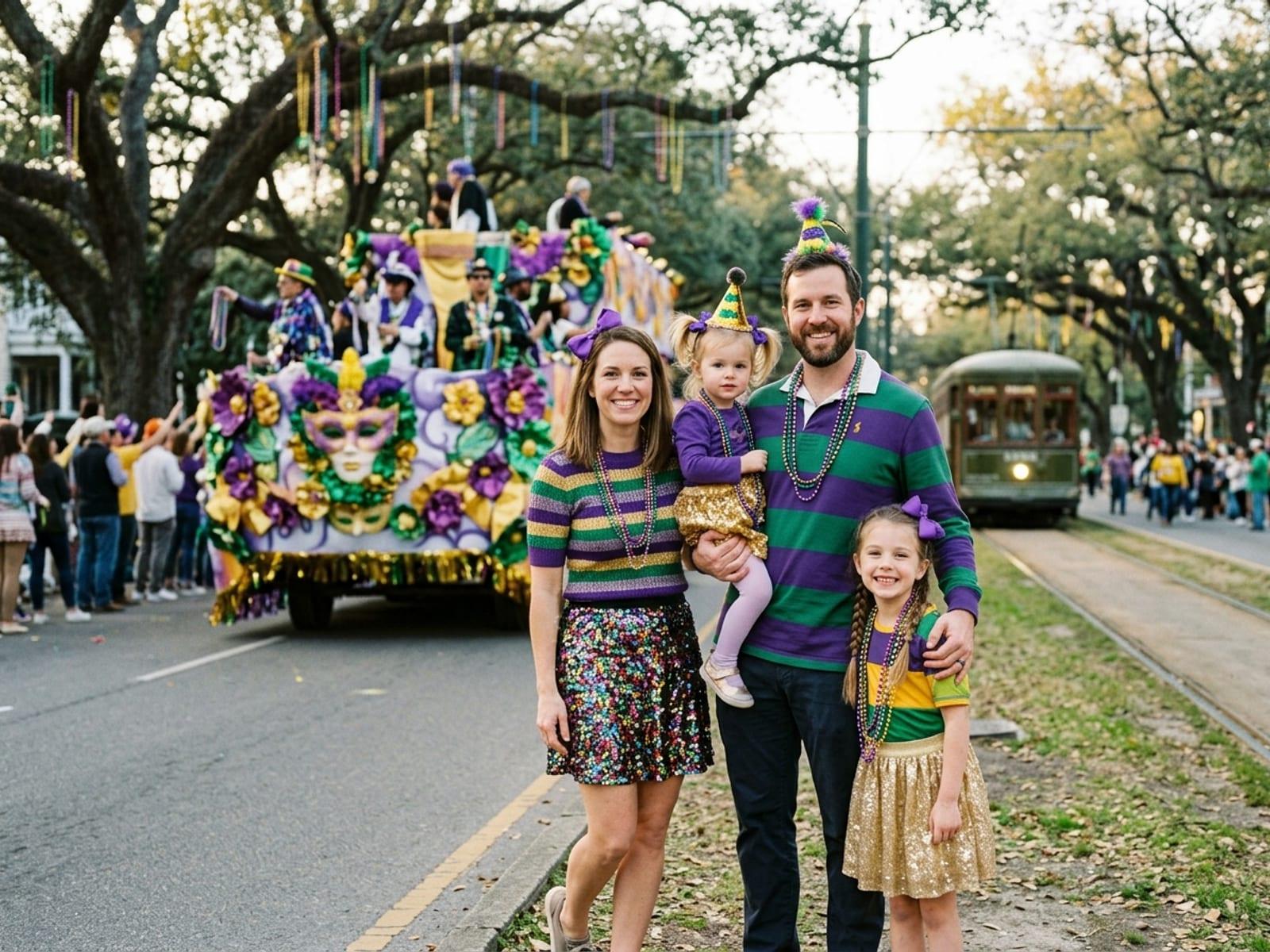
Mardi Gras is the last day of the Carnival season in New Orleans, a season that opens on January 6. In 2027 Mardi Gras falls on Tuesday, February 9, and for several weeks before it parades roll through the city by day and by night. The festival has a reputation for drinking and rowdiness, but pick the right spot along the route and it becomes a family event, with children waving at the floats and catching beads.
"Fat Tuesday" moves every year
Mardi Gras is French for "Fat Tuesday." In the Christian calendar, Lent is a season of restraint that begins on Ash Wednesday, and the day before it was traditionally the last chance to eat rich foods like meat and butter. Ash Wednesday is counted back from Easter, so the date of Mardi Gras shifts from year to year. It always lands on a Tuesday somewhere between February 3 and March 9.
The Carnival season begins on Epiphany, January 6, also called Twelfth Night, which marks the visit of the Magi to the infant Jesus. It ends at midnight before Ash Wednesday. The earliest record of Mardi Gras in Louisiana is usually traced to 1699, when a French expedition reached the mouth of the Mississippi. In 1856 a group of prominent citizens formed Comus, the first "krewe" (the clubs that stage the parades), and in 1872 Rex held its first parade. Rex is also where the purple, green and gold came from: in 1892 it explained that purple stands for justice, green for faith and gold for power.
The festival has been scaled back or cancelled during wars and after hurricanes. It went ahead in reduced form the year after Hurricane Katrina in 2005. In 2021, when COVID-19 cancelled the parades, residents decorated their own homes as "house floats," and they appeared all over the city. It was a good illustration of a city that keeps Carnival going even without a parade.
Beads rain down from the floats
The stars of a parade are the huge floats, each krewe with its own theme, and the marching bands in between. Riders on the floats toss plastic bead necklaces, aluminum coins in Mardi Gras colors called doubloons, and printed plastic cups to the crowd. These are known as "throws," and along the route adults and children alike stretch their hands toward the floats.
On Mardi Gras morning, Zulu rolls first, followed by Rex. Zulu's decorated coconuts are among the most prized throws, and since 1988 they have been handed down rather than thrown. On Mardi Gras Day you may also see the Mardi Gras Indians, who show off suits hand-sewn with beads and feathers. At night parades, the flambeaux carriers light the floats with torches, and it is still customary to tip them as they pass.
Night parades are beautiful, with lit-up floats and open flames, but the crowds are thicker and it is dark. With young children, it works well to start with a daytime parade so they get used to the size of the floats and the noise, then watch a night parade for just a short while before heading back to the hotel.
Wear one of the three colors
On Mardi Gras Day itself, plenty of adults and children are in costume, and the city's tourism office notes that children in costume tend to catch more throws. As at Halloween in New York, a shared family theme also makes it easier to spot each other in the crowd. For the parades in the days before, a purple, green or gold rugby shirt or a hair ribbon in one of the colors is enough to look the part.
New Orleans at this time of year can be warm in the afternoon and chilly once evening comes. Bring a layer you can put on and take off, and shoes that cover the toes: beads and crushed cups end up all over the ground along the route, and sandals can be a hazard. A rain poncho is worth packing too.
The sweet of the season is king cake, a ring of cinnamon-roll-style dough decorated with purple, green and gold sugar or icing, with a small plastic baby hidden inside. Whoever finds the baby is said to have good luck, and is expected to bring the next cake. To prevent choking, many bakeries now sell the baby separately so buyers can insert it themselves. When you cut a slice for a small child, check that the baby isn't in it.
Families head to St. Charles Avenue
The tourism office's family guide suggests skipping the loud French Quarter and Canal Street and watching from St. Charles Avenue between First Street and Napoleon Avenue, a stretch where families make up most of the crowd. The wide neutral ground (median) with its streetcar tracks and the oak-lined sidewalks make for good photos too.
Along the route you will often see homemade ladders topped with a box seat for a child. The New Orleans City Council's 2026 notice says ladders must be at least 6 feet (about 1.8 m) from the curb, that public space may not be roped off or otherwise claimed, that tents, generators and grills are not allowed, and that pets other than service animals should stay home. Rules can change from year to year, so check the city's latest notice.
The tourism office also recommends locating portable toilets before choosing your spot, writing your last name and phone number on your child's arm in permanent marker, and keeping away from the sides of the floats. Floats are huge and heavy; give them the same respect you would give a moving car, and keep your distance. Parades sometimes stall and run long, so carry a backpack with water, snacks, wet wipes and sunscreen.
To see how a family dressed in purple, green and gold might look in a photo, you can also try pokesta's AI photos ($1 per photo).
Dates, getting there and days without parades
The tourism office publishes a parade schedule and route maps showing which krewe rolls on which day and where. Decide which parades you want to see first, then plan your hotel nights around them. If you want a hotel near the route, book as soon as your dates are set.
The gateway airport is Louis Armstrong New Orleans International Airport (MSY), in Kenner about 18 km west of downtown. The transit authority's 202 Airport Express bus and airport shuttles that stop at hotels will take you downtown. On parade days, street closures make driving slow, so leave plenty of time.
Between parades, you can show children what goes on behind the scenes with the Carnival exhibit at the Presbytère on Jackson Square, or at Mardi Gras World, where you can tour the workshops that build the floats. Starting the morning with powdered-sugar beignets at Café du Monde, near Jackson Square, is very much a New Orleans way to begin a parade day. U.S. entry requirements depend on your nationality, so check your own government's official information before you go.
With small children, choose daytime parades over night ones, and the weekend before over Mardi Gras Day itself. Put on one of the three colors, settle into the family stretch of St. Charles Avenue, and all that's left is to reach for the beads.
References