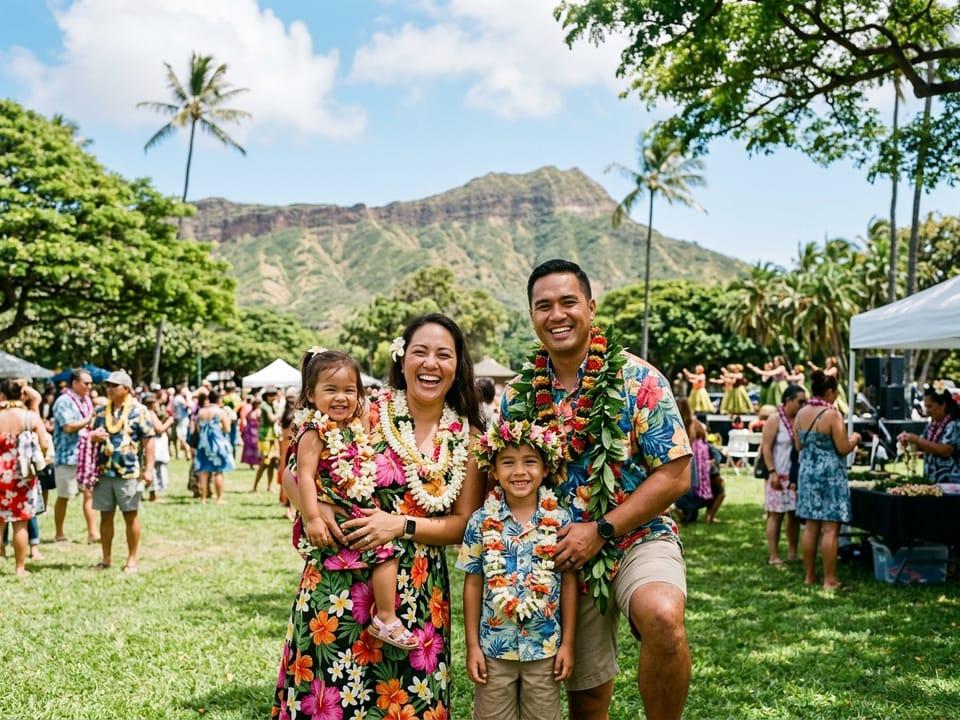
A school May Day program in Hawaii is usually an outdoor show on a field or courtyard, often in full sun, and it draws a crowd: West Hawaii Today counted more than 1,500 parents, friends, aunties and uncles at Kahakai Elementary's program in 2017. Arrive early with a mat or low chair, shade and water, find out where your child's class will stand, and check the school's photo rules before you post anything. Take the close-up lei portrait at home or right after your child's number, not from the back of the crowd.
May Day has been Lei Day since 1928, and schools keep it alive
Punahou School traces the first May Day in Hawaii to May 1, 1928, and credits the writer Don Blanding, who suggested a holiday built around the custom of making and wearing lei. Schools across the islands still mark it with a program in which each grade performs, usually a hula, along with songs and chants. At Mokapu Elementary on Marine Corps Base Hawaii in 2015, conch shells opened the program, the fourth grade performed an oli (chant), the national anthem and "Hawaiʻi Ponoʻi" were played, and every grade from pre-kindergarten up danced a hula.
Many schools also choose a May Day court. Mokapu's had 18 students, a king and queen plus a boy and a girl for each island, each dressed in their island's color, chosen for their grades and behavior. The date isn't always May 1. Waimea Elementary on Hawaiʻi Island scheduled its 2014 program for May 23 from 8:30 to 10:30 a.m. on the school field, while Kahakai's was on a Friday evening, and Punahou's Junior School holds indoor performances by grade group. Read the school notice for the date, the time and whether it's indoors.
Plan for sun, not shade
A morning program on a field in May means strong sun and very little cover. Waimea Elementary asked families to bring their own mats or chairs, and that's a safe assumption anywhere. Low beach chairs or a mat keep the view clear for the people behind you; a tall camp chair or an open umbrella in the front rows does not. Wear a hat and sunscreen and bring more water than you think, plus a cold drink for your child, who has been waiting in costume. If there is a shaded area, leave it to the kūpuna (elders) first.
Arrive well before the start. Programs run through every grade, so your child may be on for five minutes out of an hour or two. Ask the teacher a few days ahead where the class enters and which part of the field they face. Then set up on that side, not at the center where everyone else heads.
Read the school's photo rules before you post
The Hawaii State Department of Education (HIDOE) treats photos, video and audio recordings of students as separate from the basic "directory information" schools can release. It asks families to sign a Student Publication/Audio/Video release that covers school events and publications unless the parent rescinds it, and offers a narrower form for a single event. In other words, some families in the audience may have said no to their child appearing in school media, and you won't know which ones. Ask the office whether there are rules for recording from the audience, keep your own posts to your own child, and crop others out or ask their parents first. Private schools set their own policies, so check there too.
From the crowd, a phone will catch a small figure in a long row of dancers. Use the 2x or 3x lens rather than pinching far past it, and film the whole number once instead of switching between video and photos.
Take the lei portrait at home or just after the number
The best close-ups happen away from the field. In the morning, photograph your child at home in their costume and lei or haku lei (a flower crown) in open shade by a door or under a tree, before the heat and the crowd. After their number, step to the side of the field for a minute with them and whoever came to watch. Presenting lei after the program is part of the day. At Mokapu, the May Day queen's father crowned her and her mother gave her a lei. Fresh flower lei wilt in the heat, so keep yours in the refrigerator overnight and in a cooler in the car.
A nervous child does better with a plan than with a pep talk. Tell them exactly where you'll sit and that you'll wave after the dance, not during it. Calling their name in the middle of a hula only pulls their eyes away from the teacher.
A photographer's job is the family portrait, not the program
Hiring a photographer for the program itself rarely pays off. Unless the school allows otherwise, they sit in the same crowd you do, and the program runs on the school's schedule, not the best light. If you want a professional lei portrait, book a family session on another day at a park or beach in the late afternoon. The fee buys good light and everyone in the frame, and rescheduling is between you and the photographer. Your phone at home costs nothing and catches the real costume, and the program itself is best simply watched. Our graduation family photos guide uses the same before-and-after timing for another lei-heavy day.
For the relatives who couldn't be there
Grandparents on the mainland or on another island often miss May Day. pokesta can make a Lei Day family picture with AI from phone photos you already have of each person, with everyone in aloha wear and fresh lei in a park or under plumeria trees. It's a generated image, not a photo from the field, so treat it as a keepsake rather than a record. It's $1 per photo and the first photo is free, so try it with a recent photo of your child, and see what other families shared on the Lei Day posts page.
References