Fresh 48 Photos Without a Photographer: Hospital Room Pictures
pokesta Editorial Team · Updated October 12, 2026
"Fresh 48" is the name North American photographers give to pictures taken in the first day or two after a birth, usually in the hospital room before the family goes home. You can take them yourselves with a phone, a few things from home and ten quiet minutes. The hospital sets the rules, though, so the first step is a call to the maternity unit; after that it comes down to taming harsh room light, keeping other people and medical details out of the frame, and never bending safe-sleep rules for a picture.
The hospital's rules come first
The 48 lines up with US practice. Under the federal Newborns' and Mothers' Health Protection Act, health plans generally can't limit coverage of a hospital stay after childbirth to less than 48 hours after a vaginal delivery or 96 hours after a cesarean, although the attending provider, together with the mother, can decide on an earlier discharge. In Canada, how long you stay depends on the hospital, the birth and your care team. Either way, the window can be shorter than the name suggests.
Photography rules are set hospital by hospital, and they differ more than you might expect. Hunterdon Medical Center in New Jersey doesn't allow photos, video or live streaming in labor and delivery until the baby has been born and stabilized and the practitioner approves, and asks visitors not to bring a tripod because space is limited. Community Medical Center in Missoula, Montana, lets families hire an independent photographer for birth or newborn photos, but cameras must be battery-operated and tripods aren't allowed in labor and delivery. Some hospitals have their own arrangement: London Health Sciences Centre in Ontario lists the Service League of London and Debut Pictures as the photography service for a baby's picture during the stay.
Before your due date, ask the unit four things. When are photos allowed? Can staff be photographed, and how should you ask? Can an outside photographer come in, and what would they need to arrange first? Have visiting rules for siblings or grandparents changed recently? Policies get updated, so check again close to the date.
A professional is worth paying for in some cases: if you want both parents in every frame with someone directing, if you've had a cesarean and no other adult will be free to hold a camera, or if your hospital already offers a photo service and you'd rather leave it to them. Prices vary by region, hospital, time of year and package, so compare what's included, such as time in the room, the number of edited images, and what happens to the booking if the baby arrives at 3 a.m.
A small kit for the hospital bag
You need less than you think, and a hospital room has no space for more.
Your phone, a charging cable long enough to reach the bed, and a small power bank
A lens wipe, because phone lenses get smeared in a packed bag
One plain blanket or muslin swaddle from home in a soft color, to cover clutter and act as a backdrop
The baby's going-home outfit, plus a spare in a smaller size
One small thing with family meaning, such as a sibling's drawing, to photograph near the baby rather than inside the bassinet
Leave tripods and lights at home. Hospitals like the two above ask you not to bring a tripod or don't allow one in labor and delivery, and Community Medical Center's page notes that electrical cords are a safety hazard, which is why it asks for battery-powered cameras.
Make the hospital room look like your room
Hospital rooms are lit for clinical work, with bright overhead panels that flatten faces and tint skin. If staff don't need the overhead light on, switch it off, open the blinds and move parent and baby toward the window. At night, one bedside lamp beats the ceiling light, and the flash stays off.
Clutter is harder. Push the tray table, water jugs, food trays and bags out of shot, but don't move or unplug medical equipment. If an IV pole or monitor is in the way, ask a nurse, or simply frame tighter. Draping your own blanket over the bed rail and the foot of the bed makes most of the room disappear. If your hospital uses the familiar striped flannel receiving blankets, keep at least one shot with it anyway; it tells you where you were.
Other people's privacy stays out of your pictures
In a shared room, the curtain is the boundary. Shoot toward the window or the wall, never across the room toward another bed, and treat hallways and nurseries the same way; other families are having their own first day. Community Medical Center's policy says no patient or visitor may photograph another patient or visitor under any circumstances. Staff can be part of your story, like the nurse who showed you how to swaddle, but ask first and respect a no. Both Hunterdon and Community Medical Center make permission a condition of photographing staff.
Then look for details that say more than you'd want online: the whiteboard with names and times, a monitor screen, paperwork on the tray table, the baby's ID bands and the bassinet card, which can show the baby's full name and time of birth. A close-up of the card is a sweet keepsake for the family album; crop or blur those details out of anything you post. DIY birth announcement photos goes into what's safe to share.
Safe sleep and recovery come before every shot
The AAP's safe-sleep guide says a newborn should go skin-to-skin with a parent as soon after birth as possible, for at least an hour, and that after that, or whenever the mother needs to sleep or take care of herself, the baby goes on their back in a bassinet with no incline. That gives you two rules for pictures. Skin-to-skin photos are for while the parent is awake and someone else is watching. And the bassinet shot shows the baby on their back as the nurses laid them, with nothing added: no props, no extra blankets, no rolled towel to turn the face toward the camera.
Don't leave the baby at the edge of the hospital bed while you rearrange things, and don't remove ID bands or security tags for a cleaner frame. When staff are working, cameras go down; Community Medical Center asks families to turn cameras off and follow the medical team's directions. And if the birthing parent is exhausted or in pain, the photos can wait for the going-home outfit. Newborn safety at home follows the same principles, set out in newborn photo safety at home.
Ten minutes is enough
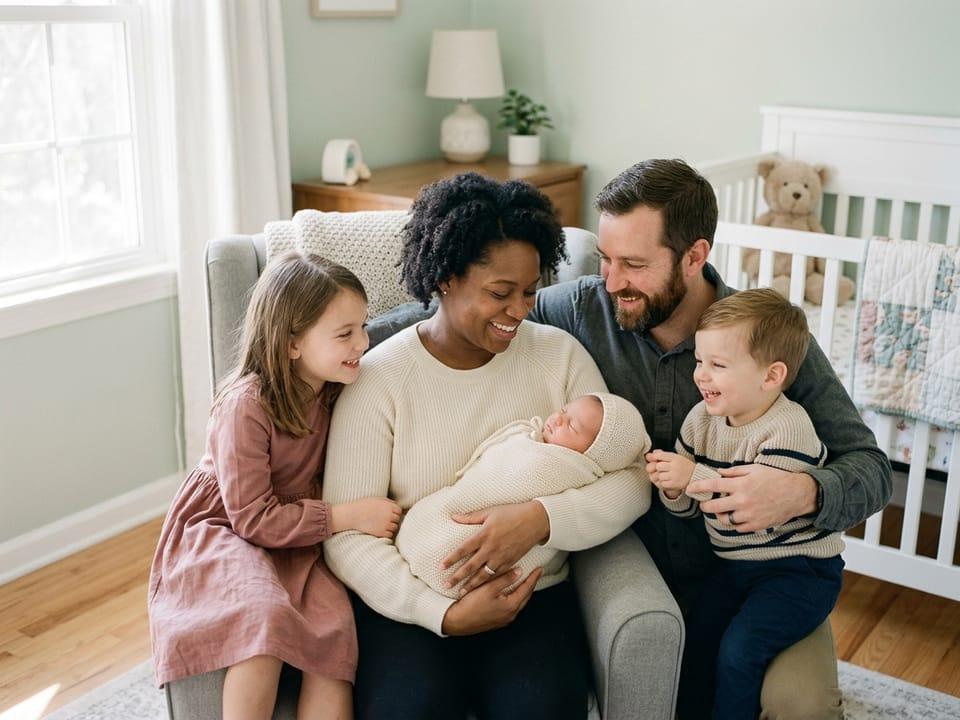
The best Fresh 48 pictures are small and specific. The baby's hand around a parent's finger. The bassinet from the side, at mattress height. An older brother or sister meeting the baby for the first time, if the visiting rules allow it. The going-home outfit laid out on the bed, and then on the baby. Both parents' tired, happy faces in one frame, even if it's a selfie. If a grandparent couldn't visit or a sibling wasn't allowed in, pokesta can use AI to create a family photo of everyone with the new baby from each person's own phone pictures ($1 per photo, the first one free). The photos that matter from those first two days are rarely perfect; they're the ones that show who was there. You can see other families' newborn pictures on the newborn posts page.