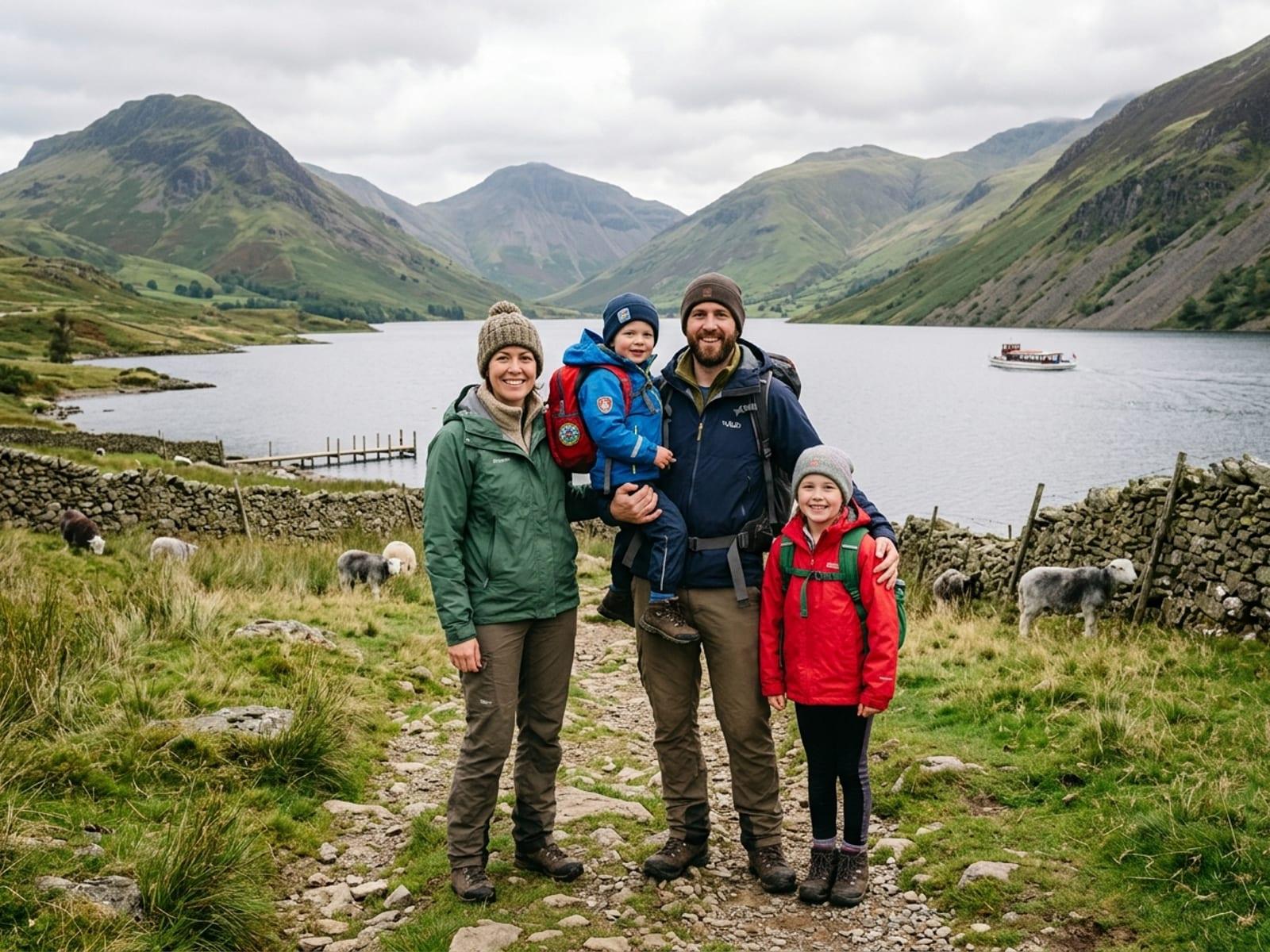
The Lake District in north-west England is a land of lakes strung between the fells, with sheep grazing in fields divided by stone walls. It became a national park in 1951 and a UNESCO World Heritage Site, as a cultural landscape, in 2017. For a family visit, base yourself in Bowness on the shore of Windermere, England's largest lake, then cross the water by boat and head for the farm of Beatrix Potter, author of The Tale of Peter Rabbit. You get the scenery and the stories in one trip.
A World Heritage landscape shaped by people and sheep
The Lake District is the largest of the 13 national parks in England and Wales, and it drew more than 17.7 million visitors in 2024. Across the whole UK, only the Cairngorms in Scotland is bigger. Windermere, 18 km long, is England's longest and largest lake, and the area is also home to its deepest lake, Wastwater (79 m), and its highest mountain, Scafell Pike (978 m).
The World Heritage listing recognizes it not as untouched wilderness but as a cultural landscape, formed where human work and nature overlap. The inscription is said to have succeeded only on the fourth attempt. The sheep that have shaped this landscape are the Herdwick, the Lake District's signature breed, tough enough to cope with hard upland life. You'll also often see Rough Fell and Swaledale sheep. When you spot them on the hillsides, try counting them with the kids.
The area has drawn writers and artists for centuries. It's spoken of alongside names such as John Ruskin, Arthur Ransome, author of Swallows and Amazons, and Wordsworth and the other "Lake Poets."
Beatrix Potter, her farms and her sheep
Beatrix Potter's The Tale of Peter Rabbit was published on 2 October 1902 and was an immediate success. With income from the book and a small legacy from an aunt, Potter bought Hill Top, a farm in the village of Near Sawrey west of Windermere, in 1905. Over time she became a dedicated breeder of Herdwick sheep, and in 1923 she bought Troutbeck Park Farm and restored the land with thousands of Herdwicks. In 1942 she became the first woman elected president of the Herdwick Sheep Breeders' Association, but she died before taking office.
When she died on 22 December 1943, Potter left almost all of her property to the National Trust: more than 4,000 acres (about 16 square kilometres) of land, 16 farms, and her flocks and herds. At the time it was the largest gift the Trust had ever received. Part of the farming landscape you see in the Lake District today has been protected this way. The same National Trust also cares for the coast of the Giant's Causeway in Northern Ireland. Note that the Beatrix Potter Gallery in the nearby village of Hawkshead closed after the 2022 season, and it has been decided that it will not reopen because the building doesn't meet current conservation standards. Keep this in mind if you're planning from an older guidebook.
From the storybook world to a real farmhouse
For small children, the easiest way in is The World of Beatrix Potter, an attraction in the centre of Bowness. Scenes from the stories of Peter Rabbit and his friends are recreated in 3D within Lake District settings, and there's a free children's quiz trail, a themed café and a garden that reflects Potter's work as a naturalist. When the official website was checked in October 2026, it was open daily from 10:00 to 16:30, with tickets bookable online.
Once you've stepped into the stories, visit the real farmhouse, Hill Top. Opened to the public by the National Trust, it's a traditional Lake District farmhouse and the inspiration behind many of Potter's little books. Visits are by advance booking, National Trust members included, and you choose an arrival time slot online. It's an old farmhouse with steps and narrow stairs, so with small children a baby carrier is handy; assume a stroller will be hard to use. Opening days vary through the year and there are closed days, so check the calendar on the official website.
Crossing the lake by boat and ferry
From Bowness, the shortcut to Hill Top is across the lake. A car ferry runs between Ferry Nab on the Bowness side and Ferry House on the far shore; the crossing takes under 10 minutes, and boats leave every 20 minutes. In summer, Windermere Lake Cruises runs a boat from Bowness across to Ash Landing on the far shore, where footpaths lead to Hill Top. In 2026 this service ran from 23 May to 27 September. The car park at Hill Top is small, so if you're driving, check the parking arrangements when you book.
A cruise on the lake alone is plenty of adventure for children. The route from Bowness to Ambleside at the northern end takes 75 minutes, and a round trip among the islands near Bowness takes about 45 minutes. There are also combined tickets that let you cross to Lakeside at the southern end and visit the aquarium or transfer to a heritage steam railway. Routes, timetables and fares change with the season, so check the official website.
Near Brockhole pier, a stop on the Ambleside route, there's a treetop net play area, and tickets combining it with a lake cruise are sold. Some piers and stretches of shore have no railings, so hold small children's hands firmly when getting on and off, and on board, settle where you'll sit before you start taking in the view. The lake water is often cold even in summer, so keep an eye on the kids when they play at the water's edge.
To see how a photo of your family on a sheep-dotted hill with the lake behind you might look, you can try pokesta's AI photos ($1 per photo, and the first one is free).
Seasons, clothing and getting there
You can visit the Lake District all year, but spring to autumn brings more boat services and longer days. Hill Top's opening days and the boat routes vary through the year, so check when the places you want to see are open before fixing your dates. Weather in this land of lakes and fells changes quickly, and it rains often, so whatever the season, pack waterproof jackets and shoes you can walk in when wet.
The nearest major airport is Manchester (MAN). By rail, a branch line runs from Kendal via Staveley to Windermere station; from there, head down to the piers at Bowness and cross the lake towards Hill Top. With Manchester as your base, you can also add the Shambles and Bettys tea room in York to the east, or the kilns and pottery painting of Stoke-on-Trent to the south. Entry requirements for the UK vary by nationality, so check your own government's official information before you travel.
References