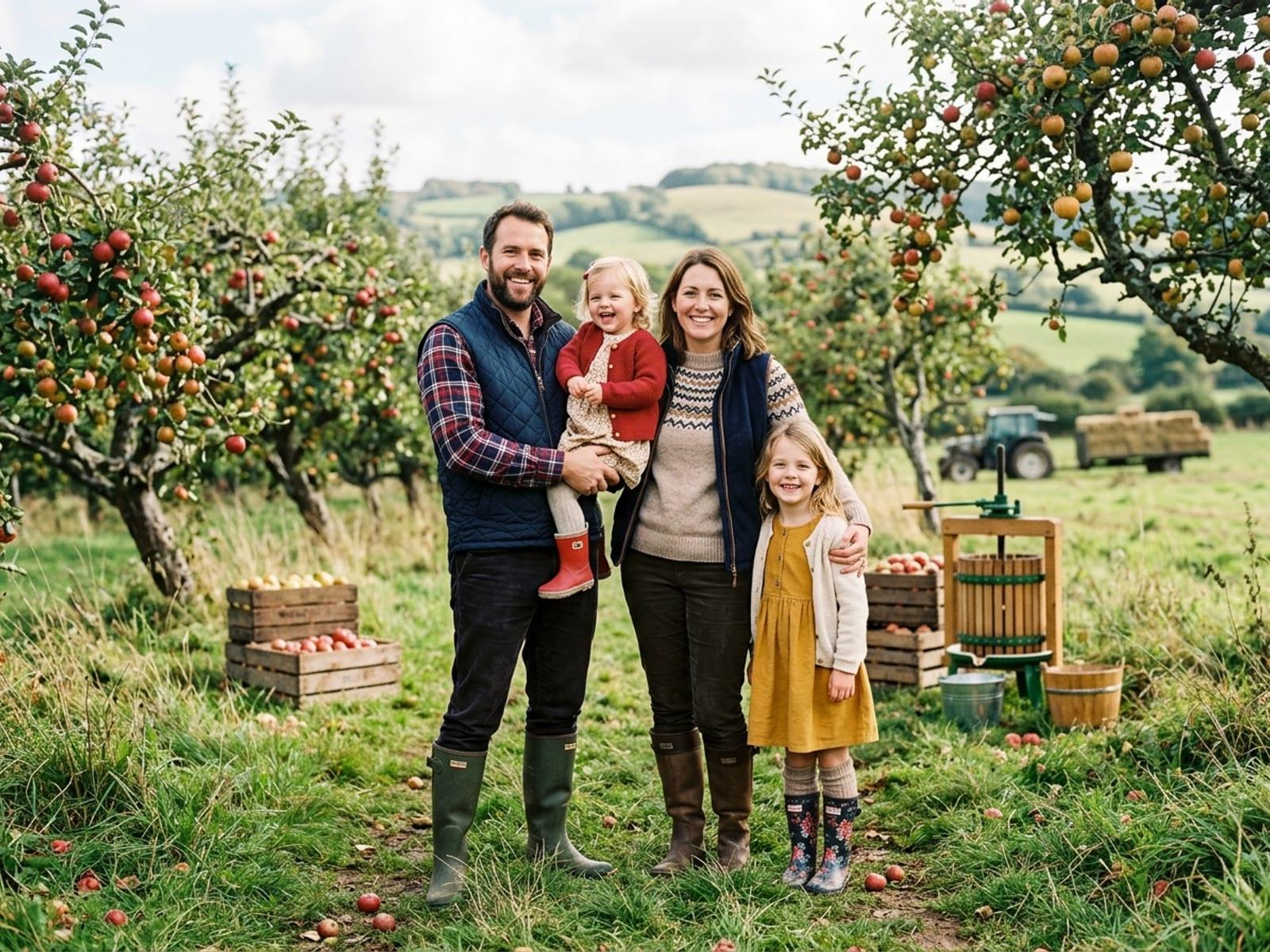
Herefordshire, in the west of England, is known for cider (an alcoholic drink made from fermented apples) and perry (its pear equivalent), and on two weekends a year, Blossomtime in early May and Harvestime on the second weekend of October, its villages open their orchards to visitors. Children can't drink the cider, but with apple juice in hand they can ride on tractor-drawn trailers between the orchards. A tour of Westons cider mill at Much Marcle and the Museum of Cider in Hereford fit into the same day.
Hills full of apple trees, and a protected way of making cider
Herefordshire is known for its apple and pear orchards and for cider. There are fewer orchards than there once were, but all over the county you still see fields of old trees with sprawling branches. In the 19th century the Herefordshire Pomona was produced, an illustrated record of the apple and pear varieties grown in the county, which shows how many varieties this land once held.
Traditional cloudy, unfiltered cider and perry made to old recipes received EU Protected Geographical Indication (PGI) status in 1996, limited to those made in three counties: Herefordshire, Worcestershire and Gloucestershire. Large-scale producers and small farm cider-makers sit side by side in the county, and Hereford, the county town, is home to a plant run by Bulmers, the big producer behind Strongbow. Other British foods are protected by place name too: Yorkshire forced rhubarb, grown in dark sheds, holds Protected Designation of Origin (PDO) status.
May is for blossom, October for the harvest
The two most enjoyable weekends of the year for families are the ones run by the Big Apple Association, a local group. Volunteers run it to keep orchard and fruit culture alive in the parishes of the Marcle Ridge, a range of hills in the east of the county.
Spring's Blossomtime is held in the villages of Putley and Aylton over the weekend of the early May bank holiday Monday; in 2026 it was 3 and 4 May. You walk through orchards as the white and pale pink blossom opens, taste cider, perry and apple juice, and wander among local musicians, Morris dancers (a traditional English dance performed with bells) and craftspeople. The day before, there's a competition where producers' ciders and perries are judged blind. Early May is festival time in Cornwall too: on 1 May, the harbour town of Padstow dresses in white for the May Day festival of the black 'Obby 'Oss.
Autumn's Harvestime takes place in the village of Much Marcle on the second weekend of October; the 2026 dates are 10 and 11 October. Venues are scattered around the parish, including the village hall, cider mills, an old manor house and small farms, some of them places not normally open to the public. You can compare many varieties of apples and pears, and taste cider and perry while chatting with the people who make them. Most venues are within walking or cycling distance, and six of them are linked by a trailer pulled by a tractor. According to the county tourism site, entry is free at every venue except Hellens, a manor house that charges a small fee, and children go free. Bumping around the orchards on a hay trailer may turn out to be the best memory of the festival for little ones.
Cider apples are nothing like eating apples
What may surprise children most in the orchards is the taste of cider apples. Cider is often made from special varieties that are high in bitterness or acidity, and some are so astringent that a raw bite makes your mouth pucker. At the harvest festival, apples and pears are sometimes laid out in long rows with a name card for each variety, in every colour, shape and size. Let your child pick an apple whose colour or shape they like and note down its name, and you'll have something to talk about long after the trip.
Freshly pressed apple juice is the taste of cider before it becomes cider. While the adults are tasting, the children can compare juices.
At the cider mill, kids are the "watchers"
In Much Marcle you'll find Westons Cider, founded by Henry Weston in 1880 and still run by the family, which offers tours and tastings. According to the county tourism site, tours run four times a day (11 am, 12:30 pm, 2 pm and 3:30 pm, with an extra 5 pm tour on summer Saturdays), and a tour with tasting costs £12.50. Prices and times can change, so check the official information before you go.
The tour walks you through the cider-making process step by step and is aimed more at adults. Children can come along, but tasting is for adults only. With young children, plan to spend more time in the on-site play area or picnic spots. The restaurant and café serve breakfast and lunch, and have high chairs and baby-changing facilities.
In Hereford itself you can drop into the Museum of Cider, set in the original factory of Bulmers, founded in the late 1880s. It has a collection of national importance on the history of cider, and you can still see the cellars dug in 1889, where cider was matured using the same method as champagne. Even if you don't drink, it's an interesting look at the history of the people who grew apples and made cider. According to the county tourism site, it's open Tuesday to Sunday from 10:30 am to 4:30 pm; admission is £7.50 for adults, and children go free.
What to wear in the orchards, and what to watch for
Orchard ground is uneven and the grass is often wet, so wear wellies or shoes that can get dirty. In May the wind can be cold even when the sun's out, and in October mornings and evenings get chilly. In both seasons, layers you can take off and put on are best.
Fallen apples are easy to slip on, and wasps and bees may come buzzing around them. Tell small children not to run in the orchards. Cider looks a lot like apple juice, so at tastings take care not to mix up cups; asking for a different-coloured cup for the children is one simple fix. You can see how a photo of your family lined up under the apple trees would turn out with pokesta's AI-generated photos ($1 per photo).
Getting there: the nearest major airport is Birmingham
Blossom time is early May, and the harvest festival is in mid-October. The Association announces the exact dates on its website each year.
The gateway airport is Birmingham Airport (BHX). By train, you can reach Hereford or Ledbury stations from Birmingham or Worcester. Westons in Much Marcle is about 10 minutes by car from Ledbury. Public transport between the villages is limited, so a hire car makes getting around much easier.
To the north-east, in the East Midlands, the hand-raised Melton Mowbray pork pie is often eaten with apples or chutney on the side. Entry requirements for the UK vary by nationality, so check your own government's official information before you travel.
References