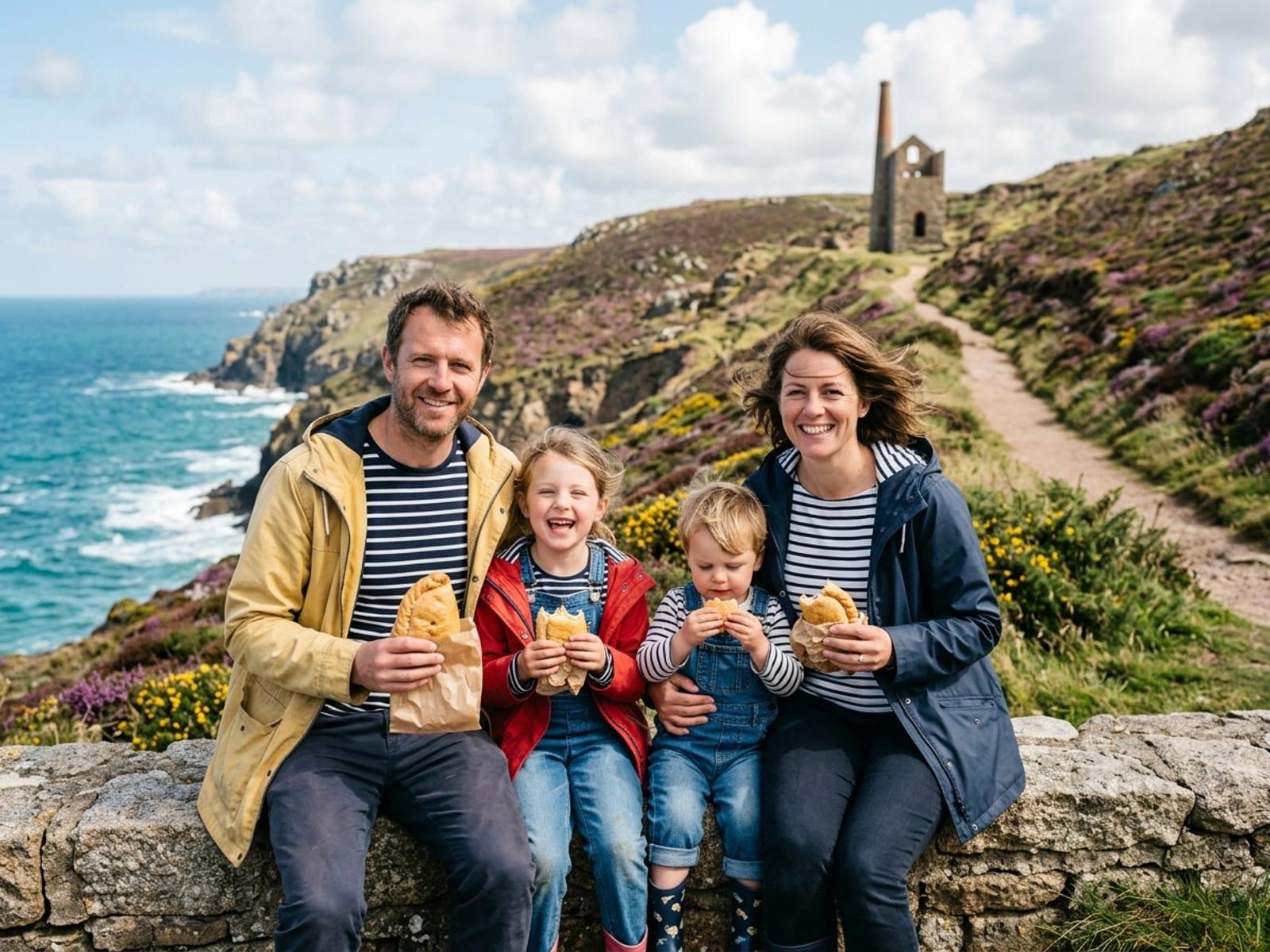
The Cornish pasty is a D-shaped pastry filled with only beef, potato, swede and onion and crimped along one side, and it spread as the packed lunch of Cornwall's tin miners. Its filling and shape are fixed by a protected geographical indication, and bakeries and pasty shops in Penzance and other Cornish towns sell them all year, handed over in a paper bag. With children, share one between you and break it in half to let the steam out before handing it over.
Only one filling and one shape count as the real thing
The Cornish pasty was registered as an EU Protected Geographical Indication (PGI) in 2011, after a nine-year application led by the Cornish Pasty Association, a group of Cornish pasty makers. Since Brexit, it has been protected in the same way under the UK's own scheme from 31 December 2020. The Melton Mowbray pork pie is protected the same way, with its own rules on the meat and the pastry.
Under the rules, the filling is beef, potato, swede (which the Cornish call "turnip") and onion, lightly seasoned with salt and pepper, and cut chunky rather than minced so it keeps its texture. The pasty is D-shaped, with the crimp along one side rather than over the top. Round pasties crimped on top are sold all over Britain, but think of those as something else.
The home recipe the association shares uses diced beef skirt, wrapped in a pastry made from strong bread flour with lard and butter. The raw filling is layered onto the pastry with salt and pepper on each layer, then sealed and baked for about 50 minutes.
A lunch to take underground
Records of pasty-like food go back to the 14th century, but the pasty became a fixture of Cornish homes as more people went to work in the mines. Miners deep in the tunnels couldn't come back to the surface at midday, so they took pasties baked by their families down with them. The thick pastry stayed warm for hours and could be eaten without a knife or fork.
You'll often hear that the thick crimped edge was a handle, held in fingers dirty with arsenic and other contaminants and thrown away at the end. The Cornish Pasty Association itself, however, also describes the view that pasties were wrapped in cloth or paper bags and eaten down to the last bite, and old photographs show miners eating them from end to end. The truth isn't clear. If you tell the story to children, present it as "one theory."
Cornish miners who went abroad for work took the pasty with them. In Real del Monte, a mining town in Mexico where many of them settled, it's still eaten under the name paste, and a pasty festival is held there every October.
The pasty is still big business in Cornwall. In March 2012 the Eden Project, the county's big botanical attraction, hosted the first World Pasty Championships, where bakers compete to make the best one.
Picking one in a shop and eating as you walk
Walk through any Cornish town and you'll pass bakeries and pasty shops one after another. Choose from the glass counter and you'll be handed your pasty in a paper bag, ready to eat while looking out to sea. The one labelled "traditional" is the beef pasty made to the rules above; many shops also sell cheese and vegetable, chicken and other fillings. If you're not sure which is the original, asking the staff is the surest way to find out.
The crimp is where the pastry folds over itself, so it's firmer and more deeply browned. Keep it as a handle or eat it last, whichever you like. Pasties are fine cold, but fresh from the oven the filling and juices are very hot.
With kids, break it in half and let it cool
Sizes vary from shop to shop, and many pasties are a full meal on their own, so compare them in the counter before choosing. For small children, start by sharing one as a family and you won't be stuck with half a pasty nobody can finish. Steam pours out when you break one open, so wait a moment before handing it over. Letting children hold it through the paper bag keeps the flakes of pastry from going everywhere.
There's no spice, just salt and pepper, so the flavour is easy for children. What to watch for is allergies: the pastry contains wheat flour and butter, and the top may be glazed with beaten egg or milk. In the UK, restaurants and takeaways must provide information on 14 allergens, so if you have concerns, ask before you buy.
To see how a family photo by the sea with pasties in hand might look, you can try pokesta's AI photos ($1 per photo, and the first one is free).
Visiting an old tin mine as a family
Once you know the pasty's story, go and see a mine. Geevor Tin Mine at Pendeen, north-west of Penzance, is a museum that shows a mine closed in 1990 more or less as it was left. It is one of the key sites of the Cornwall and West Devon Mining Landscape World Heritage Site, and tours take you into Wheal Mexico, an 18th-century tunnel. For children there are activities such as sieving sand for bits of ore and gemstones.
When the official website was checked in October 2026, Geevor was open six days a week, Sunday to Friday, from 9:00 to 17:00, with underground and mill tours running hourly from 10:00 to 16:00. Opening days and tour times can change with the season, so check the official site for the latest information. The tunnel has a low ceiling and is dark underfoot, so wear good walking shoes and hold small children by the hand.
When to go and how to get there
Pasties are available all year. For walks along the Cornish coast, spring to autumn is the most comfortable time. During the summer holidays the seaside towns get crowded and the roads often jam.
The nearest airport is Cornwall Airport Newquay (NQY). By rail, Penzance station is the end of the Cornish Main Line, with direct trains from London Paddington, and the Night Riviera sleeper runs on Sunday to Friday nights. To reach Pendeen and other coastal villages, use a bus or a rental car. Entry requirements for the UK vary by nationality, so check your own government's official information before you travel.
Elsewhere in Cornwall, the harbour town of Padstow is known for its Obby Oss May Day, and over the border in Devon you can sit down to a cream tea.
References