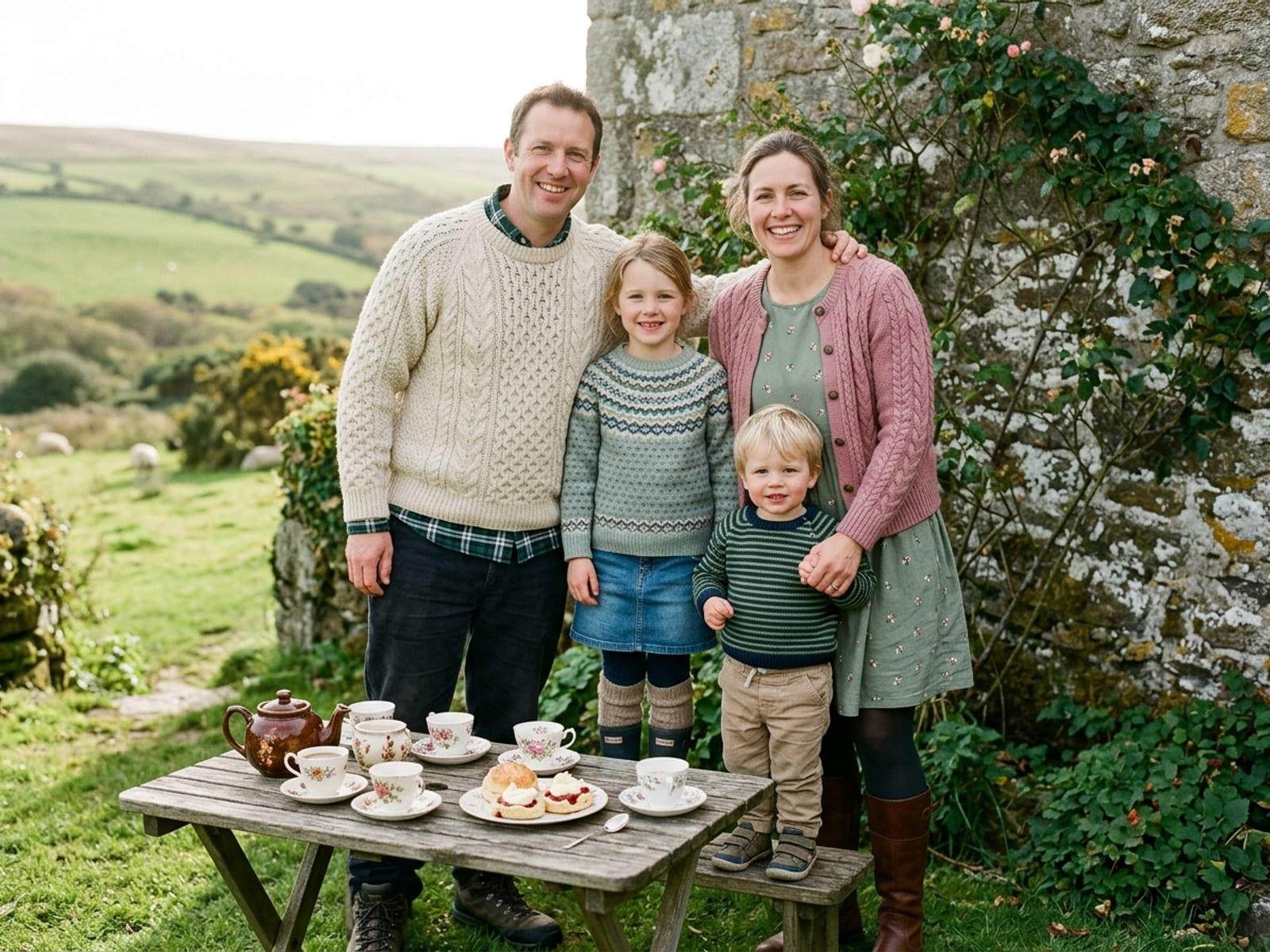
A cream tea is a scone served with clotted cream, strawberry jam and a pot of tea, a teatime treat from south-west England. In Devon the cream goes on first and the jam on top, and in Tavistock, the town on the edge of Dartmoor that claims to be its birthplace, tea rooms serve it all year round. With children, order one cream tea each to start with and add more if you need it.
A legend of monks handing out bread and cream
Tavistock is a small market town on the western edge of Dartmoor National Park. In the town centre stand the remains of an abbey founded in 961. The abbey was destroyed in a Danish (Viking) raid in 997 and later rebuilt.
According to local legend, the cream tea began when the monks served bread, thick cream and preserved fruit to the people who helped rebuild the abbey. Later, the story goes, they offered the same to travellers. Tea didn't reach England until the 17th century, though, and sugar wasn't available then either, so instead of today's strawberry jam they probably used honey or fruit sweetened with honey, as a Devon tourism organisation explains.
Scones aren't originally from here either. They are thought to have started out in Scotland around the early 16th century as an oat bread baked on a griddle. Before scones caught on in Devon, people put cream and fruit on lightly sweetened, yeast-raised round buns, and some tea rooms still serve a small bun called a Devon split in place of the scone. When tourism grew in the mid-19th century, the town's tea rooms began serving this as a "cream tea". There are competing claims about where it all began, but there's no doubt that Devon has been nurturing this way of eating for a very long time.
Clotted cream is made by gently heating milk
The real star of a cream tea may be the clotted cream rather than the scone. Full-fat milk is heated slowly, for example over a water bath, then left to cool for a long time in shallow pans. The fat-rich cream rises to the surface and sets into a thick, yellowish crust. That layer is skimmed off, and that is clotted cream. Its fat content is at least 55% and averages over 60%, giving it a rich texture somewhere between whipped cream and butter.
The name comes from the "clots" or "clouts" of cream that form on the surface. Clotting was also valued as a way of keeping cream longer and getting more of it out of the milk. Cornish clotted cream, made just next door in Cornwall, received Protected Designation of Origin (PDO) status in 1998.
The Devon way: cream first
The difference everyone brings up between Devon and Cornwall is the order of spreading. In Devon you split the scone and spread a generous layer of clotted cream first, then put the jam on top. In Cornwall, the usual way is to spread jam on the warm scone and spoon the cream on top. In practice you'll see both in both counties. A South Devon tourism body firmly backs cream first, while adding that whichever order you choose doesn't matter as long as you enjoy it. Trying both with your children and voting as a family on which tastes better is half the fun.
There's no strict etiquette. The usual way is to split the scone horizontally by hand rather than cut it with a knife, then top each half separately with cream and jam. Eating the halves one at a time instead of sandwiching them together keeps everything from collapsing, and it's easier for children too.
In Cornwall and Devon you may come across variations on the cream tea. "Thunder and lightning" is bread topped with clotted cream and honey or golden syrup, and there are savoury cream teas with cheese scones, cream cheese and chutney. If you've had enough sweet things, look out for one of these.
Tea room menus also feature afternoon tea, with sandwiches and tiers of cakes. That is a more elaborate afternoon meal said to have been started by an aristocratic lady in the 19th century. Some tea rooms are famous for it, such as Bettys in York, open since 1937. It's a lot of food and takes a while, so with small children a cream tea is the easier place to start. If your child doesn't drink tea, check the menu for other drinks.
Friday markets and walks on the edge of Dartmoor
If you have a cream tea in Tavistock, combine it with a walk around town. The town has a tradition of a weekly market granted by the king in 1105, and a market is still held on Fridays. The Pannier Market, a covered market building, was completed in 1860 and is a good place to wander on a rainy day. On the second Wednesday of October the town holds its Goose Fair, said to date back to 1116, and it's the busiest day of the year.
Tavistock is also the eastern gateway to the Cornwall and West Devon Mining Landscape, inscribed as a World Heritage Site in 2006. The site stretches west along the Tamar Valley and on toward Land's End at the tip of Cornwall, so the town makes a good starting point for exploring mining history too. Near the western end, at Pendeen, there's a tin mine museum that pairs well with the story of the Cornish pasty, once the miners' packed lunch.
Step just outside town to the north and east and you're already on the open moorland of Dartmoor. Small tea rooms are dotted across a landscape of low stone walls and heather-covered hills. A walk followed by a warm scone is the kind of day that suits a cream tea here best. You can see how a photo of your family sharing scones by a stone wall would turn out with pokesta's AI-generated photos ($1 per photo).
Changeable weather on the moor: dress in layers
Dartmoor is high moorland, windier than the town and with weather that changes quickly. Take an extra layer even in summer, and a waterproof jacket in spring and autumn. Paths are often muddy, so put children in shoes that can get dirty.
Clotted cream spoils easily, so if you want to take some home, buy it just before you leave and keep it chilled. Airlines may treat cream and jam as liquids in hand luggage, so check the rules at your departure airport before deciding whether to carry it on board.
A year-round treat, reached from Exeter or Plymouth
You can enjoy a cream tea any time of year. Spring into early summer, when the flowers are out, and autumn, when the moorland colours deepen, are lovely seasons for walking on Dartmoor too.
The gateway airport is Exeter Airport (EXT), near Devon's county town. By train, head from London to Plymouth, where buses run on to Tavistock. Tavistock's railway station closed in the 1960s, and there are plans to reopen the line to Plymouth, but for now the nearest stations are Gunnislake, Okehampton and Plymouth. With a car, you can tour the tea rooms in Dartmoor's villages.
For another taste of the south-west, you could pair your trip with the harbour-town festival of Padstow May Day in Cornwall. Entry requirements for the UK vary by nationality, so check your own government's official information before you travel.
References