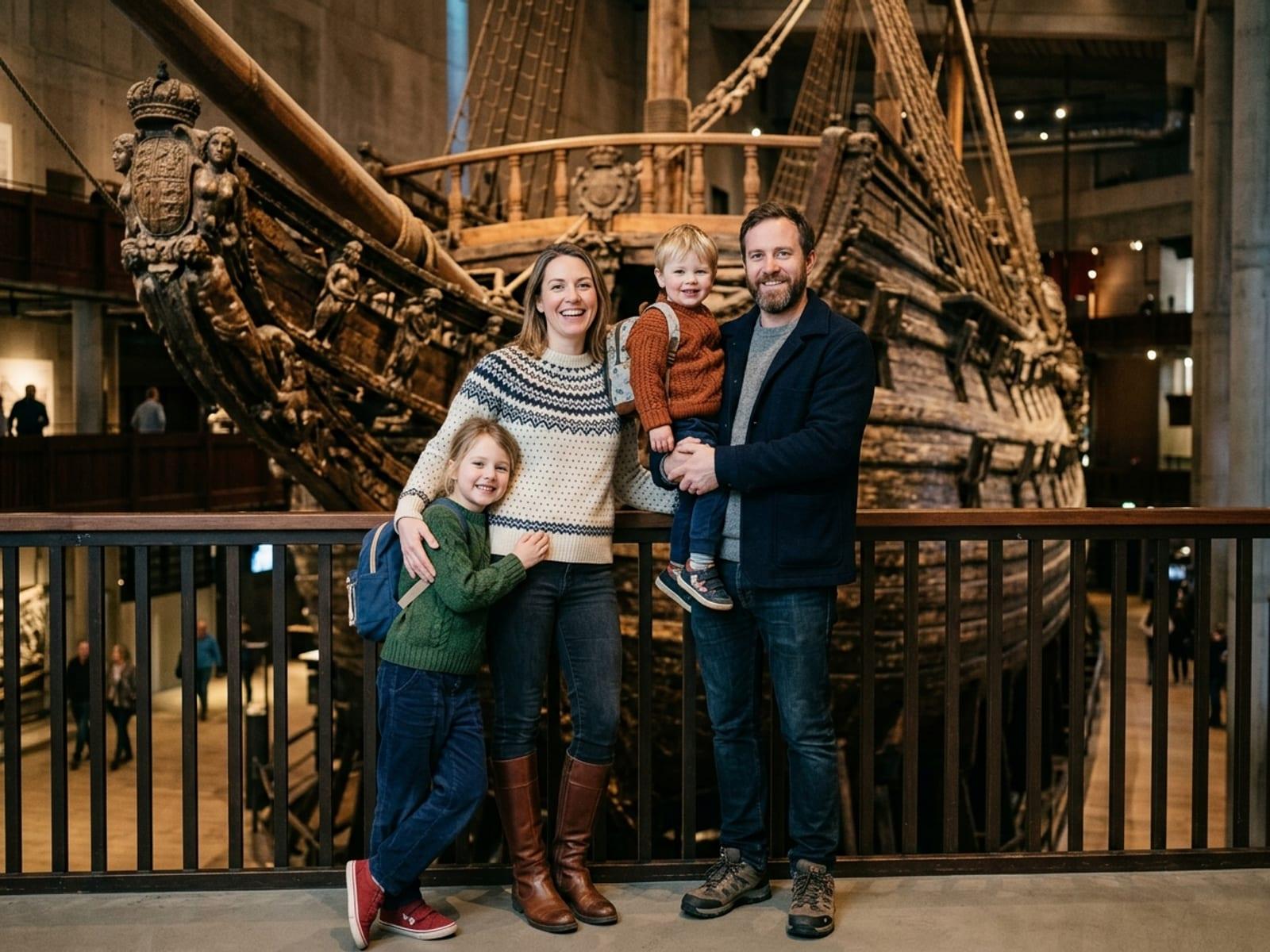
Step into the dim, cavernous hall and a wooden warship rises up in front of you. This is the Vasa, which sank in 1628 only about 1,300 meters into its maiden voyage. It was hauled up from the seabed 333 years later, in 1961, and now sits in a museum built around it on the island of Djurgården in Stockholm. The stern towers several stories high, and most visitors, young or old, simply stop and stare. Entry is free for anyone 18 or under, and there are films and an audio guide made for children, so it slots easily into the first day of a family trip.
The king's warship that sank within minutes
The Vasa was built on the orders of King Gustav II Adolf of Sweden. Construction began in 1626 and the ship was launched in 1627. It carried 64 cannons and, as a showpiece of royal power, was decorated with close to 500 carved wooden sculptures.
On August 10, 1628, the Vasa set off from Stockholm harbor on its first voyage. The wind made the ship heel over, and when a second, stronger gust hit, the open lower gunports dipped below the waterline and water poured in. It went down about 120 meters from shore, and around 30 people are said to have died. The cause is generally given as instability: the upper part of the ship was too heavy.
The wreck was found again by an amateur archaeologist, Anders Franzén. In 1956, probing the seabed with tools he had made himself, he located a large wooden hull. The cold, brackish water of the Baltic is a poor home for shipworms, which eat wood, and the mud had protected the hull too, so it had survived in remarkable condition.
Six levels, from the keel to the top of the stern
The museum opened on June 15, 1990. Mast shapes on the roof show how tall the Vasa stood under sail, and they make the building easy to spot from outside. In 2024 it welcomed more than 1.35 million visitors, making it one of the most popular museums in Sweden.
Inside, six levels wrap around the ship, so you can look at it from near the keel all the way up to the top of the stern. The lower levels give you a sense of the sheer size of the hull and the weight of the timber; from the upper levels you can see the decks and the carvings on the stern. Lifts serve every level, and there are toilets on levels 1 and 3 and in the restaurant.
Lions are the motif you'll notice most: lions gripping the royal coat of arms from either side, and a lion as the figurehead on the bow. The beakhead carries Roman emperors, and elsewhere there are mermaids and sea monsters. The wood looks bare now, but the carvings were originally painted in bright colors. Counting lions with your children as you go round is a good way to get everyone looking at the details.
With children, start with a film and the audio guide
The short film shown in the museum is the best way to get the whole story first. It's screened in Swedish, English, German and French, with English subtitles. For small children there is also a film called Vasa Piglet, so you can choose by age and interest.
From about age 8, the children's audio guide "The Boy and the Ship: A Journey into the Past" is a good choice. It tells the ship's story as a narrative, which sticks far better than just looking. There are also hands-on activities with museum staff and self-guided activity materials. Guided tours of about 25 minutes run every day and are included in the ticket price.
One thing to plan for is the temperature. To protect the ship, the hall is kept at 18 to 20°C. If you arrive in summer in short sleeves you'll feel the chill, so bring a light sweater or jacket for the kids as well. Large bags and suitcases aren't allowed, and there are no lockers or left-luggage service, so be careful if you're squeezing in a visit on the way to or from the airport or hotel. Children aged 12 and under must be accompanied by an adult at all times inside the museum.
Opening hours and tickets (checked October 2026)
According to the museum's website, it's open 10:00 to 17:00 from September to May (until 20:00 on Wednesdays) and 8:30 to 18:00 from June to August. It's closed on December 24 and 25 and closes at 15:00 on December 31. Adult tickets cost 240 kronor from May to September and 195 kronor from January to April and October to December; visitors 18 and under go free. There is also a combined ticket with Vrak, a nearby museum of shipwrecks. Prices and hours can change, so check the official site for the latest before you go. The site also notes that buying a ticket in advance doesn't give you priority in the entrance queue.
Late morning and midday in summer get especially busy, so aim for opening time, or, between September and May, a Wednesday evening when the museum stays open late. The museum restaurant serves a dish of the day, salads and meatballs in cream sauce, and you can order children's portions at a lower price. Hot food is served until 16:00 in summer and until 15:00 the rest of the year. There's more on the meatballs in "Swedish meatballs in Stockholm."
If you want to see how a photo of your family gazing up at the ship might look, you can try pokesta's AI photos ($1 per photo).
Getting to Djurgården
The main international gateway is Stockholm Arlanda Airport (ARN). From central Stockholm, take tram 7 to the Nordiska museet/Vasamuseet stop. Bus 67 stops there too, and from Karlaplan station on the red metro line it's about a 10-minute walk. Walking from the city center takes around 30 minutes. Engineering works sometimes mean cancellations or replacement buses, so check the day's service on the SL transit website.
For children, the most fun way in is by boat. Ferry line 82 runs all year from Slussen, near the Old Town, to Djurgården; get off at Allmänna gränd and it's about an 8-minute walk to the museum. Line 80 from Nybroplan stops at the same pier. Watching the city slide past from the water is a small adventure in itself.
Djurgården is also home to the open-air museum Skansen, Junibacken, which brings Astrid Lindgren's stories to life, and the Gröna Lund amusement park. A day of about two hours at the Vasa Museum, then lunch, then somewhere else on the island is easy to put together. The next day, in summer, you can take a boat across the lake to Drottningholm Palace, a World Heritage Site where the royal family still lives, and follow Sweden's royal story on from the 17th century into the 18th. For more of Lindgren's stories, in summer you can travel down to Småland for the theme park "Astrid Lindgren's World." Entry requirements for Sweden depend on your nationality, so check your own government's official information before you travel.
References