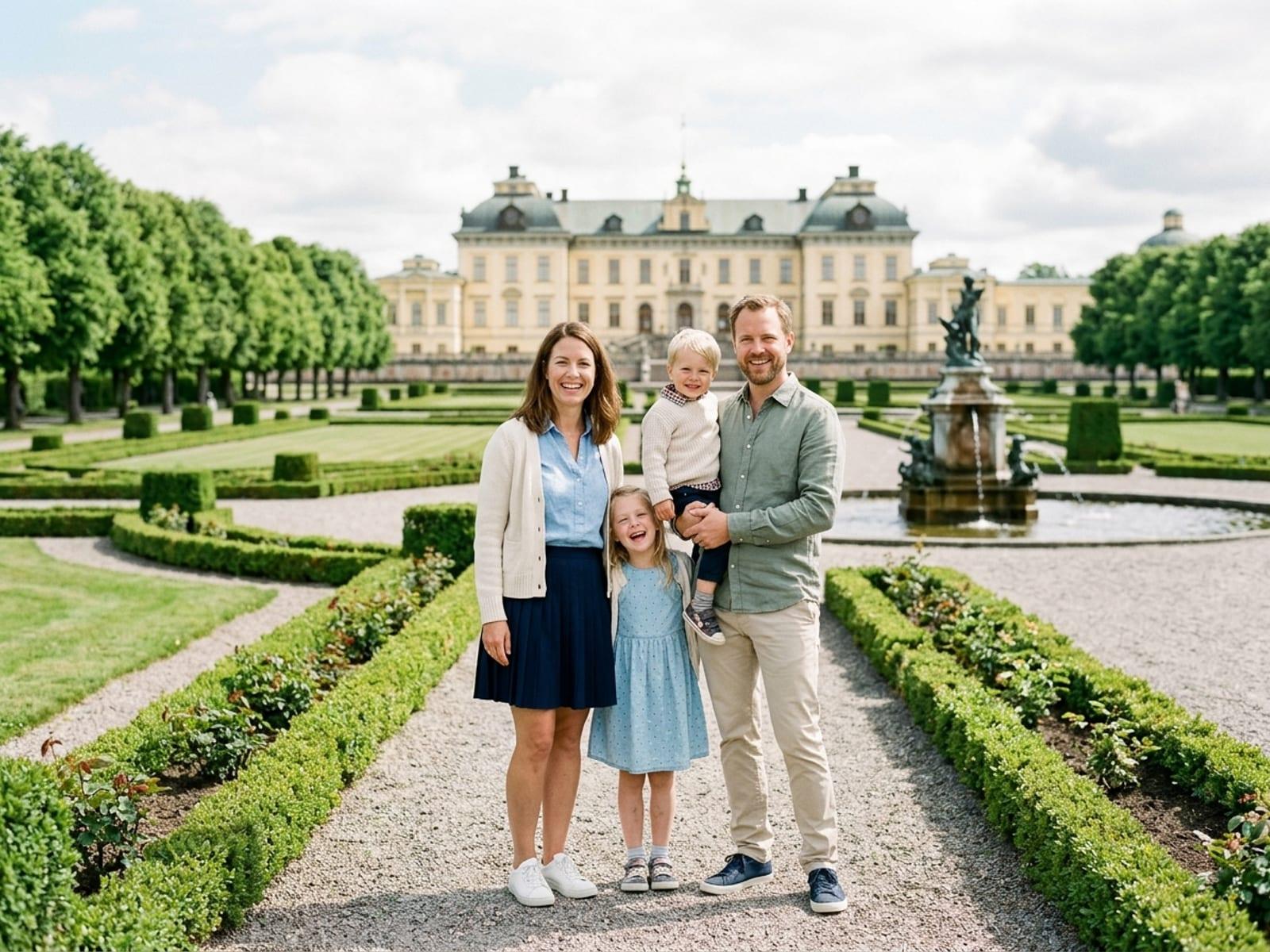
West of central Stockholm, on the island of Lovön in Lake Mälaren, stands a large, pale palace. Drottningholm has been the home of the Swedish royal family since 1981, and it was added to the UNESCO World Heritage List in 1991. Visitors can see part of the palace, the extensive gardens, a court theatre that still has its 18th-century stage machinery, and a Chinese-style pavilion. In summer you can cross the lake by boat from the city, which turns the journey itself into a small adventure for children.
A northern palace modelled on Versailles
The palace you see today began with a fire: the previous castle burned down in December 1661. Rebuilding started the following year, 1662, to designs by the architect Nicodemus Tessin the Elder, and the interiors were completed by his son, Tessin the Younger. For much of the 18th century, it served as the royal court's summer residence.
UNESCO describes Drottningholm as the best example of an 18th-century northern European royal residence inspired by Versailles. The World Heritage Site covers not just the palace but the whole ensemble, including the theatre, the Chinese Pavilion and the gardens. Because the royal family still lives here, visitors are limited to the rooms open to the public, the grounds, the theatre and a few other buildings.
Palace rooms, and a stage still worked by hand
Inside the palace you can see state rooms that have been used for ceremonies, the royal chapel and more. A nice touch for families is the picture trail sheet you can pick up at the ticket desk. There are two to choose from, the "Lion Safari" and the "Gold Hunt," and children search the rooms for painted lions or gilded details as they go. The trails are meant for ages 4 to 12, are included in admission during regular opening hours, and children who finish get a small reward. Having something to look for ("Is there a lion in the next room too?") keeps kids interested even in a palace full of paintings and furniture.
The Palace Theatre, just next to the palace, was built in 1766 for Queen Lovisa Ulrika. Its wooden stage machinery is still operated by hand, with winches, rollers, ropes and counterweights used to change the scenery. Around 30 sets of period backdrops survive. Guided tours run all year, and in summer there are opera, theatre and dance performances that make the most of the 18th-century setting. Check the theatre's official website for dates.
At the far end of the gardens is the Chinese Pavilion. Its story begins on a July evening in 1753, when King Adolf Fredrik surprised Queen Lovisa Ulrika on her birthday with a Chinese-style pavilion he'd had built in secret. That first building was prefabricated; the one standing today was rebuilt between 1763 and 1770. Inside are Swedish Rococo furniture in imitation Chinese style alongside objects shipped from China. Some rooms still have their original Chinese silk and paper wallpapers, and there are lacquer screens and porcelain to see.
The Chinese Pavilion opens only in summer. As with the palace, you can explore at your own pace without joining a guided tour, and the Royal Palaces' guide app has commentary. It has its own admission charge, so think about your children's stamina and decide in advance whether you'll go inside the palace, the pavilion or both.
The gardens are open all year
In front of the palace lies a Baroque garden laid out in the late 17th century, with clipped hedges, gravel paths, water parterres, a cascade and, in the middle, the Hercules fountain. To the north is an English-style landscape garden begun by Gustav III, with two ponds, canals, islands, bridges and lawns. Around the Chinese Pavilion there are avenues of chestnut trees dating from the mid-18th century.
The gardens are open all year, so you can walk them even on a day you don't go inside. Gravel paths are a bit hard going with a stroller, and a baby carrier makes life easier with little ones. The open lawns of the English garden are the right size for kids to burn off energy after the palace tour. There's also a restaurant and a café on the grounds. For something sweet with a royal connection, order a green Swedish princess cake (prinsesstårta), named for three princesses, at a café once you're back in town.
If you'd like to see what a family photo against the formal gardens might look like, you can try pokesta's AI photos ($1 per photo).
Opening days and admission (checked October 2026)
The palace's opening days vary a lot by season. The official schedule for October 2026 to January 2027 shows it open mainly on weekends and public holidays, from 10:00 to 16:00. There are more opening days in summer, but they change from year to year, so once you've picked a date, check the Royal Palaces' official website.
Admission to the palace is 170 kronor for adults and 85 kronor for ages 7 to 17. The Chinese Pavilion costs 140 kronor for adults and 70 kronor for ages 7 to 17, and a combined ticket for both is 250 kronor for adults and 125 kronor for ages 7 to 17. Children 6 and under go free with an adult. The official site itself notes that prices may change.
By boat in summer, by metro and bus the rest of the year
The main international gateway is Stockholm Arlanda Airport (ARN). From summer into autumn, boats run by the sightseeing company Strömma leave for Drottningholm from the Klara Mälarstrand pier near City Hall. The trip takes about an hour each way, past the islands of Lake Mälaren and lakeside houses. Sailings run from around mid-May to around October, with express departures at some times of year. Times and fares change every year, so check Strömma's official website. You can also mix and match to suit your children's mood, for example taking the faster metro and bus out and the boat back.
When the boats aren't running, or you'd rather save time, take the metro to Brommaplan and change to a bus to Drottningholm. You can't buy bus tickets near the palace, so get them in advance on the SL transit app. If you're driving, there's parking near the palace and the theatre; as of October 2026 it costs 15 kronor an hour, for up to six hours. If it's full, there's another car park at Karusellplan, about 300 meters from the palace.
If you're combining this with sightseeing in Stockholm, it's easy to plan a day before or after on Djurgården, home of "the Vasa Museum." On the evening you come back by boat, a plate of Swedish meatballs is an easy dinner for the kids. Allow half a day for the palace and gardens, or a relaxed full day if you're going by boat. Entry requirements for Sweden depend on your nationality, so check your own government's official information before you travel.
References