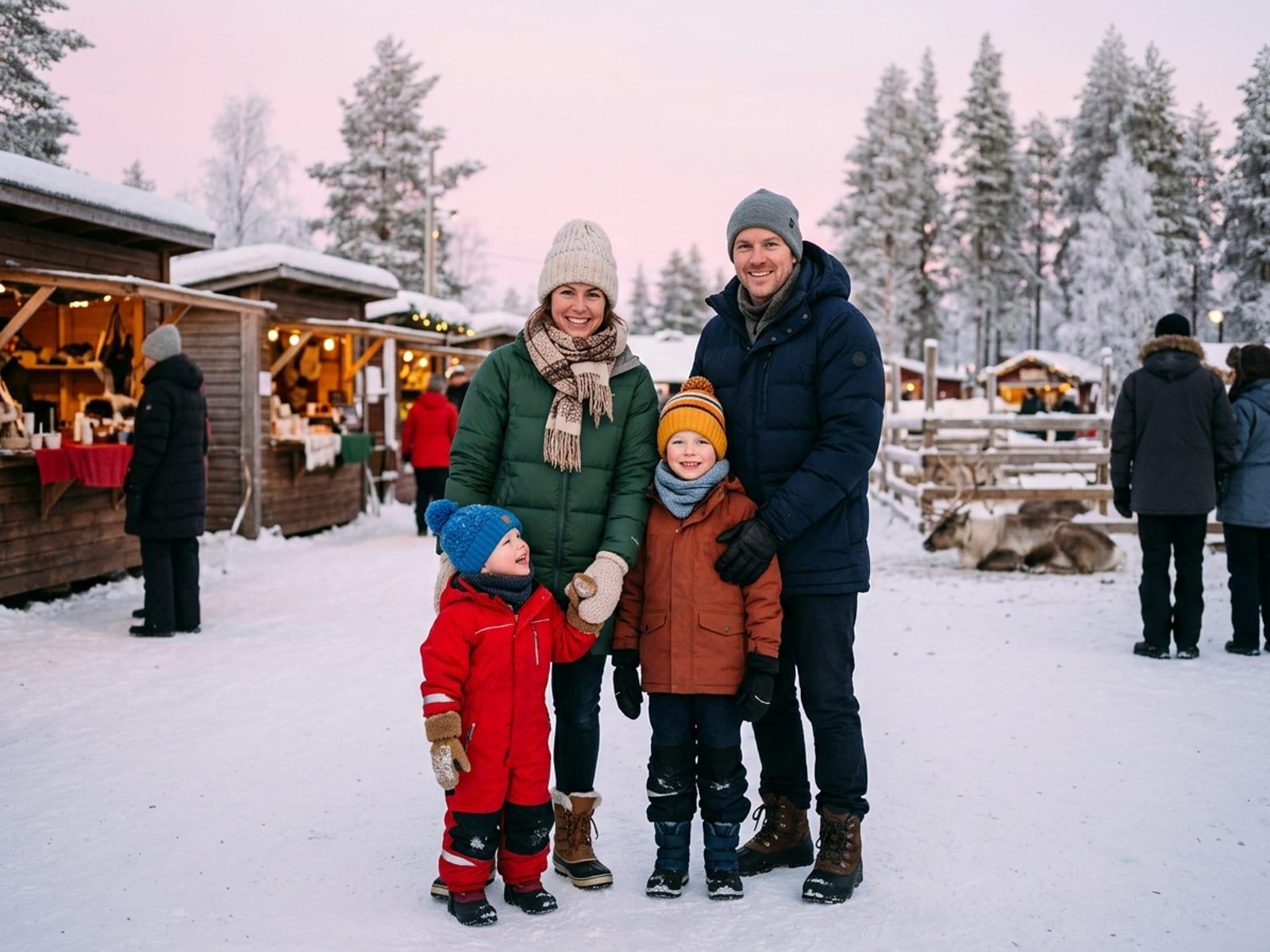
For three days at the start of February, a small snowbound town in Swedish Lapland fills with tens of thousands of people. Jokkmokk's winter market, Jokkmokks marknad, has been held since the 1600s. In 2027 it runs from Thursday, February 4 to Saturday, February 6, which the organizers count as the 422nd market. You come for Sámi handicrafts, reindeer and air so cold it bites. If you bring children, how well you prepare for that cold will decide how the trip goes.
A market a king set up in winter, still running four centuries later
Jokkmokk sits just north of the Arctic Circle and is regarded as one of the centers of Sámi culture, the culture of the Indigenous people of the region. The market goes back to around 1600 and the reign of King Charles IX, who wanted a firmer hold on the north. The crown set up permanent marketplaces there to collect taxes, enforce the law and spread Christianity.
There was a reason to hold it in the coldest part of the year. In winter, Sámi families gathered at forest winter camps near the reindeer's winter grazing grounds, and the frozen rivers and lakes became roads for merchants, officials and clergy. According to the history page of the market's official site, the Sámi brought furs, leather goods and dried fish to trade for salt, flour, silver and iron goods.
When trade was deregulated in 1846, a market that had lasted several weeks shrank to one. It never stopped, though. For its 350th year, in 1955, it drew around 10,000 visitors, and by its 400th, in 2005, around 80,000. That's an astonishing crowd for a town of only a few thousand people.
What to see, eat and buy over the three days
The market area is open from 10:00 to 18:00, Thursday through Saturday, and entry is free. Stalls line the streets selling knife handles made of reindeer antler and leather, belts, woven bands and silver jewelry. Sámi handicraft keeps its traditional forms while taking in new designs, and in the center of town, the shop of the Sámi handicraft foundation, Sameslöjdsstiftelsen, exhibits and sells work by Sámi makers. A souvenir from a street stall and a piece signed by a known maker differ in price and in workmanship, so if something catches your eye, ask the seller where it comes from.
The food centers on reindeer and moose (elk) meat and forest berries. There are easy street-food options like reindeer burgers and kebab-style wraps, so children usually find something they'll eat. The Swedish Lapland tourist board recommends gahkku, a soft white bread that is best eaten warm, when the butter melts into it. In February, cafés in the cities farther south are selling semla, the cream-filled bun of the season, so a stop on the way there or back brings another winter treat.
Talks, concerts and exhibitions continue into the evening throughout the market. Most of these are ticketed separately. The reindeer procession (renrajd), first held in 1955, has become a tradition in its own right, with a line of reindeer making its way through town. Ájtte, the Swedish mountain and Sámi museum, also runs exhibitions and talks on Sámi history and tradition, and it doubles as a refuge when the cold drives you indoors.
How many layers you wear decides the day
The official site notes that in 2012 the temperature fell to -40°C. In other years it has climbed above zero, so it varies a great deal. The tourist board says that dropping below -30°C is not unusual.
Layering is the answer. Wool next to the skin, a fleece or sweater over that, and a thick down jacket on the outside. On your feet, insulated boots with thick soles and wool socks. A hat, neck warmer and gloves are essential, and mittens keep hands warmer than fingered gloves. If you take your mittens off to shoot a photo, tie them to a string so you can't drop them in the snow.
The Sámi traditional dress, gákti, signals things like where the wearer comes from and whether they are married through its colors, patterns and even the shape of the belt buttons, and at the market you will see Sámi people walking in their finest. When non-Sámi people have worn imitation gákti, it has drawn protests across the Nordic countries as cultural appropriation. Visitors should come in ordinary winter clothes, and if a particular outfit catches your eye, ask before taking a photo.
With small children, plan for the cold and the crowds separately
Your main worry is your child's body temperature. Children are smaller than adults and chill faster, and a child sitting still in a stroller gets cold faster still. Think carefully about whether to bring a baby at all. If you do, consider a carrier with a cover that lets the baby ride inside an adult's coat. Check every so often that cheeks and the tip of the nose haven't gone pale.
The official site suggests warming up in indoor sales halls, exhibitions and cafés when you get cold. The center of the market is small enough to cover on foot, so set a rhythm before you go out, such as an hour outside followed by a hot drink indoors.
Crowds peak during the three market days. Popular events like the reindeer procession pack the route, so having one adult who can carry a child on their shoulders helps the little ones see. February days are short in the Arctic, so if you want photos in daylight, get going in the morning. In hard frost, phone and camera batteries drain quickly. Keep spare batteries or a power bank in an inside pocket where your body heat keeps them warm. Lenses fog up as soon as you step into a warm room, so wait a few minutes before shooting.
You can also try a family photo walking through the snowy market ahead of time with pokesta's AI photos ($1 per photo).
Reaching the first-Thursday-in-February market by air and road
The market traditionally runs for three days starting on the first Thursday of February. The next year's dates are announced early on the official site, and program items are posted there as soon as they're ready. The market week, with its evening events, stretches longer than the three market days.
According to the official travel page, the nearest airports are Luleå (airport code LLA), Gällivare and Arvidsjaur, and from there you continue by bus or rental car. During the market some central streets are closed, so regional buses to and from Jokkmokk detour through town and stop only at the bus station. If you're not used to driving on winter roads, a bus or a tour is the safer choice. If your route passes through Stockholm, the indoor Vasa Museum keeps children busy however cold it is outside.
Visitors far outnumber beds in a town this size, so book accommodation early. Some people stay in nearby towns and travel in each day. Entry requirements for Sweden depend on your nationality, so check your own government's official information before you go.
If you can handle the cold, there is no other winter market like it. To see another side of Lapland in winter, you could combine it with Santa Claus Village across the border in Finland.
References