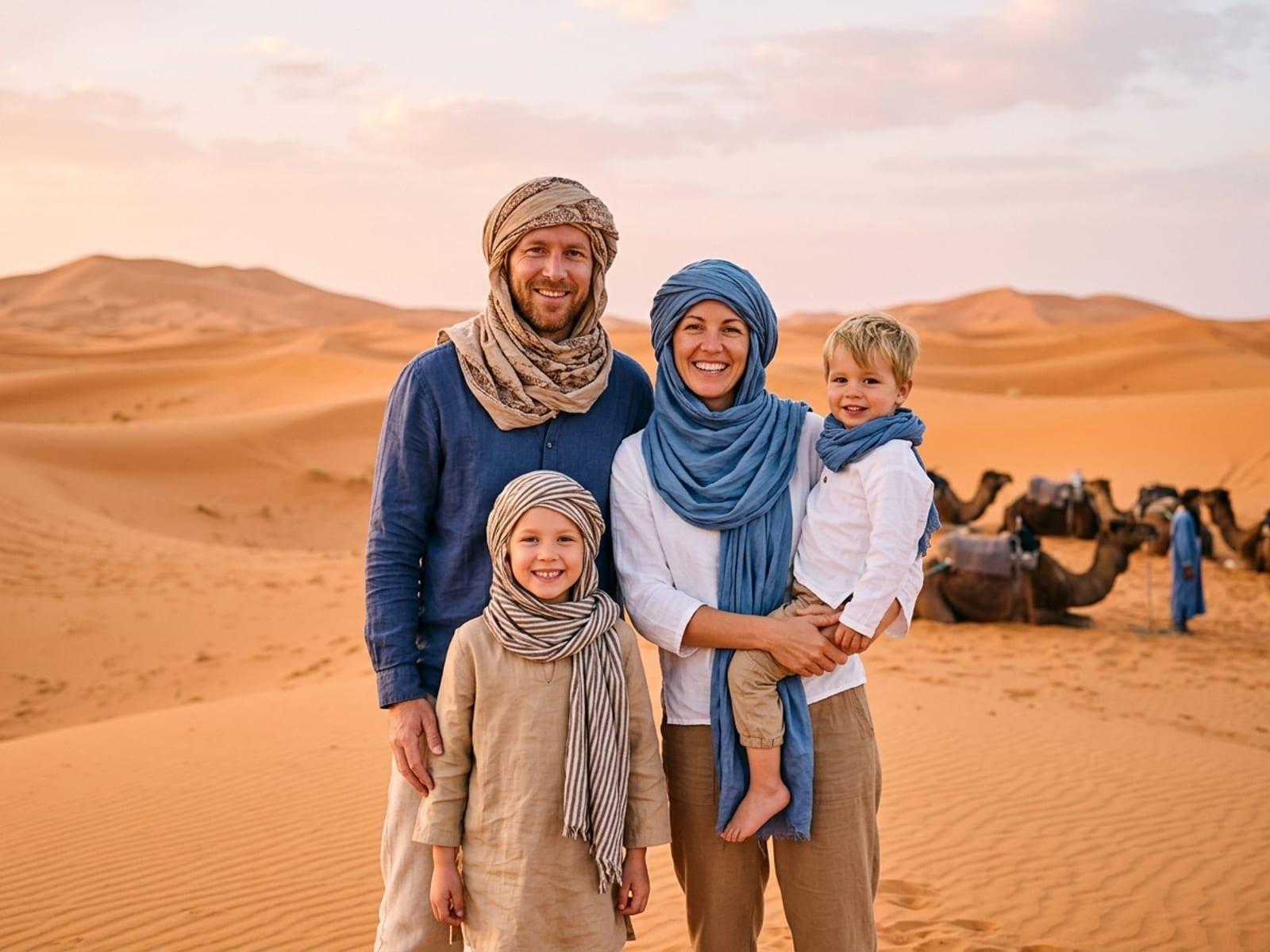
Merzouga is a small town in southeastern Morocco near the Algerian border, the gateway to Erg Chebbi, a field of Sahara dunes stretching more than 20 km north to south, where you can spend a night in a desert camp. The classic tour takes you by camel or 4x4 to a camp among the dunes for the sunset, the stars and the next morning's sunrise. It's 9 to 10 hours by car from Marrakech, so families do best with an overnight stop on the way and a trip in spring or autumn, when the heat and cold ease.
Dunes 20 km long and 150 meters high
East of town, the Erg Chebbi dunes stretch for more than 20 km from north to south and in places rise about 150 meters above the surrounding land. Depending on the angle of the light, the sand shifts from a pale gold in the morning to a deep orange in the evening.
The town lies on the western side of the dunes, with hotels and guesthouses along their edge. Within the dunes there are a number of permanent tented camps, reached from town by camel or 4x4.
A night in the desert
On a typical camp stay, you leave town in the late afternoon and sway on camelback into the dunes. In the evening you climb a dune to watch the sunset, then have dinner at camp and gather around a fire for drumming and music. The next morning you get up early to watch the sunrise from the dunes before heading back to town.
Far from city lights, the desert night is excellent for stargazing. How many stars you see depends on the phase of the moon, so if the night sky is what you're looking forward to, pick dates close to the new moon.
Camps range from simple tents to tents with beds and their own toilets and showers. With children, make toilets and bedding your top priority and you'll have a more restful night. Facilities and prices vary widely between camps, so check the details carefully before booking.
The people who live around the desert
The guides who lead the camels on desert tours and the cooks who prepare meals at camp come from communities that have long lived in this land. Many Amazigh (Berber) people, the Indigenous inhabitants, live in southern Morocco and carry on their own language, music and food traditions. At camp you are often welcomed with sweet mint tea, or atay, and served stews slow-cooked in a cone-lidded tagine.
As a visitor, ask before you photograph anyone, whether camel handlers or people you meet in villages along the way, and especially women and children. If they say no, don't press them. Teaching children the habit of "ask first, then take the photo" is also a chance to think together about how to behave when traveling.
In case the food at camp doesn't suit your children, bring a little of what they're used to, such as bread, fruit or nuts. Always drink bottled water, and use bottled water for brushing teeth too; it makes stomach trouble on the road less likely.
Riding camels with children
A camel's back is higher than you might expect, and it lurches sharply forward and back as the animal stands up and sits down. Whether small children can ride with a parent, and from what age they can ride alone, is up to each tour company. Tell them your children's ages when you book and talk it through.
If a child is nervous of camels or afraid to ride, some tours offer the option of going to camp by four-wheel drive. Don't force them on; walking the dunes or sliding down sandy slopes may turn out to be the part they enjoy most.
Heat and cold change with the seasons
The Saharan climate swings widely between day and night, and between summer and winter. In summer, daytime temperatures climb very high, making it a hard time for a family to spend a night in the desert. In winter, days are pleasant but nights turn cold. For families, spring and autumn are generally considered the most comfortable seasons.
Whatever the season, prepare for strong sun by day and nights colder than you'd expect. Children are less able than adults to regulate their body temperature, so be ready for both heat and cold.
Long sleeves, a big scarf and a down jacket
In the desert, clothing that covers your skin protects you from both the sun and the sand. Bring loose long-sleeved cotton or linen clothes and a large scarf; wrapped around your head and neck, it shields you from sun and sand by day and keeps you warm at night. In Merzouga and at shops along the way you can buy cloths for wrapping your head desert-style, and tour staff may show you how to tie them.
For the night at camp, bring warm layers such as a fleece or down jacket for everyone in the family. Shoes that keep sand out are best, but many people walk barefoot on the dunes; be careful, as the sand gets hot during the day. Keep phones and cameras in bags so sand doesn't get in.
Morocco is a predominantly Muslim country. In towns, modest clothing helps you blend in.
The long road to Merzouga
Morocco's main air gateways are the international airports of Casablanca, Marrakech and Fes. Many flights arrive from cities in Europe and the Middle East, and travelers coming from farther away usually connect in one of them.
Getting to Merzouga takes about 9 to 10 hours by car from Marrakech, or 7 to 8 hours from Fes. The route from Marrakech crosses the Atlas Mountains, and many tours run over about three days and two nights with an overnight stop on the way. In early May, you can build in a stop in the Dades Valley for the Kelaat M'Gouna rose festival. To cut the travel time, you can take a domestic flight to Errachidia, the nearest airport to Merzouga, and drive about two hours from there. With children, pick a tour with regular breaks on the long driving days, or an itinerary with an overnight stop.
Visa rules depend on nationality. Citizens of many countries can visit for up to 90 days without one, but others need a visa or electronic travel authorization in advance. Before you go, check the latest official information from the Moroccan government and your own government's travel advice, including safety tips.
To see your family lined up on the dunes in desert scarves before you go, you could try pokesta's AI photos first ($1 per photo).
References