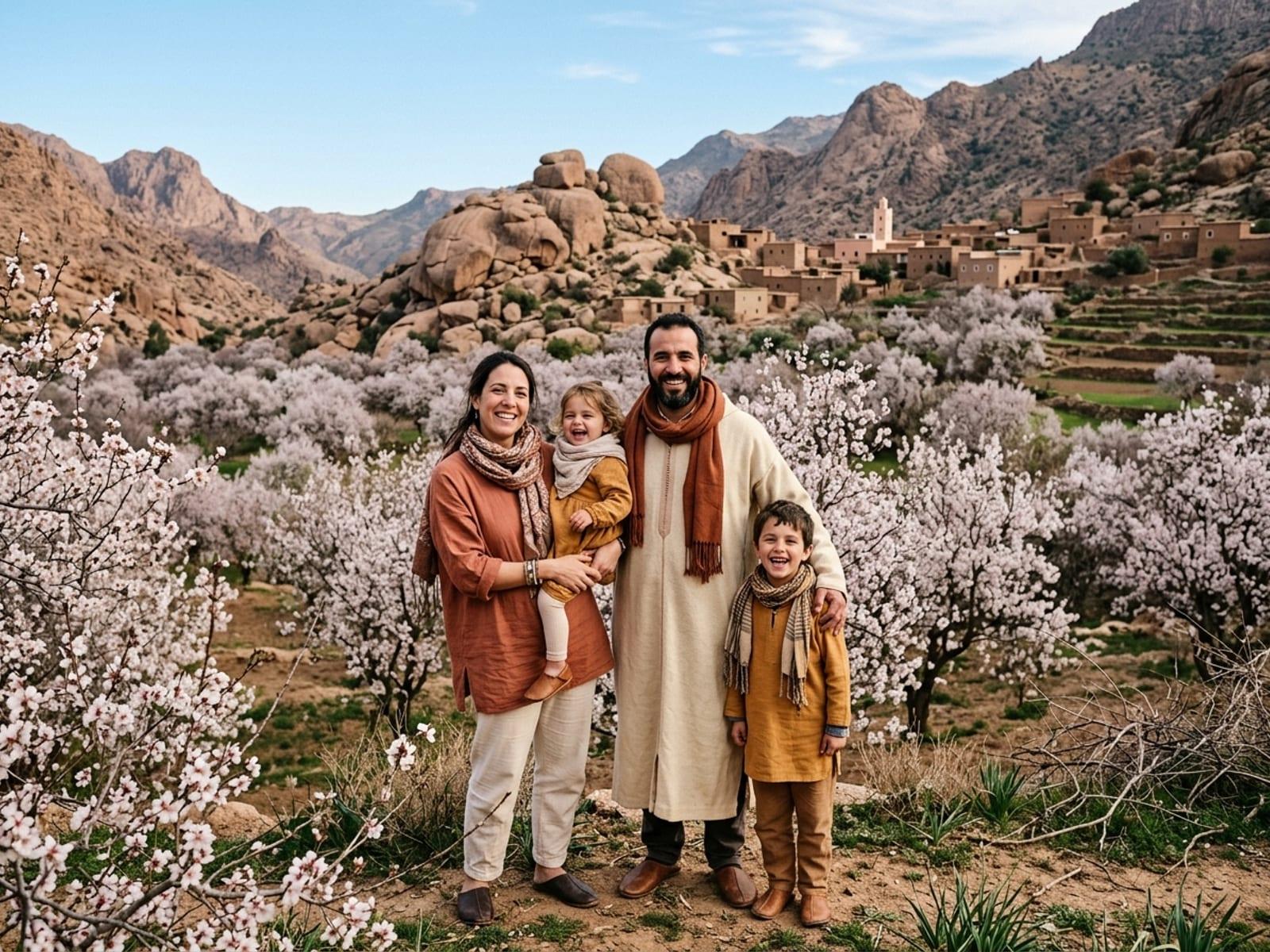
Tafraout is a small town deep in the Anti-Atlas mountains of southwestern Morocco, ringed by rounded boulders of pink granite, where the almond trees in the surrounding valleys bloom white and pale pink, at their best from February to early March. An almond festival is held to match the blossom, but its dates have moved anywhere from February to April, so check that year's announcement before you book. It's about three hours by car from Agadir and full of boulders for children to scramble on, so families do best with an overnight stay and layers for the chilly mornings and evenings.
An Amazigh town among the boulders
Tafraout belongs to Tiznit Province in the Souss-Massa region, and the 2024 census counted 6,124 residents. According to Morocco World News, it sits in the mountains about 170 km southeast of the coastal city of Agadir. The name comes from the Amazigh (Berber) language and refers to a basin that holds water drawn from a well; from there it is said to have come to mean "valley" as well.
The town center lies in a small valley at the foot of Jebel Lekst, a mountain of pink granite. Almond and olive groves spread around it, along with argan and fig trees. Almonds cope well with drought and need little water, which is why they have been grown here for centuries. The same Morocco World News article puts the region's almond output at about 1,600 tonnes a year.
The festival follows the flowers
The almond festival is timed to the blossom, and that makes its dates hard to pin down. The travel site Rove gives the best blossom season as February to early March, yet the actual festival dates vary a lot. The 11th edition in 2024 took place on February 23 and 24, while the 13th edition in 2026 ran from April 11 to 13, according to the Moroccan government's official news site. Because it is not held in the same week each year, check that year's dates in announcements from the organizer, the Association Louz Tafraout, or in local news before you plan the trip.
At its heart, the festival is a fair for local produce, almonds above all. Cooperatives and craft groups set up stalls selling almonds and handmade goods. There is usually a day of talks by researchers, sports and recreational activities, and stages for music and folk performance. In 2026 the program also highlighted Idernan, a ritual that stands for mutual aid and solidarity and for Amazigh identity.
Ahwash, in which men and women stand in lines and sway to hand claps and frame drums, is the signature group dance of this region. You may see it on the festival stage, though the performers and program change from year to year.
Tasting almonds, and taking some home
The first thing to try at the festival is amlou. Roasted almonds are ground with argan oil and mixed with honey into a paste that people spread on breakfast breads like msemen and baghrir. Its smooth texture is a bit like peanut butter, so children tend to take to it quickly. If your child has a nut allergy, though, keep them away from it, including the free samples at the stalls.
Tafraout's small souk (market) has shops selling argan oil, silver jewelry, tin tagine pots and leather slippers. The travel guide Maptrotting describes it as calm, with few touts. Almonds and amlou come in jars and bags, so think about what will fit in your luggage on the way home before you buy.
Rocks and valleys children can explore
The festival grounds are only part of the appeal. A short walk from town brings you to a landscape scattered with huge round boulders, where children can scramble and climb. About ten minutes away by car, a rock formation known as Napoleon's Hat gives you a view over the valley after only a short climb.
About 10 km north of town are the Painted Rocks. In 1984 the artist Jean Vérame painted boulders here in blue, red and other colors; the paint has faded quite a bit since. The last few hundred meters are on an unpaved track.
Amazigh villages dot the valleys where the almonds bloom. When you walk through one, say hello to the people you pass. Always ask before photographing anyone's face, and lower the camera if they say no. Each tree in the groves belongs to a family, so tell children not to break off flowering branches or wander into the fields.
With an extra day, you can drive about two hours southeast to Amtoudi. The path through its palm grove is easy enough for small children. The old hilltop granary, or agadir, takes about 45 minutes of climbing each way, which suits kids who are used to mountain trails.
In town, the usual meal at local restaurants is a tagine with bread, salad and mint tea. Go easy on raw salads for children with sensitive stomachs, and buy bottled water. Many guesthouses are painted kasbah-style to blend in with the color of the rocks, and there are places with swimming pools outside town.
Cold mornings and strong sun
Maptrotting suggests October to April for a family trip to this area; from May to September temperatures can top 35 to 40°C, which is hard going with children. The blossom season falls inside the comfortable months, but even when afternoons are warm, mornings and evenings are cold. Dress in layers: a loose long-sleeved cotton top with a light down jacket or fleece over it. The sun is strong, so bring hats and sunglasses. You'll be walking on rocky ground, so non-slip sneakers are better than sandals.
For photos that carry the feel of the place, a large scarf in a bright color helps. Yellow or blue looks lovely against the white and pink blossoms and the reddish-brown rock. The leather babouche slippers sold in the souk make good indoor shoes for relaxing at your guesthouse. In town and in the villages, clothes that cover shoulders and knees help you blend in.
You can also preview your family among the rocks and blossoms with pokesta's AI photos before you leave ($1 per photo).
Three hours over the mountains from Agadir
The nearest international airport is Agadir Al Massira (AGA). Tafraout has no airport or railway, so rent a car in Agadir or arrange one with a driver. Maptrotting says the drive via Aït Baha takes about three hours. You don't need a four-wheel drive, but the road is full of bends, so travel-sickness medicine is worth packing for children who get carsick.
There aren't many places to stay, so book early once the festival dates are announced. You could stay on the coast in Agadir and make a day trip, but that means around six hours on the road in total. Spend one night and you get to see the rocks turn red in the evening and the blossoming valley in the morning light. If you travel the south in autumn instead, the saffron harvest in Taliouine, also in the Anti-Atlas, runs from mid-October to mid-November.
When the almonds bloom depends on rainfall and temperature, and in some years the festival and the peak blossom don't coincide. If the flowers are what you want, aim for February to early March; if it's the festival, plan around that year's announcement. Entry requirements for Morocco depend on your nationality, so check your own government's official information before you go.
References