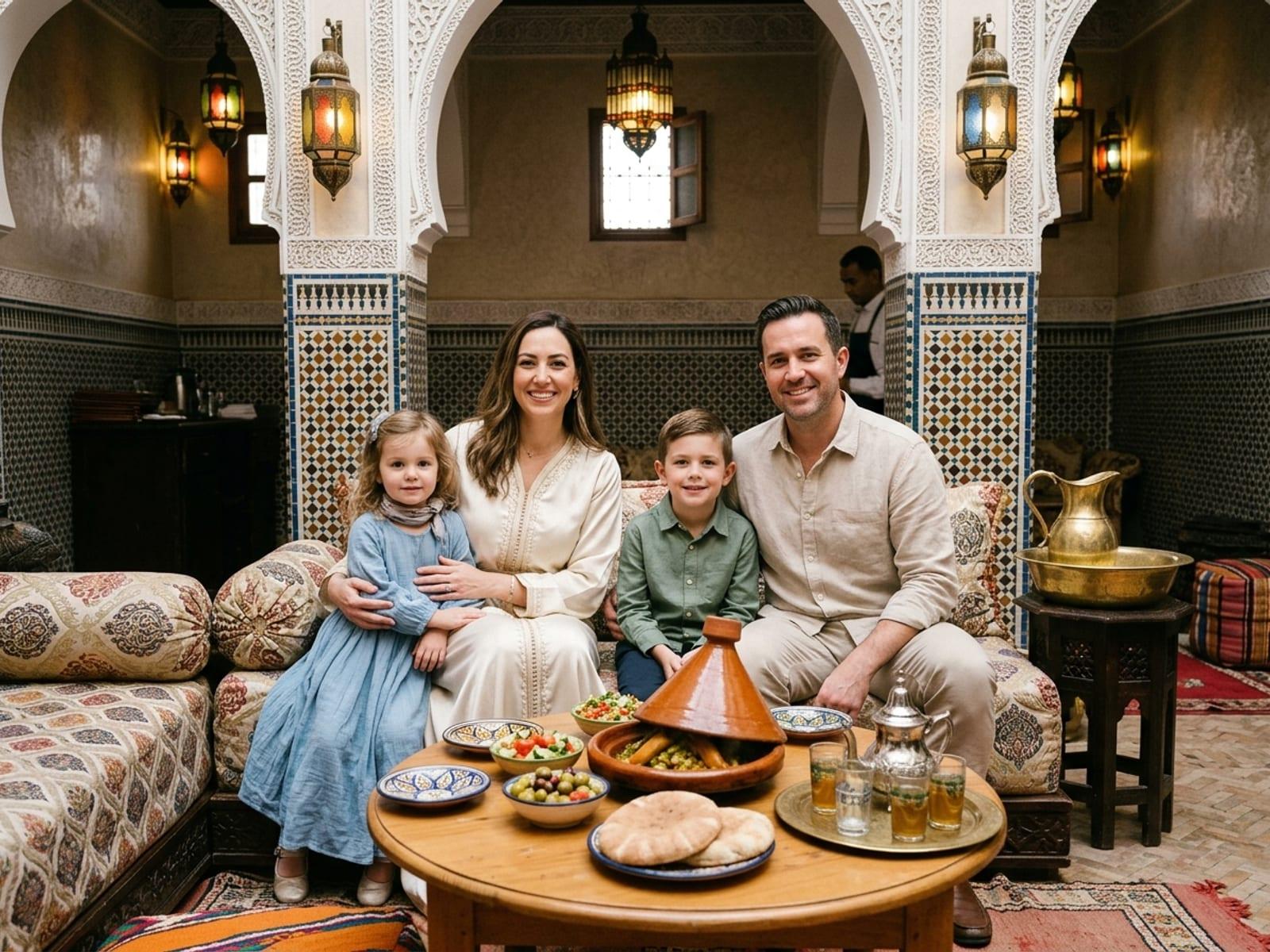
In Morocco, lunch is the main meal of the day and dinner comes late, from around 8 p.m. You eat from a shared dish with your right hand and bread, alcohol is served only where a license allows it, and daytime routines change during Ramadan. None of this is complicated, and knowing it in advance makes meals on the road much more relaxed. Tipping isn't compulsory; at a casual eatery, rounding up the bill is enough.
Lunch is the main event; dinner starts at 8
According to a guide to Moroccan daily life published by the Five Colleges consortium of US colleges, people who can get home eat lunch around 1 to 2 p.m., and dinner is usually served between 8 and 10 p.m. As the English Wikipedia article on Moroccan cuisine describes, a typical lunch is a substantial meal: several warm and cold salads, followed by a stew such as tagine. Morocco's national tourism office notes that couscous is traditionally eaten on Fridays.
The same guide says many Moroccan restaurants serve both full sit-down meals and quick snacks. Workers on a lunch break often grab something fast at places serving baguette sandwiches, pizza or burgers. Dessert is usually seasonal fruit or a pudding-like sweet, with ice cream in summer. For children who've had enough of spiced food, snacks and fruit like these are a welcome fallback.
With kids, the hardest part is how late dinner is. One way around it: eat a proper lunch, bridge the late afternoon with a snack, then in the evening go to a tourist-oriented restaurant that opens early, or ask your guesthouse to cook dinner. That makes it easier to get the children to bed on time. Some riads (traditional courtyard houses turned into guesthouses) will prepare dinner if you ask in advance, so ask when you book.
Wash your hands, use your right hand and bread, and eat from your side
As English Wikipedia notes, Moroccans traditionally eat with their hands and bread. At home and in traditional restaurants, a large shared dish is set in the middle of the table and everyone gathers round. A cultural guide from the tour company Trafalgar describes what happens before the meal. Hands are washed first; at home, the host may bring a washing basin to the table before the food is served. Nobody starts eating until the host has blessed the food by saying "Bismillah" ("in the name of God").
Eat with your right hand. According to the same guide, the left hand is considered unclean, so both greetings and eating are done with the right. Hold a piece of bread between your fingers and use your thumb to scoop up the meat, vegetables and sauce. Take food only from the part of the shared dish in front of you. If the host invites you to, it's fine to take from elsewhere.
If you have a left-handed child, explain before you go that "we use our right hand for the shared dish," and nobody, child included, will feel awkward at the table. For small children who find eating by hand difficult, ask the restaurant for a spoon.
Ordering, paying, and how much to tip
Morocco's official languages are Arabic and Amazigh, but French is widely used too. Menus sometimes list dishes in French, so besides tagine and couscous it helps to know a few words like poulet (chicken), boeuf (beef) and poisson (fish).
For paying, a guide from the tour company Intrepid says cards are widely accepted in larger establishments, but cash is the norm at small shops and market stalls. The currency is the Moroccan dirham (MAD).
Tipping isn't compulsory. The same Intrepid guide says the usual practice in restaurants and cafes is to round up the bill and leave the small change. Trafalgar's guide says tipping waiters and other staff is customary, at around 10 to 15 percent. Since the guides differ, a simple rule works: small change or rounding up at casual eateries, and around 10 percent at a proper restaurant when the service was good. Also check whether a service charge is already on the bill.
Alcohol only where licensed, and Ramadan changes the daytime
According to the UK government's travel advice, alcohol is available in licensed venues in Morocco, but drinking it in public or anywhere other than a licensed restaurant or bar is illegal and can lead to arrest. Whether a restaurant serves alcohol varies, so if the adults want a drink, check that the place is licensed before you choose it.
During Ramadan, the Islamic month of fasting, eating out during the day works very differently. The same travel advice notes that eating, drinking or chewing gum in public during daylight hours in Ramadan may cause offense, and suggests checking the opening hours of shops and restaurants. Even places that serve lunch sometimes seat non-fasting customers separately from fasting Muslims. Ramadan moves earlier each year, so check before you leave whether it falls during your trip. The dates for 2027 and 2028 are in our piece on harira and chebakia, the soup and sweets of the evening meal.
Eating out with kids: write your allergies down
The health section of the UK government's travel advice notes that allergen information in Morocco is not consistently provided and that there's a risk of cross-contamination during cooking, and recommends stating your allergies clearly when eating out. Moroccan cooking uses a lot of almonds, sesame and honey. A card listing the foods your family needs to avoid, written in Arabic and French, gets the message across to both the waiter and the kitchen. Be careful with food and water hygiene too, and choose well-cooked dishes.
When you sit down, you may be offered sweet mint tea first. The tourism office describes mint tea, or atay, as the drink of welcome. Ask for the hot glasses to be kept out of children's reach.
When in doubt, eat big at lunch and light at night
You'll get more out of Moroccan meals by making lunch the center of your day than by worrying about every rule of etiquette. If you arrive through Marrakech Menara Airport (RAK), one of the country's main gateways, spend your first lunch sharing a tagine at a riad or a local eatery. You can also see your family gathered around a shared dish with pokesta's AI photos ($1 per photo, with your first one free). Entry requirements depend on your nationality, so check your own government's official information before you travel.
References