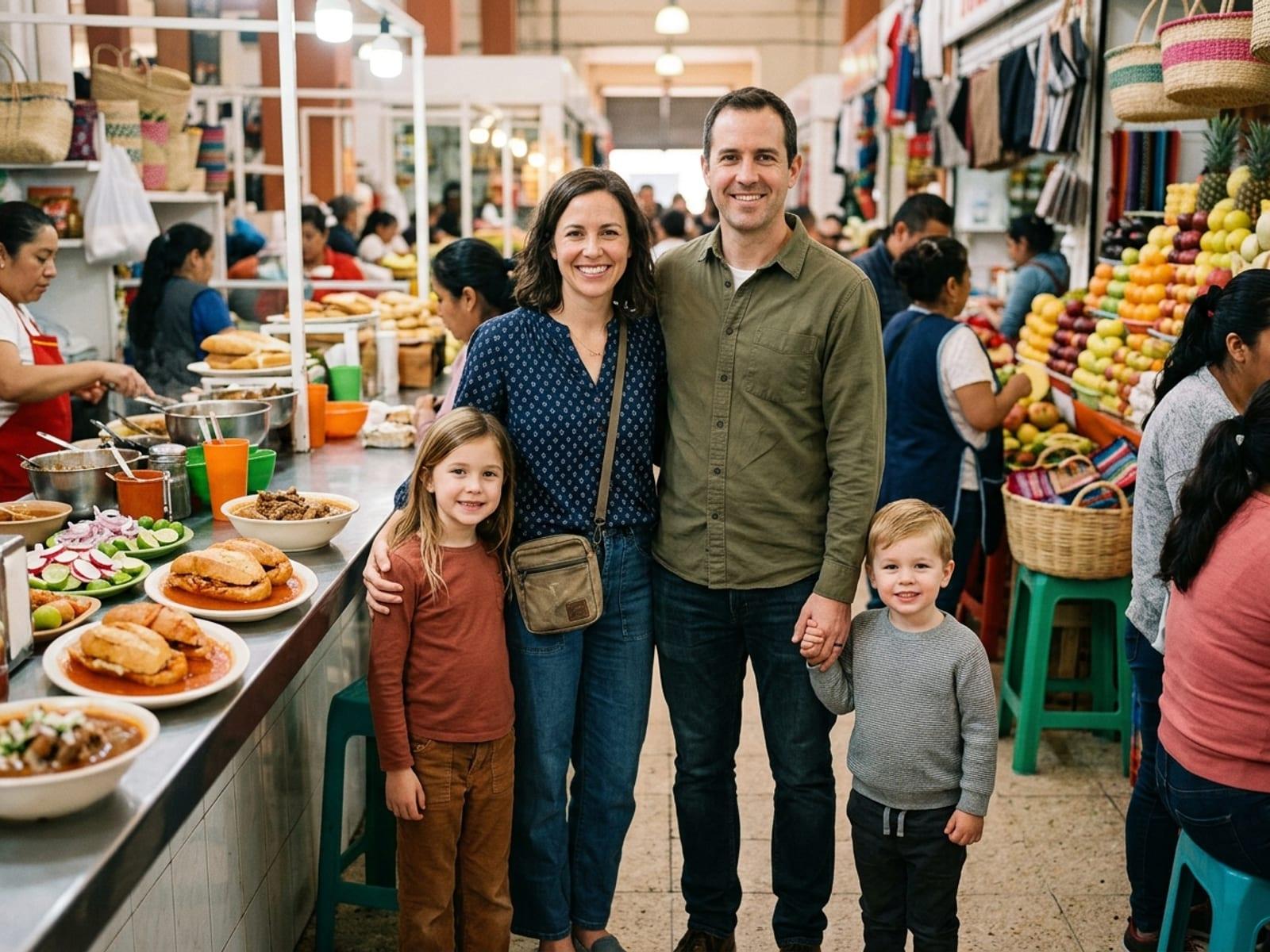
In the historic center of Guadalajara, capital of the state of Jalisco, stands a vast indoor market that locals call "San Juan de Dios." Its official name is Mercado Libertad (Liberty Market). The ground floor has fruit, sweets, crafts and snack stands; the second floor is given over to eateries; and the third sells clothing and electronics. It's open every day of the year, and it's a place to taste Jalisco's regional cooking under one roof, which makes it an easy lunch stop on a family trip. It's also big and crowded, so deciding how you'll get around before you go in helps everyone stay calm.
One of Latin America's largest covered markets
The current building was designed by the architect Alejandro Zohn, built in 1957 and 1958, and opened on December 30, 1958. It covers about 25,000 square meters and is said to hold around 4,000 stalls, and it is sometimes described as the largest covered market in Latin America. The previous market, from 1928, was a far smaller building planned for about 250 stalls.
The market is in the San Juan district of the historic center and is open every day of the year. On March 31, 2022, a fire damaged the southern section of the market, facing Calle Javier Mina. Conditions can change, so check the latest information before you visit.
Each floor has its own job
What's sold here is clearly divided by floor. The ground floor has groceries, sweets and crafts, along with stands serving Guadalajara favorites such as tortas ahogadas, tacos, pozole (a stew with whole corn kernels) and menudo (tripe soup). The second floor is the level of fondas, no-frills eateries and small restaurants where you can sit down to Mexican home cooking. For how a fonda's set lunch works, and what to tip, see our piece on comida corrida in Mexico City. The third floor sells imported goods, clothes, electronics, music and movies, shoes and so on.
With a family, it works well to have lunch at the second-floor fondas first, then, once everyone is fed, browse the fruit, sweets and crafts downstairs. Bargaining is common at the craft stalls. Until you're used to it, asking for a small discount when you buy several things is plenty. Letting a child pick out one souvenir and ask the price themselves is the kind of thing only a market offers. On the other hand, the electronics and media stalls on the third floor have been noted to include fakes and pirated copies. With kids in tow, there's no need to go up there.
The aisles are narrow and similar stalls go on and on, so it's easy to lose your bearings. Before setting off, agree as a family on which entrance you came in by and where to meet if anyone gets lost. It's a crowded place, so hold children's hands and carry bags in front of you.
The drowned sandwich: torta ahogada
Every list of Guadalajara specialties includes the torta ahogada, the "drowned sandwich." A birote salado, a salty roll with a thick, hard crust, is filled with shredded pork or carnitas (pork simmered and fried in its own fat), bean paste and onion, then soaked in chile sauce. The birote is a sourdough roll that holds together when soaked. A bolillo sometimes stands in when birote isn't available, but birote is the real thing.
There are two sauces. One is a hot sauce of dried chile de árbol with vinegar, garlic and oregano; the other, made from red tomatoes, is far milder. There are degrees of drowning, too: "media ahogada" is half-dipped, and "bien ahogada" means fully submerged until the bubbles stop.
For children, the easiest version is tomato sauce, media ahogada. Even so, hands and faces will end up covered in sauce, so bring plenty of napkins and wet wipes. As for the bread, one legend credits a French sergeant who came with the French intervention in 1864, and says the name "birote" comes from his surname. The dish itself is said to have started when a vendor accidentally dropped a sandwich into the sauce. It usually comes with onion, radishes, avocado and chiles, and eating one by hand at the Estadio Jalisco football stadium is a familiar local sight.
Birria, the stew for celebrations
Jalisco's other signature dish is birria. Meat is marinated in a sauce of vinegar, dried chiles, garlic, herbs and spices, then stewed in broth (consomé). Goat is traditional, and beef is now common too. The word is said to have originally referred to meat steamed or roasted in a pit dug in the ground or an earthen oven. Birria comes with corn tortillas, chopped onion, cilantro and lime, and you can make tacos with the meat or drink the broth. In Tijuana in the north, some cooks switched to beef because goat was more expensive and less fatty, and quesabirria, birria with cheese, is often served with consomé on the side. Birria is still served at weddings, baptisms, Christmas, Easter and other celebrations.
The broth can carry a strong chile flavor, so for children, lift out the meat, wrap it in a tortilla and add lime and onion. You could also go to a pozole or menudo stand and pick a soup that isn't spicy. At any stand, check with a quick "¿Pica?" ("Is it spicy?") before you order.
When to go and how to get there
The market is open year-round. The gateway is Guadalajara International Airport (GDL), about 17 km southeast of the city center. The market fits easily into a day in the historic center, and Guadalajara is also home to the Hospicio Cabañas, a UNESCO World Heritage Site since 1997. It served as a hospital until 1980 and is now a cultural center and museum with schools of art and crafts. In its main hall you can look up at "The Man of Fire," a mural painted by José Clemente Orozco between 1936 and 1939. Consider it for the afternoon after lunch at the market. A trip out from Guadalajara also takes you to the town of Tequila and its agave fields.
You can also see what your family might look like lined up at a market food counter with pokesta's AI-generated photos ($1 per photo, and your first one is free). Entry requirements for Mexico depend on your nationality, so check your own government's official information before you travel.
References