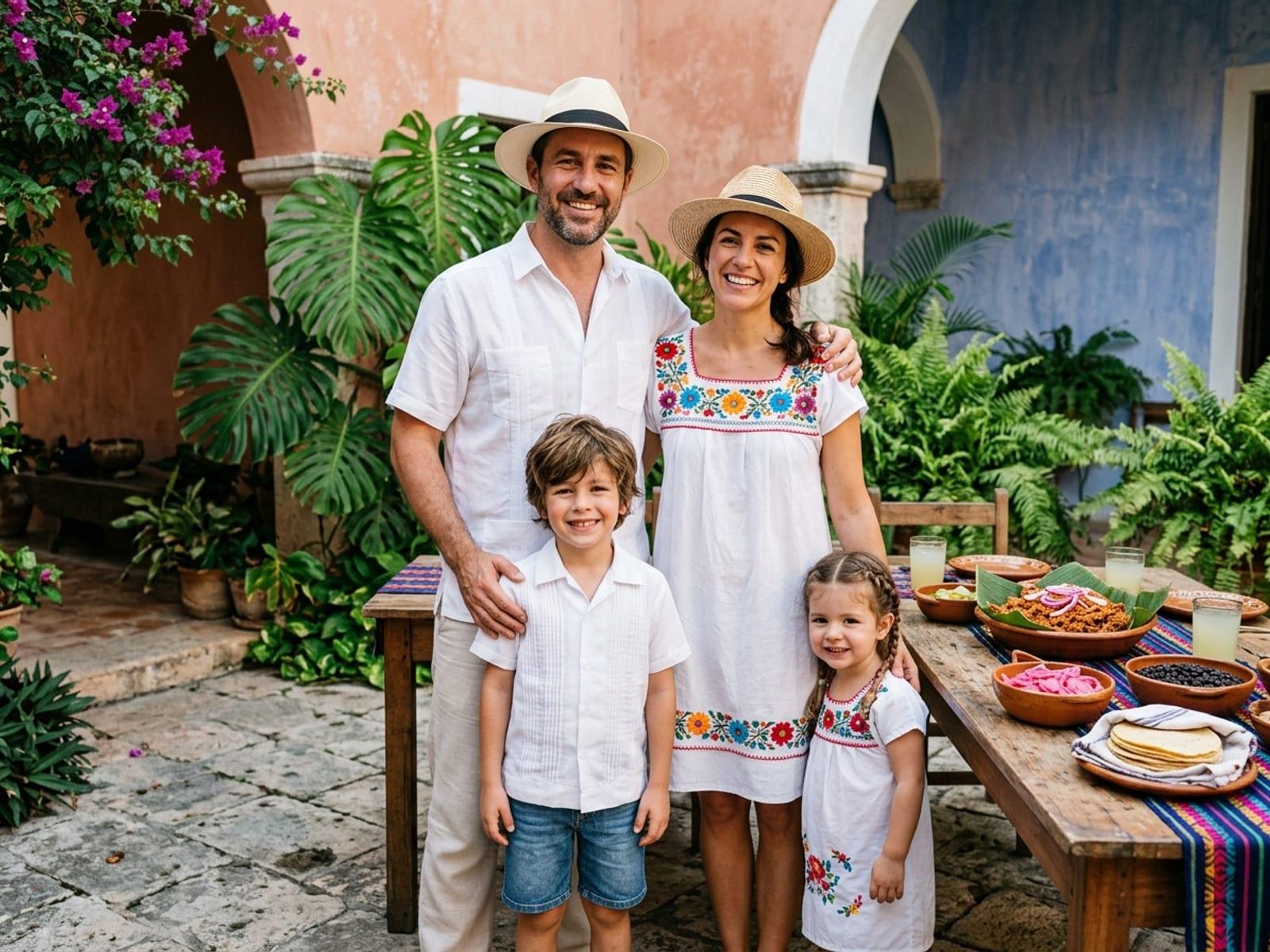
Cochinita pibil is pork marinated in achiote and sour orange, wrapped in banana leaves and slow-cooked in an oven dug into the ground, and it is the signature dish of the Yucatán Peninsula. You can eat it year-round with Mérida as your base, and it has long been a Sunday-morning and holiday dish. The meat itself isn't spicy, but the pickled red onion served with it usually gets its kick from fiery habanero, so set aside the children's portion before the onions go on.
The pork comes out a vivid orange and so tender it falls apart at the touch of a fork, and you eat it topped with the pink onions and wrapped in a warm tortilla. It came from the meeting of a Maya cooking method and the pork the Spanish brought with them.
Pibil means cooked in an earth oven
In the Maya language, pibil refers to food cooked in a pib, an oven dug into the ground. You dig a rectangular pit, burn wood down to embers and lay flat stones on top. The food goes on the stones, and the pit is closed with branches, sheet metal and earth. The technique predates the Spanish, and it was originally used for peccary (a wild, pig-like animal), deer and game birds in the pheasant family.
Pigs arrived in Yucatán with the Spanish conquest. Once pork started going into the pib, the dish took the name cochinita, "little pig." Early-20th-century recipes describe cooking a whole pig in an earth oven. Today, shoulder or loin is often used instead.
The color and aroma come from recado rojo, a red seasoning paste. It's achiote, made from annatto seeds, blended with pepper and other spices, and it dyes the meat a vivid burnt orange.
The other essential is the juice of the sour orange known in Yucatán as naranja agria. Yucatecan recipes always marinate the meat in this bitter orange. Where it can't be found, people reportedly substitute sweet orange juice mixed with lemon, lime or vinegar.
The marinated meat goes into a metal container lined with banana leaves that have been toasted to release their aroma, is wrapped up in the leaves, and goes into the pib. Cooking time depends on the amount of meat and the size of the oven, but about three hours is typical. Steamed inside the banana leaves, the meat comes out moist and tender, pulling apart along the grain.
Pickled red onions, and the habanero
Cochinita pibil almost always comes with pink pickled red onions, soaked in sour orange juice. Their bright tang cuts through the rich pork.
These pickles, however, are usually seasoned with habanero, a very hot chile, and sometimes whole habaneros are served alongside. The meat itself isn't spicy, so set aside the children's portion before adding the onions, and have an adult taste the onions first before passing any to the kids.
It's usually eaten wrapped in yellow corn tortillas, sometimes with mashed black beans on the side. Yucatán also has panuchos, fried tortillas stuffed with black bean paste and piled with toppings. Snack spots called panucherías serve them along with salbutes and other bites, and going out to one in the evening with family or friends is a local routine.
Sunday mornings, before the heat
Cochinita pibil has long been a dish for Sunday mornings and holidays. Because it takes hours in an earth oven, it's treated as a weekend or special-occasion treat rather than everyday food. If you're traveling, planning a Sunday breakfast around it is a very local way to spend the morning.
Mérida, the capital of Yucatán state, makes a good base for a trip built around this dish. At the heart of the historic center is the main square, the Plaza Grande, and a little to the north runs the Paseo de Montejo, a boulevard lined with grand early-20th-century mansions and sculptures. The Casas Gemelas, a pair of twin mansions completed in 1911, stand along it too. In the evening, carts selling marquesitas, crisp rolled crepes filled with cheese, set up near the end of this boulevard and on the old-town plazas, so you can plan a day of cochinita at lunch and a sweet snack after dark.
Mérida is very hot. The hottest months are April and May, with average daytime highs around 36°C, and afternoons often go above 38°C. June through October is the rainy season. For walking the city with small children, winter into early spring is the most comfortable, and in any season it's sensible to do your sightseeing early in the morning and rest indoors at midday.
Eating cochinita pibil for breakfast, before it gets hot, fits that rhythm perfectly. Carry drinks to stay hydrated at all times, and don't forget hats and sunscreen.
Dress cool, in white
The guayabera is also called the camisa de Yucatán, the "Yucatán shirt," in Mexico. It's a long shirt with two vertical rows of pleats down the front and pockets, and the embroidered style common across Mexico is said to have originated in Mérida. In Yucatán, the white filipina, with its stand-up collar, is still worn as formal dress and as the costume for jarana, the traditional local dance. Linen and cotton breathe well in the hot, humid climate, so they're practical for travel too.
To coordinate as a family, go all white: guayaberas for the men and boys, white dresses with floral embroidery for the women and girls. It looks cool even under strong sun. You can see what your family might look like around a plate of cochinita pibil at a courtyard table with pokesta's AI-generated photos ($1 per photo, and your first one is free).
Making it at home after the trip
If you fall for it, cooking it together back home is a nice way to keep the trip going. You probably can't dig an earth oven, but the idea is the same. Achiote paste can sometimes be found at shops that sell imported foods, and for the sour orange, use orange juice mixed with lime or lemon and vinegar, as described above. Marinate pork shoulder overnight, wrap it in banana leaves (or baking paper if you have none), and cook it slowly at a low temperature in a covered pot or the oven, and you'll get close to that fall-apart tenderness.
Pickling the red onions is a step kids can help with. As thin slices of red onion sit in the juice, they gradually turn bright pink. Add habanero only to the adults' jar and keep a chile-free one for the kids, and everyone can eat at their own heat level.
Getting there and planning the trip
Cochinita pibil is available all year. The gateway airport is Mérida International Airport (MID). From Mérida you can head out to the Yucatán Peninsula's archaeological sites and cenotes (natural pools formed in the limestone). For more of Mexico's signature dishes, try tacos al pastor from the capital's street stands, or chiles en nogada in Puebla, made only at the end of summer. Entry requirements for Mexico vary by nationality, so check your own government's official information before you travel.
References