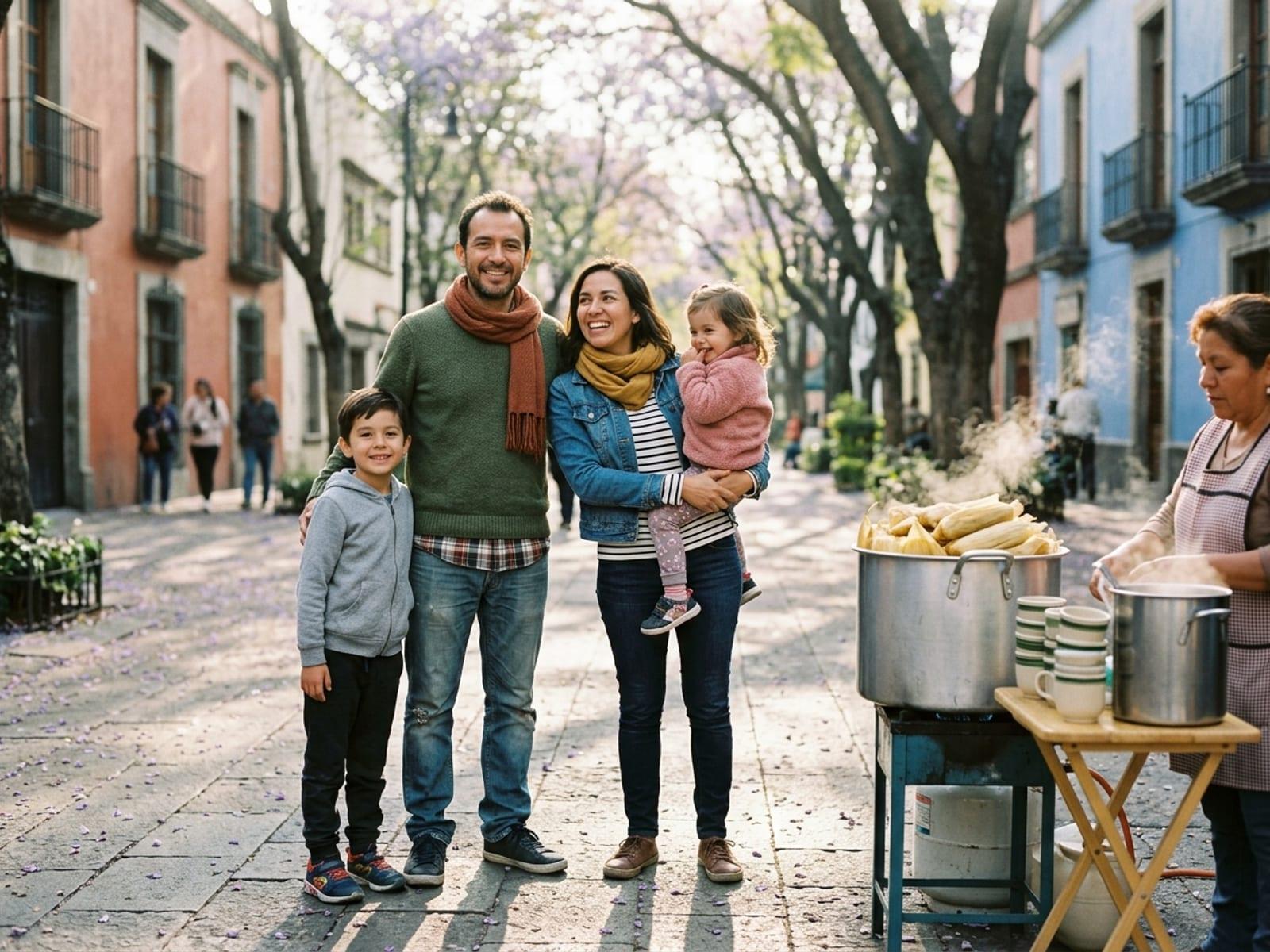
Tamales are corn dough wrapped around a filling and steamed, and atole is a warm, thick drink made from corn. In Mexico City you can buy both year-round, mornings and evenings, from stands at metro exits and on park corners, and on February 2, Candelaria, families gather over tamales and atole. Sweet tamales or cheese ones are the easiest picks for children, and let the hot atole cool a little before you hand it over.
In the morning, stands with big silver steamer pots appear at Mexico City's metro exits and on the corners of parks. When the lid comes off, steam rises from a pot packed with tamales (singular: tamal) wrapped in corn husks. The pot beside it holds atole, a warm, thick drink made from corn. The pair is an everyday breakfast for people in the city and also an essential part of family celebrations in January and February.
Corn dough, wrapped and steamed
A tamal is masa, dough made from corn treated with alkali, wrapped around a filling, rolled in a corn husk or banana leaf and steamed. The dough is beaten with lard and broth, or water, until it turns light and fluffy. Tamales have been made in Mexico since before the Spanish arrived, and because they take so much work, families and neighbors often get together to make them in large batches.
In Mexico City you'll most often see tamales filled with pork or chicken stewed in green salsa (verde) or red salsa (rojo), tamales with cheese and strips of chile (rajas), and sweet tamales. In hot southern regions such as Oaxaca, Chiapas and Yucatán, tamales are usually wrapped in banana leaves instead of corn husks. Oaxaca is known for tamales of black mole and chicken wrapped in banana leaf, and for sweet ones with pineapple, raisins or blackberries. The same word, tamal, can mean quite different food depending on the wrapper and what's inside.
Tamales are eaten for breakfast and for supper. Street stands and vendors who ride around on tricycles keep them warm in a large lidded steamer called a tamalera. When you order, ask what's in the pot, and it's fine to just point at the one you want.
The guajolota, and a sweet drink called atole
One way of eating tamales is particular to Mexico City: the guajolota, also called a torta de tamal. A small white roll, a bolillo or telera, is split open and a whole tamal goes inside. It's a classic breakfast snack. The vendor puts it together when you order, and people eat it standing at the stand or on the way to work. With atole on the side it's jokingly called a "guajolocombo." Being carbohydrate stacked on carbohydrate, it's heavy, so sharing one is plenty for most children.
Atole is a drink of corn dough heated with water and flavored with cinnamon, piloncillo (unrefined cane sugar), vanilla and the like. The basic method is to toast the corn dough lightly on a flat griddle called a comal, mix it smooth with water boiled with a cinnamon stick, then reheat it to serve. Vanilla and cinnamon are the standard flavors, and there are fruit versions such as guava, as well as champurrado, made with chocolate. It's the usual drink with tamales and is especially popular around the Day of the Dead and at Christmas. Atole is thick and holds its heat, so wait a moment before handing a cup to a child.
From the bread of January 6 to the tamales of February 2
The day tamales take center stage is February 2, Día de la Candelaria (Candlemas). It begins around January 6, Three Kings' Day, with a ring-shaped sweet bread called the rosca de reyes. A small figurine of the baby Jesus is hidden inside, and by Mexican custom, whoever finds it in their slice is responsible for hosting everyone with tamales and atole on February 2.
In central Mexico there's also a custom of dressing the baby Jesus figure from the family's Christmas nativity scene (nacimiento) in new clothes on this day and taking it to Mass. After the blessing, the family goes home and celebrates with tamales and atole. The figure is then placed in a small niche in the house, where it watches over the family until the following year. The tamales of February 2 close the season that started at Christmas.
If you're in Mexico City in January and February, you may see roscas lined up in bakery windows, then more and more people buying tamales as February begins. Travelers rarely get invited to a family celebration, but buying a slice of rosca and seeing who gets the figurine is a small way to share in the season. The figurine is small and hard, so when an adult cuts the bread, make sure little children don't put it in their mouths.
With kids, start with sweet tamales or rajas
If you want to avoid heat, sweet tamales or cheese-and-rajas tamales are the easier choices. Rajas are a kind of chile, though, so how spicy they are varies from stand to stand. Verde and rojo tamales can come with a real kick from the salsa. Ask "¿Pica?" ("Is it spicy?") before you order.
You don't eat the husk. Peel it off and eat what's inside; you can use the husk as a little plate. For a child trying one for the first time, peel it before you hand it over. Lard is traditional in the dough, so if anyone has dietary restrictions, ask before choosing. The roll in a guajolota contains wheat.
Mexico City sits high up, and mornings in January and February can be surprisingly cold. You can also see how a photo of your layered-up family on a morning street, warm cups of atole in hand, might turn out with pokesta's AI-generated photos ($1 per photo, and your first one is free).
When to go and how to get there
Tamales and atole are sold all year, in the morning and in the evening. Rosca season peaks around January 6, and Candelaria is February 2 every year. The gateway is Mexico City International Airport (MEX). You'll find stands at metro exits, around parks and along busy avenues. Pair them with the city's nighttime favorite, tacos al pastor, and you'll have covered street food from morning to night. Entry requirements for Mexico depend on your nationality, so check your own government's official information before you travel.
References