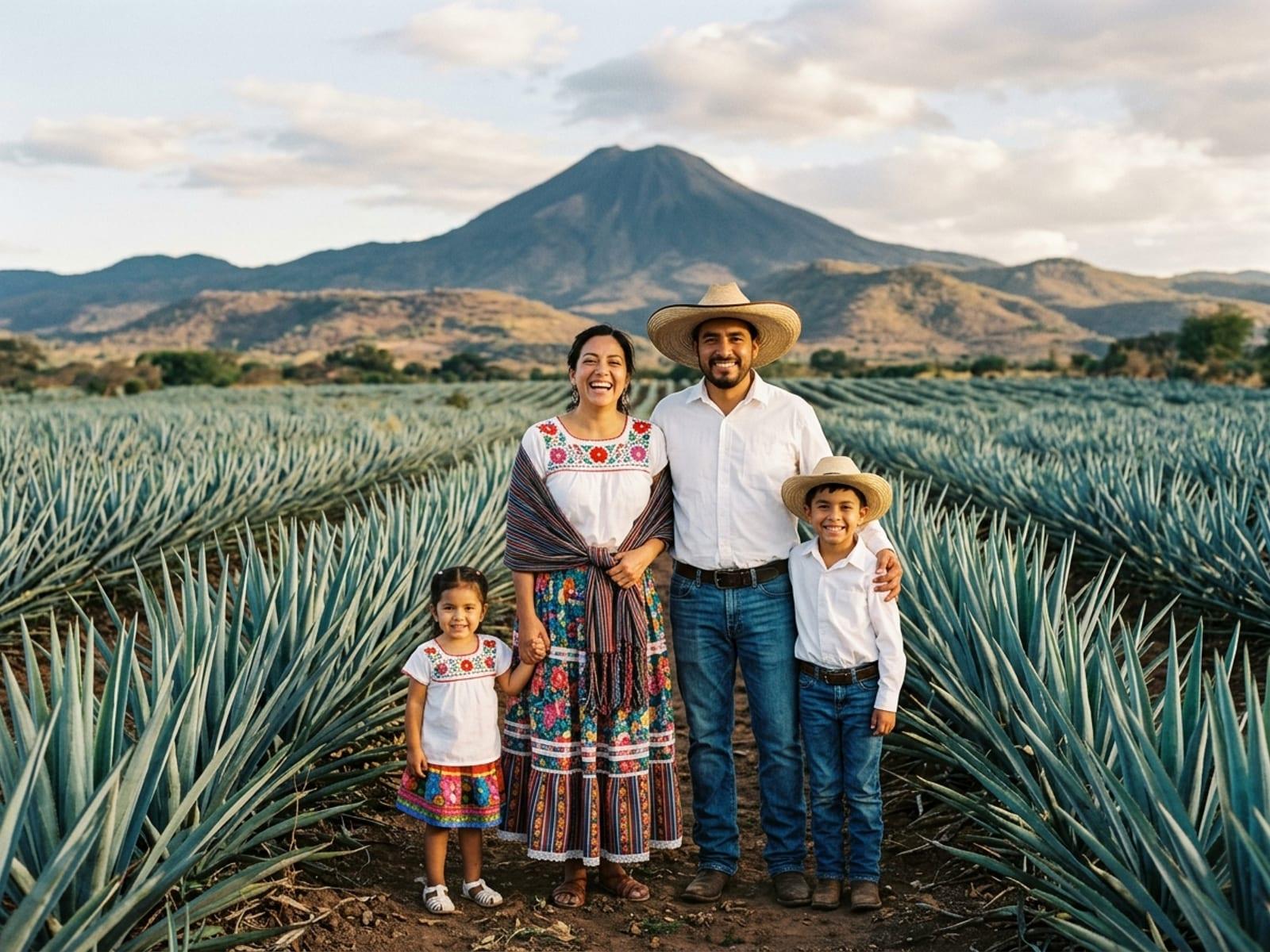
The town of Tequila, in the western state of Jalisco, sits about 60 km northwest of Guadalajara amid fields of blue agave, the raw material for the spirit of the same name, and the fields and the old distillery town were added to UNESCO's World Heritage list in 2006 as the "Agave Landscape and Ancient Industrial Facilities of Tequila." The fields can be seen year-round, and the town makes an easy day trip from Guadalajara. Tasting is for adults only, so with children, check whether distillery tours have age limits before you book, and make the fields, the harvest tools and the huge ovens the highlights.
Row after straight row of spiky, blue-gray-green plants march up the hillsides. That's blue agave, and the spirit that shares the town's name is made from the hearts of these plants.
What's protected is the fields and the towns
The World Heritage site covers about 35,000 hectares in the Valles region of Jalisco and takes in the towns of Tequila, Magdalena, El Arenal and Amatitán.
It was listed not only for ruins and buildings but for fields and towns that are still in use. Agave has gone into tequila since the 16th century, and for at least 2,000 years before that it was used to make fermented drinks such as pulque and to make cloth. As demand for tequila grew in the 19th and 20th centuries, the fields spread and distilleries went up, creating the landscape you see now. Between about AD 200 and 900, the region's Teuchitlán culture built terraced fields, temples and ball courts, and their remains are part of the landscape as well. Agave culture is a point of pride for Mexicans and has turned up in films, music, dance and painting.
Blue agave takes seven years or more to grow
Only one kind of agave can be used for tequila: Agave tequilana Weber Azul, known as blue agave. It prefers land above 1,500 meters, and a full-grown plant can stand more than 2 meters tall.
It's a long wait until harvest: plants are harvested between their 7th and 14th year after planting. Put another way, a plant set out the year a child is born would be ready somewhere between that child starting school and becoming a teenager, which makes the fields look a little different.
You'll hardly see any flowers in the fields. Wild agave sends up a tall flower stalk from the center after about five years and blooms yellow, but on farms the stalk is cut off so the plant stores that energy in its core instead. The stalk can grow about 5 meters above the leaves. New plants come not from seed but from offshoots, or "pups," that sprout around the base of the mother plant. Look closely at the base of a plant and you may spot a little one poking out, which makes a good game of find-it with kids.
The harvest is done by skilled workers called jimadores. With a long-handled tool tipped with a round blade, the coa, they cut away the leaves and dig out the big heart at the center, the piña. Stripped of its leaves, the piña looks like a pineapple (piña in Spanish) and averages about 70 kg in the valley fields and as much as 110 kg in the highlands. The piñas are slow-cooked in ovens until their starch-like compounds turn to sugar, then crushed, fermented and distilled.
Tequila's rules, and the town's distilleries
In 1974 tequila became the first product in Mexico to receive a protected designation of origin. Only spirits made in Jalisco and in certain areas of Guanajuato, Michoacán, Nayarit and Tamaulipas can be called tequila. There's "100% agave," made from blue agave alone, and "mixto," made with at least 51% agave. By aging time it's divided into categories such as blanco, reposado (at least two months but under a year), añejo (at least one year but under three) and extra añejo (three years or more).
Several distilleries founded in the 18th and 19th centuries still stand in Tequila, including La Rojeña, founded in 1795; El Tigre (now La Constancia), founded in 1823; and La Perseverancia (now Tequila Sauza), founded in 1873. Some offer guided tours. The town also has the National Tequila Museum (MUNAT), which reopened as a museum in 2000 after starting life as a cultural center.
In 2003 Tequila was named a Pueblo Mágico ("Magical Town"), a designation the Mexican government gives to towns of special appeal. The Tequila Volcano rising nearby is a dormant volcano about 2,900 meters high that hasn't erupted in more than 220,000 years.
With kids, the fields and tools are the stars
Distillery tours almost always end with a tasting. Tastings are for adults only, and whether children can join a tour, and at what age, depends on the distillery, so check before you book.
What kids really enjoy is the fields themselves and seeing the tools and steps that turn a plant into tequila. Out in the fields, point out how far the rows run and look for pups at the base of the plants. The leaf tips are extremely sharp, though, so even when taking photos in the fields, keep children's faces and hands well away from them. There's almost no shade, so bring hats and water.
On weekends, a tourist train has run from Guadalajara toward Tequila. The Tequila Express, in service since 1997 and run by the Guadalajara Chamber of Commerce, travels through agave country to a distillery in Tequila, with live mariachi music on board. Popular departures sell out early, so book about a month ahead if you plan to ride. Child fares, minimum ages and whether it's running at all can change from year to year, so check the official information.
Dress like a Jalisco ranch
For walking the fields, jeans or a long skirt with a wide-brimmed straw hat keeps the sun off and suits the scenery. Wear sneakers that can handle dirt paths.
Keeping colors simple, an embroidered blouse for women and girls and a white shirt for men and boys, lets the blue of the agave stand out even more. You can see what your family might look like standing among the agave in slanting late-afternoon light with pokesta's AI-generated photos ($1 per photo, and your first one is free).
When to go and getting there
Agave grows in the fields all year round, so any season works if you're coming for the scenery. Tequila is about 60 km northwest of Guadalajara, the capital of Jalisco, and the gateway airport is Guadalajara International Airport (GDL). If you're staying in Guadalajara, you can fit in tortas ahogadas and birria at the Mercado San Juan de Dios before heading out.
From late November into mid-December, the town usually holds its Tequila Fair around the feast of its patron Virgin, with the crowning of a tequila queen, parades, charreada (Mexican rodeo) and mariachi. For another of Mexico's wine and spirits regions, the Valle de Guadalupe in Baja California is also a good family trip. Entry requirements for Mexico vary by nationality, so check your own government's official information before you travel.
References