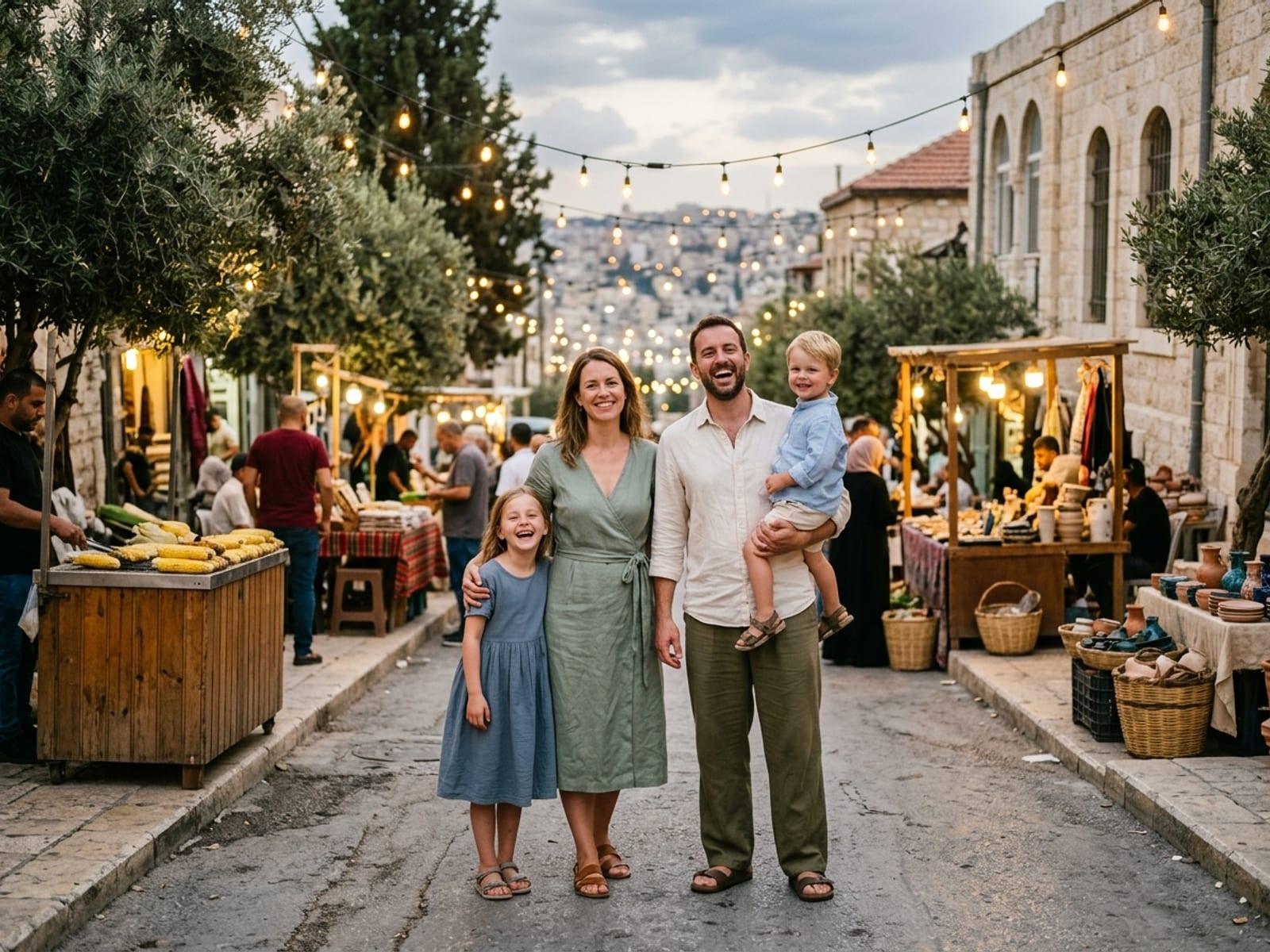
Climb the hill from the noisy markets in the valley and the feel of the city changes completely. Tree-lined streets, old stone houses with big front porches, music drifting from cafe terraces, families strolling with snacks in hand. Rainbow Street runs across Jabal Amman, one of the city's hills, close to the old downtown, and it is a street made for eating and wandering. On Fridays from mid-May to mid-September, a market called Souk Jara sets up on a street right beside it, with snack stalls and craft stands. In Amman's hot season, this is a good place to head with children once the afternoon starts to cool.
A hilltop street that kept a cinema's name
Rainbow Street runs east from the roundabout known as Jabal Amman's First Circle to Mango Street. Its original name was Abu Bakr al-Siddiq Street, but people started calling it after the Rainbow cinema that stood on it, and the name stuck.
Jabal Amman is the hill where royals, leading families, politicians and military officers began to settle in the 20th century, after Amman became the capital of the Emirate of Transjordan. Before that it was wooded, and buildings from the first half of the 20th century still stand, along with tree-lined avenues and houses with large porches running across the whole front. In 2005 the Greater Amman Municipality recognized Jabal Amman as a heritage attraction point. Near the street are the house that was home to King Talal, Jordan's second king, and the Al-Mufti House, and many old homes now serve as shops or cultural venues.
In Amman's hilltop districts, the big roundabouts are called circles and numbered: First Circle, Second Circle and so on. Jabal Amman is described as starting around the First Circle and ending near King Talal Street on the valley floor. Mango Street, which crosses the slope north to south, and the Ittihad Church, a modern-looking building of reinforced concrete, are both landmarks of the hill. There are plenty of named old houses, too, such as the Jordan River Foundation House, the Belbeisi palace and Mango House. Just walking past and looking at them from the street gives you a sense of how people lived in Amman in the early 20th century.
The Jordan Tourism Board recommends the street as a place in Amman for shopping, a night out or a simple meal. It is lined with cafes, restaurants and galleries, and there are showrooms for crafts. The Wild Jordan Center, run by the nature conservation group RSCN, is also in the area. For families thinking about a trip to one of Jordan's nature reserves, it's a handy way to pick up information on places like the Dana Biosphere Reserve.
Summer Fridays mean Souk Jara
Souk Jara is an open-air market in Jabal Amman that started in 2005. It opens every Friday from mid-May to mid-September, from 10 am to 10 pm (as checked in October 2026), with stalls lining a street right next to Rainbow Street.
On sale are handicrafts, antiques and secondhand pieces, traditional goods from around Jordan, art, clothes and food. The tourism board describes it as a summer Friday market with local wares, pop-up cafes and live music. Film screenings and concerts are sometimes held as well. The food stalls lean toward snacks and drinks you can eat on the spot, so buying a little from several and sharing as a family is a good way to try lots of flavors. With traditional goods from all over Jordan in one place, it is also a good spot for end-of-trip souvenirs. Giving children a set budget and letting them choose one thing themselves is a fun way to spend part of the evening.
Dates and hours can change from year to year, so check Souk Jara's official information before you go.
Go from late afternoon into the evening
Amman's summer middays are bright and hot, and walking these hilly streets tires out even adults. For Rainbow Street and Souk Jara, the easiest plan is to go out in the late afternoon as the heat eases, have dinner, and stay into the evening. Because the street is on a hilltop, after dark you can see the city lights across the valley, a very different view from the daytime one. Even in summer, temperatures can drop at night, so bring a light layer for each child.
Friday is the Muslim holy day, and the whole city stays quiet until midday prayers are over. On a Souk Jara Friday, spend the morning relaxing at your hotel and head out in the afternoon, and you'll arrive just as the market is getting busy.
When choosing where to eat, look for places with terrace seating. If a child gets restless, the view outside can help reset their mood. Service charges and taxes may be added to menu prices, so check the bill. For more on the customs of eating out, see eating out in Jordan.
Walk back down the stairs to downtown
As Amman spread from the valley up onto the surrounding hills, many long stairways were built to link the valley with the hilltops. Running straight up the slopes, they are everyday routes for the people who live on the hills and one of the sights that make Amman look like Amman. You can walk from Jabal Amman down to downtown on stairways and steep lanes like these. Climbing up is hard work for children, so the easier way round is to take a taxi up the hill and walk down on the way back, enjoying the views. Once it gets dark your footing becomes harder to see, so do the stairs while it's still light and take a taxi at night.
Walking with kids
Rainbow Street is open to cars. At busy times more people stop in front of shops, so keep hold of small children's hands. A baby carrier will cope with slopes and steps better than a stroller.
When buying snacks at Souk Jara stalls, mention any allergies before choosing, and let hot food cool a little before handing it to children. You can't count on finding somewhere to wash hands nearby, so bring hand sanitizer and wet wipes. At craft stalls, it's polite to ask before touching ceramics and small items.
When to go and getting there
Rainbow Street is worth a walk all year, but Souk Jara runs only on Fridays from mid-May to mid-September. The gateway is Queen Alia International Airport (AMM), about 30 km south of central Amman. Since the street connects to the old downtown by slopes and stairs, it's easy to combine a daytime walk through the downtown markets with a taxi up the hill in the late afternoon. You can also try a photo of your family spending a summer evening on a tree-lined street with pokesta's AI photos ($1 per photo, first one free).
The situation in the Middle East can change quickly, and travel advisories and entry requirements vary by nationality. Check your own government's latest official information while planning and again before you leave.
References