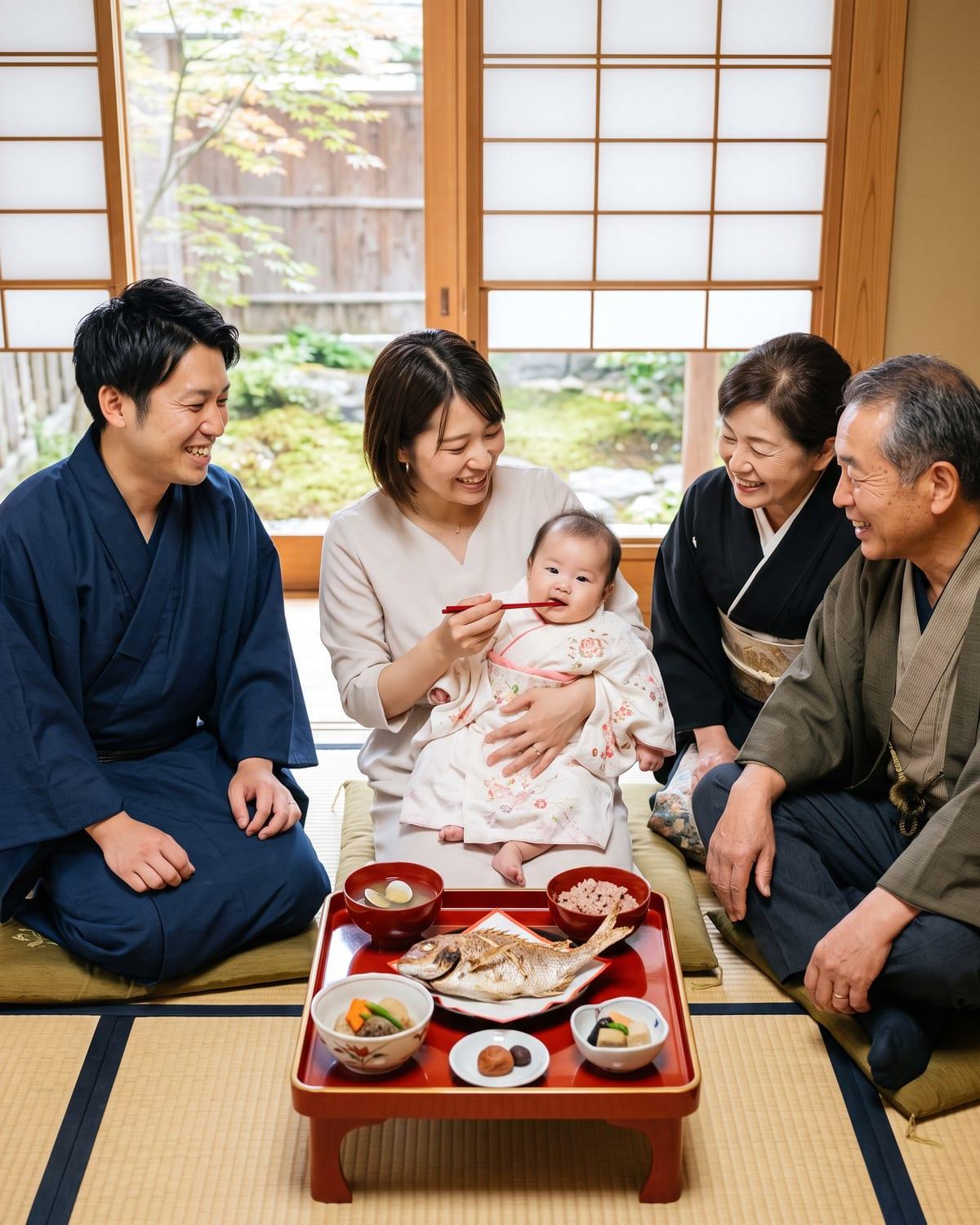
Okuizome, the Japanese celebration held around a baby's 100th day with a symbolic first meal, often comes with a studio portrait, and at that age many babies are still gaining head control. In a national survey by Japan's Children and Families Agency, about half of babies aged three to four months could hold their heads steady, rising to over 90 percent at four to five months. Before head control, build the photos around lying on the back and being held upright by an adult, and keep tummy-down or propped-sitting poses short, with an adult's hand ready. If a pose doesn't feel right, it's fine to say no.
At 100 days, head control is still coming in
Head control means that when your baby is lifted upright, their head doesn't wobble and they can hold it steady on their own. In the 2023 infant growth survey, based on parents' answers, more than 90 percent of babies aged four to five months had head control, compared with about half at three to four months. A 100-day-old baby is just past three months, so some will have steady heads and some won't, and both are normal.
Studio Alice's 100-day page counts the day of birth as day one and describes the weeks around day 100 as a time when babies' expressions become richer. Even if your baby isn't there when you book, they may be by the shoot. There's no need to move the date. Decide which poses to try based on how your baby is on the day.
Lying down and upright holds work; tummy and sitting poses need support
Before head control, the least demanding positions are those where your baby doesn't have to hold up their own head. For lying-down shots, place your baby on their back on a flat surface close to the floor and shoot from above. For family photos, an adult holding the baby upright with one hand supporting the head and neck is the most stable.
The poses to be careful with are tummy-down shots with the head lifted and propped-sitting shots against a cushion. Both leave the neck carrying the weight of the head, so before head control an adult's hand is essential.
Keep the tummy pose separate from sleep. The Children and Families Agency says research shows sudden infant death syndrome (SIDS) occurs less often when babies sleep on their backs, recommends a firm, flat sleep surface rather than soft cushions, and warns that stuffed toys and towels can lead to suffocation. A short shot of an awake baby with an adult watching is a different situation, but if your baby falls asleep during the shoot, don't leave them on their tummy; turn them onto their back. Avoid poses where the face sinks into fluffy fur or cushions, too. For lying-down shots, a mat on the floor removes the risk of falling that comes with a sofa or a raised platform. For general safety when shooting at home, see keeping babies safe in photos before they can sit.
Compare studio, hired photographer and home by where your baby can lie down
|
Photo studio |
Hired photographer |
Home, DIY |
| Before head control |
Dedicated chair, lying-down shots, being held |
Lying-down shots on your own futon or mat |
Lying-down shots on a futon |
| Feeding and breaks |
Some studios have a nursing space |
Any time at home |
Any time |
| Time needed |
About 2 hours |
About 60 minutes |
No limit |
| How you pay |
Session fee plus prints |
Time-based fee, files included |
Equipment only |
A studio's strength is equipment suited to babies without head control. In its FAQ, Studio Alice, a large children's photo studio chain, answers the question "My baby's head isn't steady yet; can they be photographed alone?" by saying it has a dedicated reclining chair for babies who can't sit on their own. It also has a nursing space and asks families to allow about two hours. The 100-day session fee is 5,500 yen per family for any number of poses, and from the 1st to the 7th of each month there's a 100-day smile pack for babies aged three to five months, 5,500 yen with one rokugiri print, and free if not a single smiling photo is taken (all tax included, as of October 2026). There's no cancellation fee if your child suddenly falls ill on the day of the booking.
A hired photographer comes to your home or to the Okuizome meal, so lying-down shots can happen on the futon your baby usually sleeps on. fotowa, an on-location photo service, charges 24,200 yen on weekdays and 29,700 yen on weekends and holidays for Okuizome shoots (tax included, as of October 2026), for about 60 minutes with at least 75 digital photos, and lets you change the date for free until the day before.
Shooting at home yourselves has no time limit, and you can stop for every feed and diaper change. For a baby without head control, it puts the least strain on the body. For how studio pricing works, see 100-day photos at a studio.
What to say when you book, and where a parent should stand
When booking a studio or a photographer, mention that your baby's head isn't steady yet and that you'd like to decide on the day whether to try tummy or sitting poses. Ask what poses they usually use for babies at this stage, how high the lying-down platform is, and whether they can avoid showing the supporting hand. Whether the hand is hidden under fabric or removed from the image afterward can affect the price. At fotowa, for instance, editing such as compositing and background removal isn't included in the base fee.
On the day, ask to stay right beside your baby, within arm's reach. When staff change your baby's position, check that the head and neck are supported. If your baby keeps crying, changes color or goes limp, it's fine to stop. Studio Alice says that if a child gets upset, it waits a while and may ask the family to come back another day. Before head control, rescheduling is safer than pushing on. Saying "let's skip this pose" isn't rude; it's ordinary care for your baby.
Add the other poses after head control comes in
Lying-down and held photos are plenty for a 100-day portrait before head control. If you'd like tummy or sitting shots, you can add them once the head is steady, around the half-birthday at six months. For supporting a baby who can't sit yet, see photographing a baby who can't sit up.
If you couldn't get a photo of the whole family around the Okuizome meal, pokesta uses AI to create the celebration scene from each family member's phone photos. It's a created image, not a record of the day, but your baby doesn't have to hold any pose for it. At $1 per photo with your first one free, try a 100-day photo with a sleeping or smiling shot already on your phone.
References