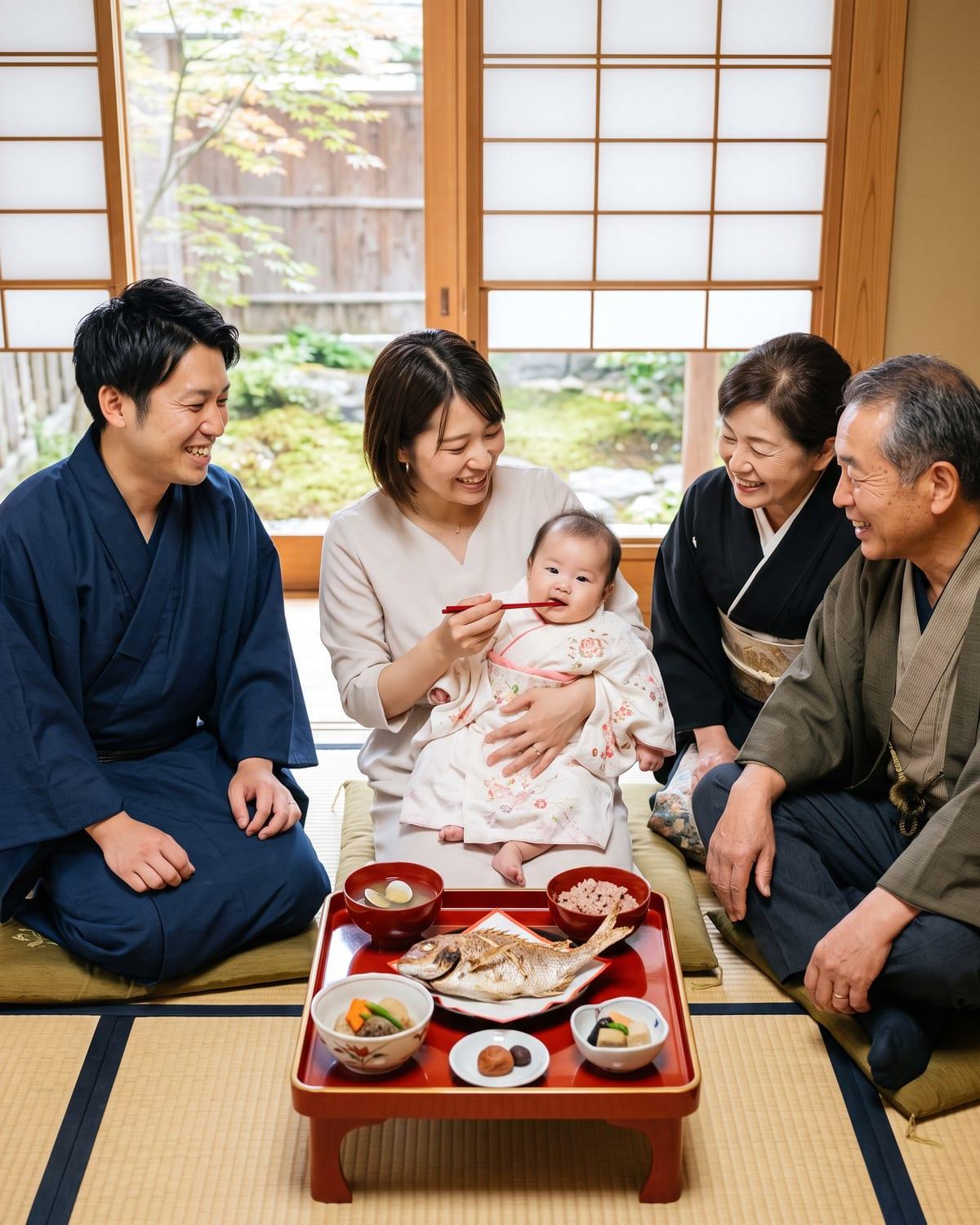
A self photo studio is a private studio with no photographer: the family presses the shutter button themselves. It works for Okuizome, the Japanese celebration around a baby's 100th day, but it suits families who want everyone in the same photo or who mainly want to borrow good lighting and backdrops. What separates it from a regular studio or shooting at home is whether there's somewhere for your baby to lie down, how hot the lights get, and how feeds and diaper changes fit into a fixed time slot.
A self photo studio rents you space and equipment by the hour
Self photo studios vary, but their official descriptions share a pattern. "Self Photo Studio by Studio Mario," launched in July 2025 by the Studio Mario chain, describes a private space with no photographer, unlimited shots within the plan's time and every photo handed over. It provides a self-shooting camera and stand, free props and four free backdrops, and the room is booked privately with no outdoor shoes allowed. Studio BNF in Sapporo, featured on the Sapporo Tourism Association's site, is also reservation-only: you watch a monitor and press a shutter button in your hand, and all the photos are sent straight to your smartphone.
In short, you're renting the room, lights and camera, and the family takes the roles of photographer and pose-setter. How prices are set, by time, by headcount, and whether a baby counts as a person, differs by studio, so check the official site before booking.
The challenges at three months: a place to lie down, lighting and the time slot
Neither of the descriptions above mentions facilities for babies. Plan on the assumption that a self photo studio may not have a baby platform or a nursing room.
The first issue is somewhere to lie your baby down. Before head control, lying-down shots on the back are the core of the session, and they need a flat mat close to the floor. If the studio only has a sofa or a raised platform, you can't leave your baby on it alone. Ask whether you can bring a mat or a bath towel to lay down. Lying-down shots are taken from above, so it also matters whether the fixed camera can be raised and pointed down. If not, you can take the lying-down shots at home and keep the studio for held family portraits.
The second is lighting. In lying-down shots the lights end up close to your baby's face. Check what kind of lights the studio uses, whether they get hot up close and whether they're too bright, and avoid shining strong light directly at your baby's face for long.
The third is the time slot. Unlimited shots within the plan's time means feeds, diaper changes and waiting for crying to stop all come out of that time. Book a slot when your baby is usually fed and content, and ask whether you can extend. Okuizome centers on pretending to feed the baby a first meal, a wish that the child will never go hungry, so if you'd like the celebration dishes in the photos, ask whether you can bring food and tableware in.
Comparing a regular studio, a self photo studio and home
|
Regular studio |
Self photo studio |
Home (DIY or hired photographer) |
| Who shoots |
Staff |
Family |
Family or a visiting photographer |
| Where your baby lies |
Some studios have a chair for babies without head control |
Depends on the studio, check first |
Your usual futon or mat |
| Feeding and breaks |
Some have a nursing space; about 2 hours |
Within the time slot |
Any time |
| Whole-family photos |
Yes |
Yes |
Needs a tripod or a photographer |
At a regular studio, staff both take the photos and keep your baby happy. Studio Alice, a large children's photo studio chain, says it has a dedicated reclining chair so babies without head control can be photographed on their own, as well as a nursing space, and suggests allowing about two hours. Its 100-day session fee is 5,500 yen per family, and from the 1st to the 7th of each month a 100-day smile pack for babies aged three to five months costs 5,500 yen with one rokugiri print, and is free if not a single smiling photo is taken (both tax included, as of October 2026). There's no cancellation fee if your child suddenly falls ill on the day of the booking.
Home's big advantage is no time limit, so you can stop for every feed. Lighting and backdrops come down to window light and your own walls. If you'd like a professional to come to you, fotowa's Okuizome shoots cost 24,200 yen on weekdays and 29,700 yen on weekends and holidays (tax included, as of October 2026) for about 60 minutes, with at least 75 digital photos and free date changes until the day before. For low-cost ways to shoot at home, see budget 100-day photos.
A self photo studio sits in between. You get studio lights and backdrops, and since the family presses the shutter, parents and baby can all be in the same frame. In exchange, the family does all the soothing and posing, and feeding time comes out of your slot.
Questions to ask before you book
Official websites rarely tell you whether a studio works for a baby, so check these by phone or message before booking:
- Is there a mat or low platform for a baby to lie on, and can you bring your own?
- Is there somewhere to nurse and somewhere to change diapers?
- What kind of lights are used, and do they get hot near a baby?
- Does time for feeding and breaks count toward the slot, and can you extend?
- Does a baby under one count toward the per-person price?
- How are the photos delivered, and for how long can you download them?
- Can you bring a stroller in, and if outdoor shoes aren't allowed, where does it go?
For preparing to use a self photo studio with a newborn, see Omiyamairi photos at a self photo studio.
Choose a self studio to all be in the frame, a studio or home for your baby alone
Put simply: if parents, baby and siblings all want to be in the same photo, a self photo studio fits. For careful portraits of your baby alone, a regular studio. To keep the strain on your baby as low as possible, home. If you go with a self photo studio, take the family photo first while your baby is in a good mood, then use the rest of the time for solo shots, so the key photo is done even if fussing starts.
For families who want the grandparents in the picture but live too far apart, pokesta uses AI to create a 100-day family photo from each person's phone photos. It's a newly created image, not a photo taken that day. At $1 per photo with the first one free, use a photo of your baby from the self studio and create a picture with the grandparents beside you.
References