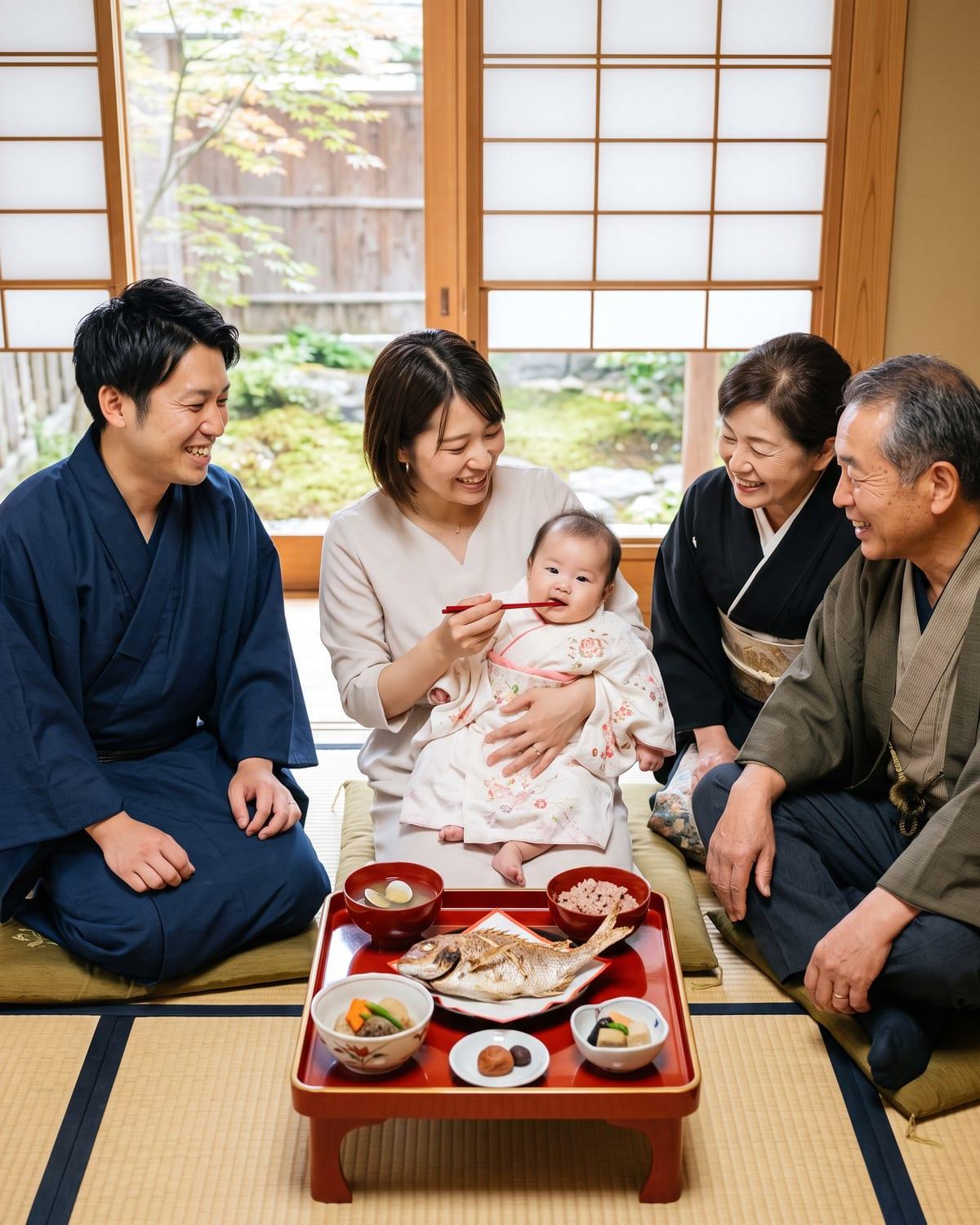
Okuizome is a Japanese ceremony held around a baby's 100th day, in which an adult pretends to feed the baby a celebration meal for the first time. The Okuizome meal follows a set menu of one soup and three dishes: sekihan (rice with red beans), a clear soup with hamaguri clams, a whole grilled sea bream, a simmered dish and pickles, plus a hagatame stone and an umeboshi (pickled plum). Cooking it all on the morning while looking after a baby isn't realistic. Reserve the fish a week out and cook the simmered dish and rice the day before, though, and the morning shrinks to grilling the fish, making the soup and plating.
The 100th-day meal: one soup, three dishes
Most families hold Okuizome around day 100, though some regions mark it on day 110 or 120. It also goes by names such as momoka ("hundred days"), momoka-iwai (100-day celebration), hashi-zoroe and hashi-zome, the last two referring to the baby's first use of chopsticks. The custom is said to date back to the Heian period, and in the Edo period babies were "fed" at 120 days from a tray of rice, fish, five rice cakes, soup and sake. The 100th day is often explained as a milestone from a time when nutrition was poor and many babies didn't live that long.
The menu follows the ichiju sansai pattern: rice and soup plus three dishes (grilled, simmered and pickled), with the hagatame stone and umeboshi alongside. Together they're said to represent everything a child will need in life, from grains to food from the sea and the mountains.
Sekihan
Red has long been thought to ward off evil, so sekihan, rice cooked with red beans, is served with wishes for healthy growth and protection from bad luck. Plain white rice is fine too.
Clear soup with hamaguri clams
A hamaguri shell only fits its own matching half, so the clams carry the wish that the child will find a partner as well matched as the two halves. The soup is also said to express the hope that the baby will grow up strong at suckling. When hamaguri are hard to find, other shellfish or seasonal ingredients work just as well.
Grilled dish (whole sea bream)
Tai, sea bream, is the fish of celebrations because its name echoes medetai, "auspicious." Served whole from head to tail, it also stands for seeing things through to the end. Ways to spend less with a smaller fish or a substitute are compared in Cutting the cost of the Okuizome sea bream.
Simmered dish
Each ingredient carries a wish. Lotus root, which you can see through, is for a clear view of the future. Bamboo shoots, which grow straight up, are for growing tall and healthy. Taro, which produces lots of small offshoots, is for many children, and shrimp, curved like a bent back, is for living to a ripe old age. Root vegetables are sometimes linked to "putting down roots," and kombu to yorokobu, "to rejoice." You don't need all of them; a few seasonal vegetables are plenty.
Pickles, umeboshi and the hagatame stone
For the pickled dish, kohaku namasu is common: a red-and-white salad of carrot and daikon in vinegar, matching the colors of celebration. The Japanese word for pickles, kō-no-mono, is also said to play on kō, a reading of the character for "happiness." The umeboshi goes alongside with the wish that the child will live long enough to be as wrinkled as the plum.
The hagatame stone is a small pebble for teeth as strong as stone, and it sits with the umeboshi on a takatsuki, a small footed dish. It never goes into the baby's mouth: you touch the chopsticks to the stone, then touch them gently to the baby's gums. Where to get one and what to use instead are covered in Where to get a hagatame stone.
Regional differences
The menu varies by region and by family. Some serve another red fish, such as kanagashira (red gurnard), instead of sea bream; some use red-and-white mochi in place of sekihan; and in Kansai, octopus rather than a stone is used for the hagatame. In the Saku area of Nagano, a washed stone and grilled sardines are added. Ask the grandparents how it was done where they grew up before you settle on a menu.
Who feeds the baby, and in what order
The person who pretends to feed the baby is the yashinai-oya, traditionally the oldest person present, so the baby shares in their long life. It used to be an elder of the baby's sex (a grandfather for a boy, a grandmother for a girl), but that's no longer a rule, and either parent can do it.
The feeding order differs by region and from one guide to the next. A common version alternates rice and soup on the way to the sea bream and repeats the sequence three times, and some guides treat the simmered dish and pickles as optional. Whatever the order, the food only touches the baby's lips on the tip of the chopsticks; nothing is actually eaten. If you're unsure, follow the grandparents' local custom or the sequence in How to do Okuizome.
A week to two days before: the fish and the tableware
Start with the sea bream. Whole fish aren't always on display at the supermarket, so ask a fishmonger or the fish counter to reserve "a whole one for a celebration." Madai (red sea bream) is in season in spring, and large ones can be hard to get at other times of year, so mention the size you want. Some shops will grill it for you, too. Prices vary widely with size and whether the fish is wild or farmed, so give the shop your budget and head count and let them advise you.
Around the same time, gather the tableware, the iwai-bashi (celebration chopsticks), and shikigami, such as red-and-white paper to lay under the fish. With formal lacquerware, the color traditionally depends on the baby: vermilion inside and out for a boy, black outside and vermilion inside for a girl. In some regions it's the other way around, so check with your parents or relatives. Your own baby dishes work too, and Okuizome tableware explains which bowl to use for what.
Hamaguri need to be fresh, so buy them the day before or the day before that. If they need to be purged of sand, put them in salt water the day you buy them. Koya-dofu (freeze-dried tofu) or dried shiitake for the simmered dish can be bought now too.
This is also the time to lay out the dishes once. The usual arrangement on the tray is the rice bowl with sekihan at front left, the soup bowl at front right, the hira-wan (a shallow lidded bowl) with the simmered dish at back left, the tsubo-wan (a small deep bowl) with the namasu at back right, and the takatsuki with the stone and umeboshi in the center. The sea bream doesn't go on the tray; it sits on a flat plate beside it. Check, too, that the bowls are big enough for the food.
The day before and the morning of
The simmered dish, the kohaku namasu and the sekihan can all be made the day before; the first two actually improve overnight. Re-steam or microwave the sekihan on the day, or, if you'll cook it in a rice cooker that morning, soak the glutinous rice the night before. If you're grilling the sea bream yourself, scale and gut it the day before, pat it dry, salt it and refrigerate it. If the fishmonger can do the prep, pick it up the day before.
On the day, all that's left is grilling the fish, making the clear soup and plating. Before grilling, rub plenty of salt onto the fins and tail. This keshō-jio, or "makeup salt," keeps them from burning and helps the fish hold its shape. About 30 minutes in a 200°C oven is the usual guideline, but adjust for the size of the fish, watching the color and checking it's cooked through. If the fins or tail start to burn, wrap them in foil.
Lay the fish with its head to the left and its belly toward you. Heat the soup just before the ceremony and turn off the heat once the clams open. With feeds and naps to work around, aim to have everything ready about 30 minutes before the ceremony begins.
Feeding the adults, and a photo of the tray
When the ceremony is over, the adults eat the celebration meal. The baby's tray alone won't feed the grown-ups, so buy a larger sea bream to share and make extra sekihan and simmered vegetables. Leftover fish can be flaked into sea bream rice or a soup.
If cooking everything from scratch is too much, you can buy just the grilled sea bream, put a ready-made simmered dish into your own bowls, or have the whole meal delivered. Being at your baby's side during the ceremony matters more than whether everything is homemade.
Once everything is laid out, take one photo of the tray on its own before the baby arrives so you can look back at the menu later. If grandparents live far away and can't be there, another option is to generate a 100-day commemorative photo with AI on pokesta from photos of each family member (one free try after signing up, then $1 per photo).
From ordering the fish to the morning of
Reserve the sea bream a week ahead, buy the clams two days before, cook the simmered dish, namasu and sekihan the day before, and the morning is down to three tasks: the fish, the soup and the plating. If even that feels like too much, buy the sea bream ready-grilled and leave yourself just the soup.
References
- Wikipedia, "Momoka-iwai (100-day celebration)" (Japanese) https://ja.wikipedia.org/wiki/%E3%81%8A%E9%A3%9F%E3%81%84%E5%88%9D%E3%82%81
- Kotobank, "Kuizome" (Japanese dictionaries) https://kotobank.jp/word/%E9%A3%9F%E5%88%9D%E3%82%81-482183
- Pampers Japan, "What is Okuizome?" (Japanese) https://www.jp.pampers.com/baby/feeding/article/first-meal-celebration
- HugKum, "How to do Okuizome and the feeding order" (Japanese) https://hugkum.sho.jp/137493
- Studio Mario, "The Okuizome menu and what each food means" (Japanese) https://www.studio-mario.jp/event/momoka/article/003/
- Ichibiki, "Learning about Okuizome" (Japanese) https://www.ichibiki.co.jp/enjoy/knowledge_okuizome/
- Studio Alice, "Decorating and grilling the Okuizome sea bream" (Japanese) https://www.studio-alice.co.jp/shortcut/100days_s/column/detail35.html
- Studio Alice, "Plating examples for Okuizome" (Japanese) https://www.studio-alice.co.jp/shortcut/100days_s/column/detail36.html
- Kosodate Hack, "Why umeboshi is served at Okuizome" (Japanese) https://192abc.com/122910
- Clip, "Grilling or ordering the Okuizome sea bream" (Japanese) https://clip.8122.jp/33890/