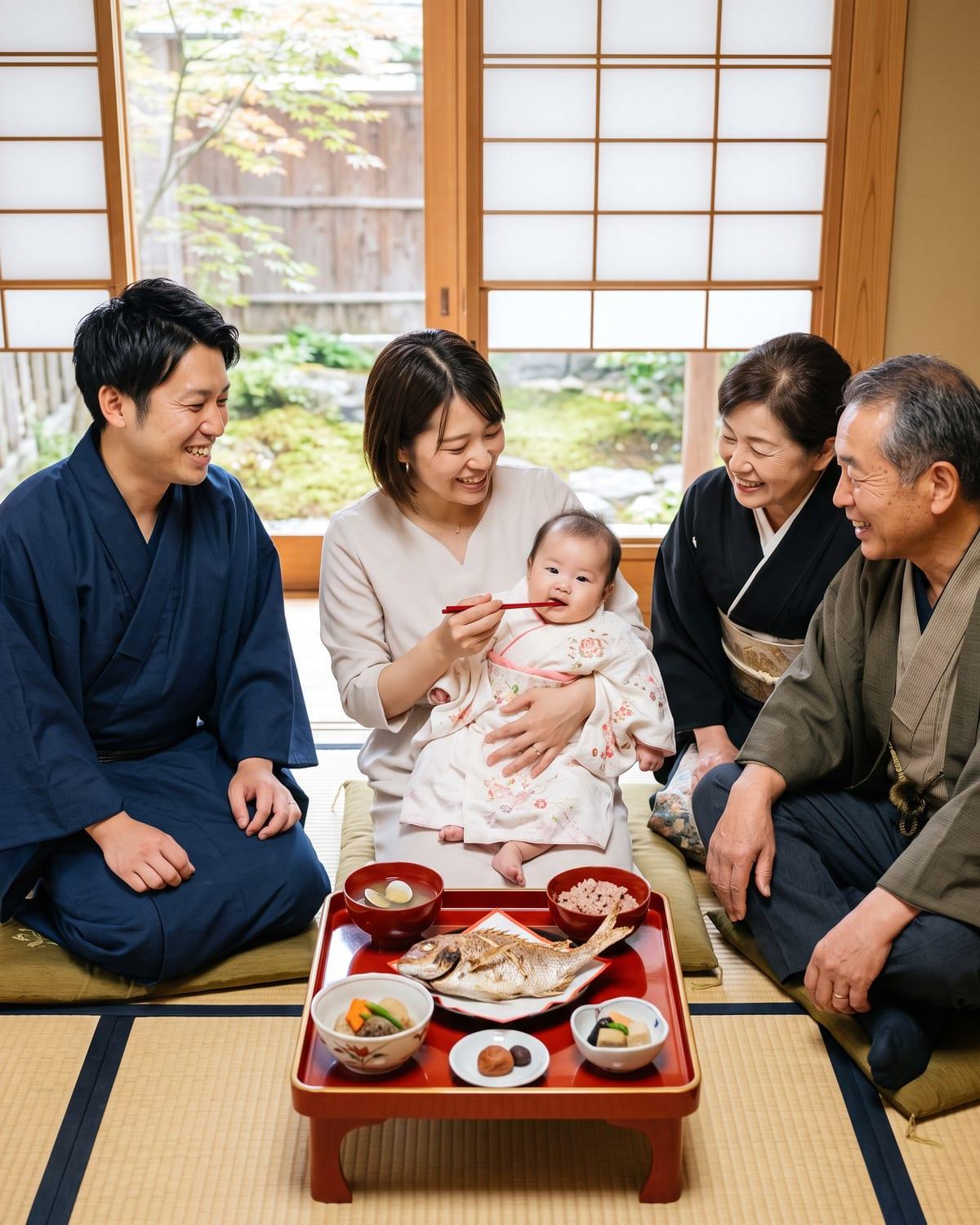
100-Day Baby Photos Near a Vaccination Date: How to Pick the Shoot Day
pokesta Editorial Team · Updated October 22, 2026
Around a baby's 100th day, the second round of routine shots is often due. Under the routine schedule published by Japan's Ministry of Health, Labour and Welfare, the five-in-one vaccine is given three times from two months of age, usually 20 to 56 days apart, and the second hepatitis B dose is standard at three months. Shots can bring on a fever or a fussy spell, so book the 100-day photo studio and the Okuizome (a Japanese ceremony where the family pretends to feed the baby a celebratory meal) away from the day of the shot and the day after, and choose a studio or photographer that lets you change the date for free. Whether to move a vaccination is a question for your baby's doctor, not for the photo schedule.
The second dose tends to land right around day 100
Okuizome is held around the 100th day as a prayer that the baby will never go hungry, and many families also book 100-day (hyakunichi) portraits. Counting the day of birth as day one, day 100 falls about three months and a week after birth.
The ministry's pages give these standard timings. The five-in-one vaccine (against diphtheria, whooping cough, tetanus, polio and Hib) is given three times between two and seven months, at least 20 days apart and usually 20 to 56 days. Hepatitis B is given at two months, three months, and seven to eight months. The oral rotavirus vaccine should start between two months and 14 weeks 6 days after birth, with at least 27 days between doses.
So if the first shots happen right at two months and the next about four weeks later, the second round lands at around three months, just before day 100, and a third dose follows at around four months. Schedules elsewhere may differ, but the planning logic is the same.
What to watch for after a shot: fever and mood
For the five-in-one vaccine, the ministry's page reports results from clinical trials in Japan (with the shot given under the skin). Fever was seen in 57.9% of babies with one manufacturer's vaccine (37.5°C or higher) and 65.2% with another (fever appearing within six days of the shot). Redness, hardness and swelling where the needle went in were also common. The page adds that no major safety concerns have been raised. The hepatitis B page lists redness or swelling at the injection site, fever, and a baby who is crankier, fussier or sleepier than usual.
Rotavirus vaccine comes with a different warning. The risk of intussusception, where one part of the bowel slides into another, rises for about one to two weeks after vaccination, especially after the first dose. The ministry asks parents to seek care promptly if the baby suddenly cries hard, swings between good and bad moods, vomits, has bloody stools, or goes limp and pale. Keep these signs in mind whatever the photo plans.
Even without a clear reaction, a baby can be out of sorts on shot day, and swapping costumes on a day like that helps neither the photos nor the baby.
Book the shoot after you know the vaccination dates
Make vaccination appointments first and photo bookings second, keeping the studio session and the Okuizome off the day of a shot and the day after. Because fever can appear over several days, leaving a few days' gap, or finishing the photos the week before a shot, takes the pressure off.
The shots themselves can also slip. Babies with a fever can't be vaccinated, so a cold that delays one dose by a week pushes the next one toward your photo date. Book photos in a way that lets you move them.
Don't move a vaccination to suit the photos; each dose has its timing for a reason. If the two collide, move the photos, and talk any doubts through with the clinic.
Studio, hired photographer or DIY: compare how easily the date can move
Photo studio
On-location photographer
DIY
How pricing works
Session fee plus the prints or files you choose
Hourly fee with digital files included
Little beyond equipment
If the baby gets sick
Some studios waive same-day cancellation for illness
Some services charge nothing to change the date
Postpone anytime
Strain on the baby
Travel and outfit changes
No travel if they come to your home
Stop whenever needed
Results
Controlled lighting and backdrops, consistent
The celebration at home, as it happened
Expressions only family sees
Best for
A costumed portrait with the grandparents
Capturing the Okuizome itself
Families who want low cost and no fixed date
As a studio example, Studio Alice charges a session fee of 5,500 yen (tax included) per family for 100-day photos, however many poses you take, and that covers costumes, dressing and hair styling. It says there is no cancellation fee if a child falls ill on the day of the booking, and changes or cancellations are made through its online booking page. The total then depends on which photos and files you buy.
For an on-location example, fotowa's base fee is 24,200 yen on weekdays and 29,700 yen on weekends and holidays (tax included), for about 60 minutes including setup and packing up, with 75 or more photos delivered as files. Changing the date is free, and a 1,980 yen option waives cancellation fees from three days before the shoot through the day itself (the option fee itself isn't refunded). A photographer who comes to you also spares a recovering baby the trip.
These prices were checked on each official site in October 2026. They vary by season, location and plan, so confirm on the official site before booking.
A studio is still worth it for a well-lit group portrait with the grandparents, or a baby properly dressed in a celebration kimono, shots that are hard to get at home. How studio pricing works and how to time the booking are covered in 100-day photos at a studio.
If a fever starts the day before, postpone the photos and keep the Okuizome small
If a fever starts the day before or the morning of the shoot, contact the studio or photographer early and rebook under their rules. Ask the clinic in advance what to do if a fever appears and when it's fine to go out again.
The Okuizome is a family event, so you can shift it or keep the ritual brief and family-only. Warn grandparents coming from afar that the day may move. If the baby falls asleep or won't stop crying on the day, see when the baby sleeps or cries at Okuizome.
A missed 100-day photo can still be made from the photos you have
If shot week or a fever ruled out the 100-day photos, your everyday phone photos are still there. With pokesta, you can use photos of each family member to create an AI family portrait in 100-day celebration outfits, at $1 per photo, without leaving home. The result is an image made from your photos, not a record of the day. Your first photo is free, so once your baby is feeling better, try it with a photo already on your phone.