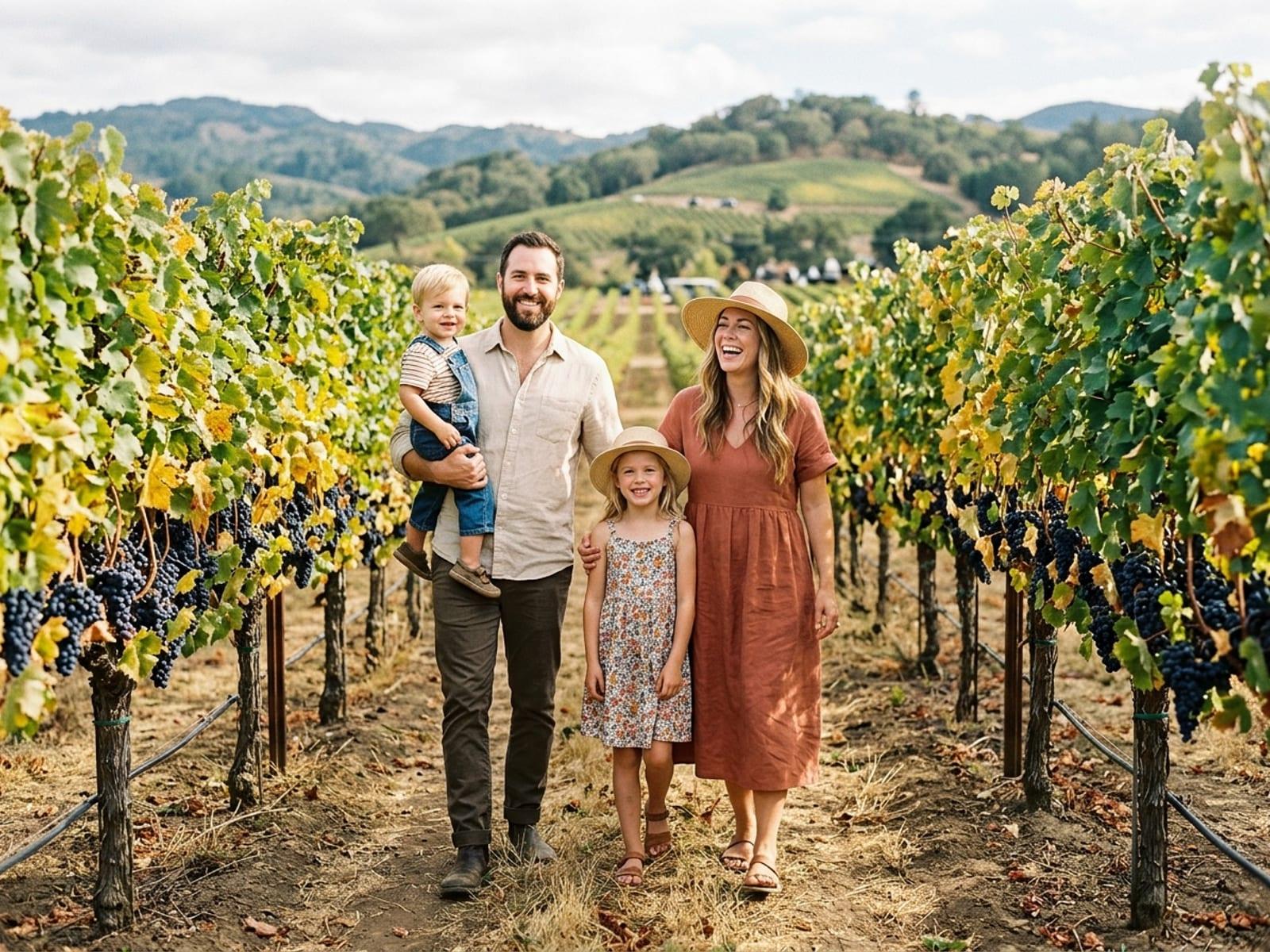
Napa Valley, stretching north from San Francisco, is one of America's best-known wine regions, home to more than 400 wineries. A wine trip sounds like something for adults only, but some wineries pour grape juice for children or open gardens with animals. The liveliest time is harvest, from August to October, when the grapes are picked. Seeing the clusters on the vine, the whole family can learn how grapes become wine.
A valley made famous by a Paris tasting in 1976
Napa Valley is a long, narrow valley between the Mayacamas Mountains to the west and the Vaca Mountains to the east. Its climate is Mediterranean, with hot, dry summers and cool, rainy winters, and fog and cool air flow into the south end of the valley from San Pablo Bay. The south is cool and it gets warmer as you go north. That temperature range is what lets one valley grow grapes with so many different flavors.
The valley's name went global after a 1976 tasting known as the "Judgment of Paris." French experts tasted wines blind, and a Napa Valley Chardonnay and a Napa Valley Cabernet Sauvignon each came out on top. In 1981 Napa Valley became the first American Viticultural Area (AVA) in California and the second in the country, and today 17 smaller sub-areas have been defined within it. According to the tourism board, Cabernet Sauvignon grows on 51 percent of the vineyard land, and 95 percent of the wineries are family-owned.
Choosing wineries you can visit with children
The drinking age in the United States is 21, so children can't take part in tastings. Even so, Visit Napa Valley, the tourism board, recommends wineries that welcome families. Castello di Amorosa near Calistoga, for instance, looks like a medieval castle, offers grape juice tastings for kids and has a garden with peacocks, goats and other animals, although strollers can't go inside the castle. V. Sattui in St. Helena has a picnic area of about 2 acres (roughly 8,000 square meters), and at Frog's Leap in Rutherford you can wander the gardens. The board also mentions a family tasting at Cakebread Cellars, where children can join a walk around the grounds while the adults taste; Honig, which serves kids juice and snacks; and Hoopes Vineyard, with a farm that is home to rescued animals.
Some wineries, like Inglenook, don't admit children under 12. If you are going as a family, the basic rule is to check with each winery in advance whether children are allowed and whether you need a reservation. The tourism board suggests booking the first tasting slot of the day, usually around 10 a.m., when the tasting room is quiet and the staff have more time.
If too many wineries in a row will bore the kids, slot in one stop that isn't a winery. Calistoga has the Old Faithful Geyser, a natural geyser (not the famous one in Yellowstone National Park, but one with the same name), and at Bothe-Napa Valley State Park you can see the historic Bale Grist Mill, which still works. In the town of Napa, Oxbow Public Market is an indoor market full of food stalls, good for lunch or a break. For young children there is also Connolly Ranch, which runs hands-on nature programs.
Wineries are working places with big machinery, and coyotes, snakes and other wildlife sometimes turn up in the vineyards. Keep an eye on children of every age.
The harvest treat: grape stomping
During harvest, wineries hold harvest festivals and hands-on events, and the one children love most is grape stomping. You take off your shoes and crush grapes with your bare feet, the old-fashioned way. Some events are races for speed or volume, and some give prizes. Some welcome children, but not all of them do. One family harvest event asks guests to come in sandals or flip-flops that are easy to change, and it helps to allow time to wash feet afterward. Most events need a reservation and the popular ones sell out every year, so book early once your dates are set. Some wineries also offer winemaking experiences year-round, outside the harvest season.
For photos in the vineyard, the low late-afternoon light between August and October, when the clusters are on the vines, is lovely. Most vineyards are private land, though, and the grapes are a valuable crop. Ask someone at the winery before walking into the rows or touching the fruit.
To see how a photo of your family walking through the vines might look, you can try pokesta's AI photos ($1 per photo).
Dress for sun and for changing temperatures
According to the tourism board, autumn highs in Napa Valley are around 75°F (about 24°C) and lows around 48°F (about 9°C), so the difference between midday and morning or evening is big. The midday sun is strong, so bring wide-brimmed hats, sunglasses and sunscreen, plus a light cardigan or jacket for mornings and evenings.
You'll be walking on dirt paths between the vines and on gravelly grounds, so wear comfortable shoes. If you join a grape stomp, bring clothes you don't mind staining and sandals to change into. Light-colored clothes in natural fabrics, like linen shirts and linen dresses, blend nicely with the green vines and golden leaves.
When to go and getting there
The valley's towns, Napa, Yountville, St. Helena and Calistoga among them, line up from south to north, with wineries scattered between them. The main international airport is San Francisco International Airport (SFO). If you stay in the city, you can spend one day on sourdough and clam chowder at Fisherman's Wharf and another in the valley. The tourism board lists four airports near the valley, so if you are connecting within the United States you may be able to choose a closer one that suits your plans. Getting between wineries mostly means driving, and adults who are tasting can't drive. Decide on a designated driver or book a tour with transport.
Harvest events and popular wineries book up fast, so make arrangements as soon as your dates are fixed. The tourism board describes winter as the quiet season with fewer visitors. Winter highs are around 60°F (about 16°C), which suits adults who want to taste at a slower pace, but if you want to see grapes on the vines, go from August to October. U.S. entry requirements depend on your nationality, so check your own government's official information before you go.
Wine for the adults, grape juice for the kids. Raise two glasses made from the same vineyard's grapes, and a wine country trip becomes a family trip.
References