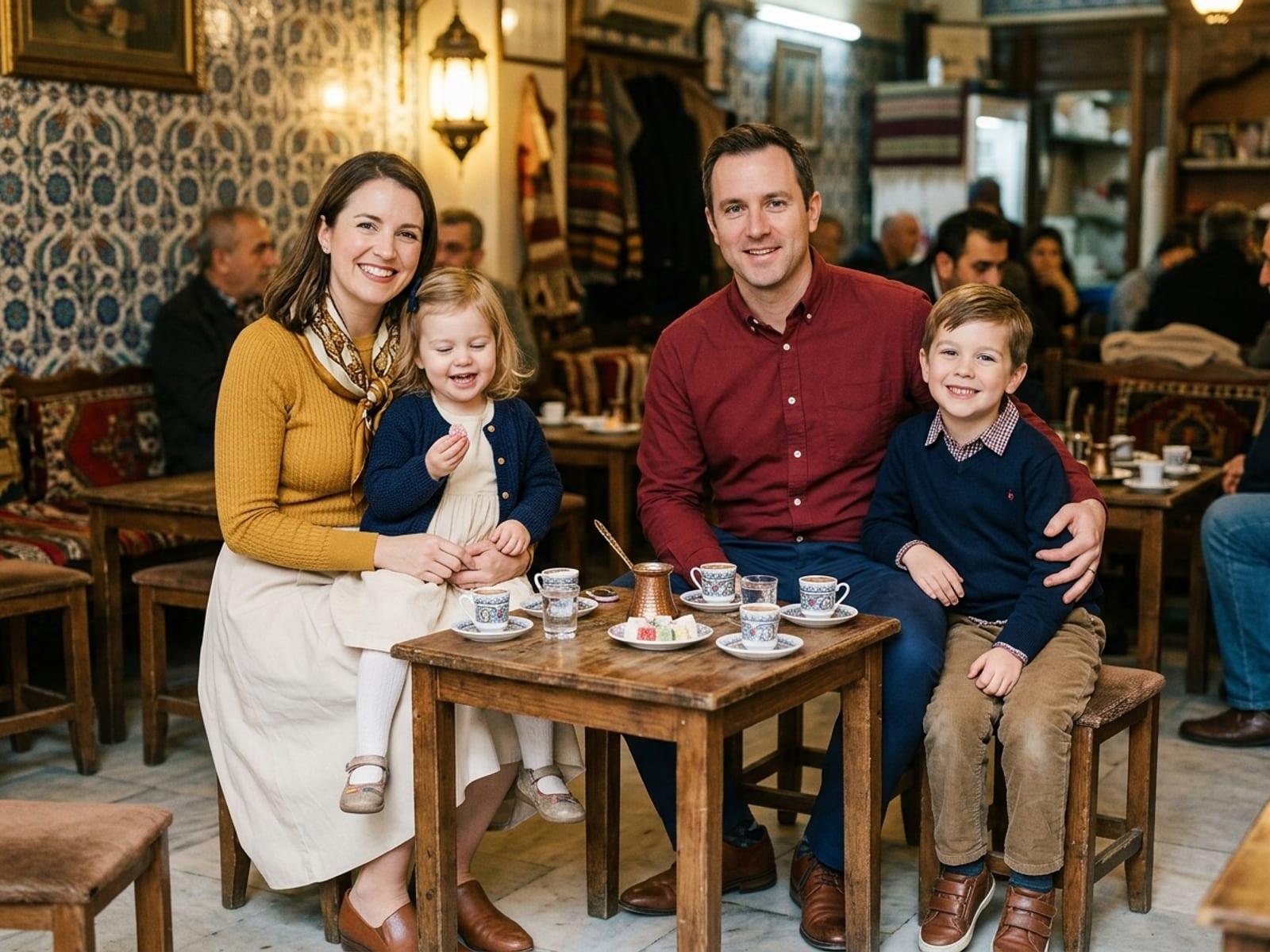
A fine, dense foam sits on top of the tiny cup like a lid. Beneath it is thick, velvety coffee, and at the bottom the grounds settle, because nothing has been strained out. Turkish coffee is made by simmering beans ground as fine as flour with water in a small pot, then serving it unfiltered. The customs around this cup were added to UNESCO's list of Intangible Cultural Heritage in 2013 as "Turkish coffee culture and tradition." To enjoy it in Istanbul, all you really need to know is the order of things and when to ask for sugar.
Coffee reached Istanbul in the 16th century
Coffee spread through the Islamic world in the 16th century. There are records of it being drunk in Istanbul by 1539, and in 1554 (some sources say 1551) two merchants, Hakem from Aleppo and Şems from Damascus, are said to have opened the city's first coffeehouse, probably around Tahtakale in the old city.
The palace took to coffee quickly, and even created a post called the kahvecibaşı, the chief coffee maker, who brewed for the sultan and high officials. The job went to trusted, discreet men, and a few are said to have risen as far as grand vizier. From the palace, coffee spread to the mansions of the wealthy and then into ordinary homes. In those days raw beans were roasted in shallow pans, pounded to powder in a stone mortar called a dibek, and brewed in a cezve.
The English word "coffee" itself came by way of the Turkish kahve. Coffeehouses took root as places to meet, talk, swap news and read. People played backgammon and chess there and discussed poetry and literature, and the shadow puppet theater Karagöz and the improvised comedy Ortaoyunu are said to have been performed in coffeehouses first. In Tahtakale, where it all started, there is still a Tahmis Street, named after a word for roasted coffee. UNESCO describes Turkish coffee culture as a symbol of hospitality, friendship, refinement and entertainment.
In the 19th century, the way coffee was sold changed too. Back then, people bought green beans and roasted and ground them at home. Mehmet Efendi, who took over his father's shop in 1871, began roasting and grinding the beans himself and packing the ground coffee into small paper bags in front of his customers. Ready-to-brew coffee was an instant hit, and he became known as Kurukahveci Mehmet Efendi, "Mehmet Efendi the roasted-coffee seller." His name lives on as an Istanbul coffee brand.
Ask for your sugar up front
Turkish coffee isn't sweetened afterward. The ground coffee, cold water and sugar all go into the cezve, a small long-handled pot, at the start and are heated slowly over a low flame until the foam rises. That means you tell them how sweet you want it when you order.
Sade is no sugar, az şekerli is a little sweet, orta şekerli is medium, and çok şekerli (or just şekerli) is sweet. If it's your first time, start with orta. It's the easiest way to taste how the bitterness and sweetness balance.
When the coffee arrives, take a sip of the water served with it first. It clears your palate so you can taste the coffee properly. The foam is prized as the sign of a good cup. Don't drink all the way down to the grounds; stop when a little is left. A small sweet, often lokum (Turkish delight), frequently comes on the side.
Some places serve "sand coffee," where the pot is heated by setting it in hot sand. Watching the server slide the pot around in the sand as the foam bubbles up is a show in itself.
Fortunes in the grounds and salt for the suitor
Reading fortunes from the patterns left by the grounds at the bottom of the cup is part of Turkish coffee culture as well. Even just peering into the cup together as a family and arguing over whether a shape is a bird or a mountain makes for a fun moment on the trip.
Coffee also plays a part in engagements. When the family of a man who has come to ask for a woman's hand is welcomed into her home, it's customary for the bride-to-be to make and serve the coffee. Sometimes, the story goes, she puts salt instead of sugar into the prospective groom's cup alone, to test his character.
Enjoying it with kids
Turkish coffee is strong and has plenty of caffeine, so it's wise not to give it to children. Let them take charge of the lokum and the water instead, and watch together as the coffee is made in the cezve and the foam forms on the adults' cups. If you want a caffeine-free "coffee" they can try, there's menengiç coffee, a specialty of Gaziantep in the southeast. We cover it in our article on baklava in Gaziantep.
For ground coffee to take home, the area around the Spice Bazaar (Mısır Çarşısı) in Eminönü, in the old city, is convenient. Construction on the market began in 1660, and about 85 shops sell spices, lokum, dried fruit and nuts. It was originally part of the complex of the neighboring New Mosque (Yeni Cami), and the shop rents went toward the mosque's upkeep. To stock up on the lokum that comes with the coffee, Hacı Bekir, the lokum shop founded in 1777, is nearby in Bahçekapı. If you plan to make it at home, buy a cezve too, and you can repeat the same steps after the trip.
And if you'd like the family peering into the cups as a photo, pokesta's AI photos can make it for $1 per photo, with the first one free.
When and where to have it
You can order Turkish coffee all year round in cafés, coffeehouses and restaurants across the city. It's strong but small, which makes it a good size for after lunch or dinner. The main international gateway is Istanbul Airport (IST), and it's easy to work a coffeehouse break into a day of sightseeing in the old city. Entry requirements for Turkey depend on your nationality, so check your own government's official information.
If you're visiting in April, have a cup at a park café during the tulip festival. And Turkey has one more drink you can't skip: çay, black tea served in tulip-shaped glasses. Most of it is grown in the tea gardens of Rize on the Black Sea coast.
Say how much sugar you want when you order, drink the water first, and leave the grounds in the cup. Remember those three things and you can walk into any café in Turkey and drink your coffee just the way locals do.
References